Introduction
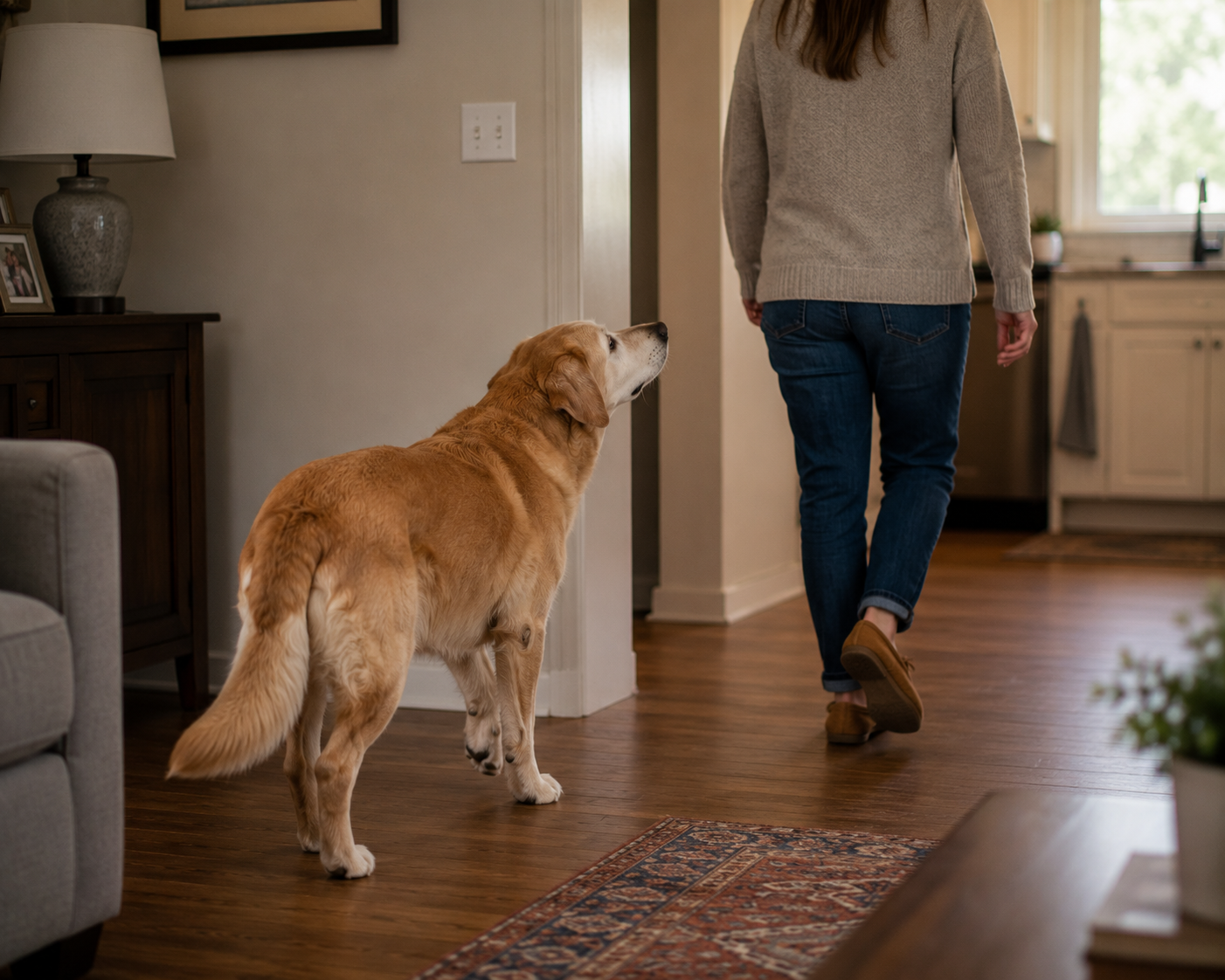
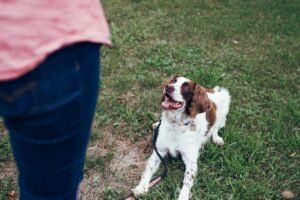
Why does my dog follow me everywhere is one of those questions that makes most dog owners smile before they even think about answering it. Your dog tracks you from room to room, waits outside the bathroom door, and repositions themselves the moment you move. It is endearing, sometimes inconvenient, and occasionally a little surprising when you nearly trip over them for the third time before breakfast.
Most of the time, this behaviour is exactly what it looks like. Love, loyalty, and the comfortable routine of being near the person they trust most. Dogs are social animals that have spent thousands of years living alongside humans, and following their person is one of the most natural things they do.
That said, there is usually more going on than pure affection. Understanding what drives the behaviour helps you appreciate it properly and also helps you recognise the small number of cases where it signals something worth paying attention to.
By Dogcat-Care.
This post contains affiliate links. If you buy through these links, I may earn a small commission at no extra cost to you.
Table of Contents
Why Dogs Follow Their Owners: The Main Reasons
Love and Social Bonding
This is the most fundamental reason and the one that deserves to come first. Dogs form genuine emotional attachments to their owners. Research on the human-dog bond has shown that dogs and their owners experience mutual increases in oxytocin, the bonding hormone, during positive interaction. The same neurochemical response that drives human social bonding is active in the dog-owner relationship.
Following you is one of the ways dogs express and maintain that bond. Being near you is rewarding in itself. Your presence is associated with safety, positive experiences, food, play, and the full range of good things in your dog’s life. Staying close to you makes sense from their perspective in the most straightforward way possible.
Loyalty and Pack Instinct
Dogs descended from animals that lived in social groups where staying close to the group meant safety and access to resources. Although domestic dogs are not wolves and the direct wolf comparison is often overstated, the underlying social instinct to stay near trusted companions is real and deeply embedded.
Your dog sees you as their primary social companion. Following you is an expression of that social bond, not a sign of weakness or overdependence in a dog that is otherwise relaxed and confident. A secure, well-adjusted dog that follows their owner is simply doing what social animals do.
Routine and Habit
Dogs are creatures of habit and they learn your routines with remarkable precision. They know that when you put on shoes something interesting usually happens. They know that when you go to the kitchen there is a reasonable chance food is involved. They know that when you sit at your desk you will be there for a while and the most efficient place to be is nearby.
Following you is partly a learned behaviour built on pattern recognition. Your movements predict events that matter to your dog, and staying close means never missing them. This is not anxiety. It is intelligent adaptation to a predictable social environment.
Breed Tendencies
Some breeds were specifically developed to work closely alongside humans and have particularly strong following instincts as a result. Herding breeds including Border Collies, Australian Shepherds, and Shelties are extraordinarily attentive to their person’s movements because their working role required it. Velcro dogs, the informal term for breeds that stick particularly close to their owners, include Vizslas, Dobermans, and many of the gun dog breeds that worked at close range with hunters.
If your dog is a breed with historically close working relationships with humans, their tendency to follow you everywhere is partly written into their genetics. It does not mean anything is wrong. It means you have a dog whose breed was designed to be exactly where they are.
You Have Reinforced the Behaviour
Dogs learn through consequences. If following you has consistently resulted in positive outcomes, attention, affection, treats, play, or simply being included in whatever is happening, the behaviour gets reinforced and strengthens over time.
Most owners reinforce following behaviour without realising it. Speaking to the dog when they follow, reaching down to pet them, including them in activities, all of these responses tell the dog that following you is a successful strategy. This is not a problem. It is just worth understanding that the behaviour has likely been shaped as well as instinctive.
The Difference Between Normal Following and Separation Anxiety
This is the distinction that matters most when owners become concerned about their dog’s following behaviour.
Normal following is a dog that is relaxed, content, and simply prefers to be near you. They follow you from room to room but settle easily when you are stationary. They are calm and relaxed when left alone, or at most briefly unsettled before accepting the situation. They do not show distress when you prepare to leave.
Separation anxiety is different in character and intensity. A dog with separation anxiety does not just follow you because they enjoy your company. They follow you because they cannot tolerate the prospect of being without you. The behaviour is driven by anxiety rather than preference.
Signs that following may be connected to separation anxiety rather than normal attachment include: distress signals when you prepare to leave such as panting, pacing, or whining before you have even gone; destructive behaviour, excessive vocalisation, or house soiling when left alone; an inability to settle even when you are present unless they are in physical contact with you; and escalating distress as you move further away even within the home.
Separation anxiety requires a different approach than normal following behaviour. It is worth addressing directly because it represents genuine distress for the dog rather than a preference.
For more on managing dog anxiety: How to Calm an Anxious Dog at Home
When Following Behaviour Changes or Increases
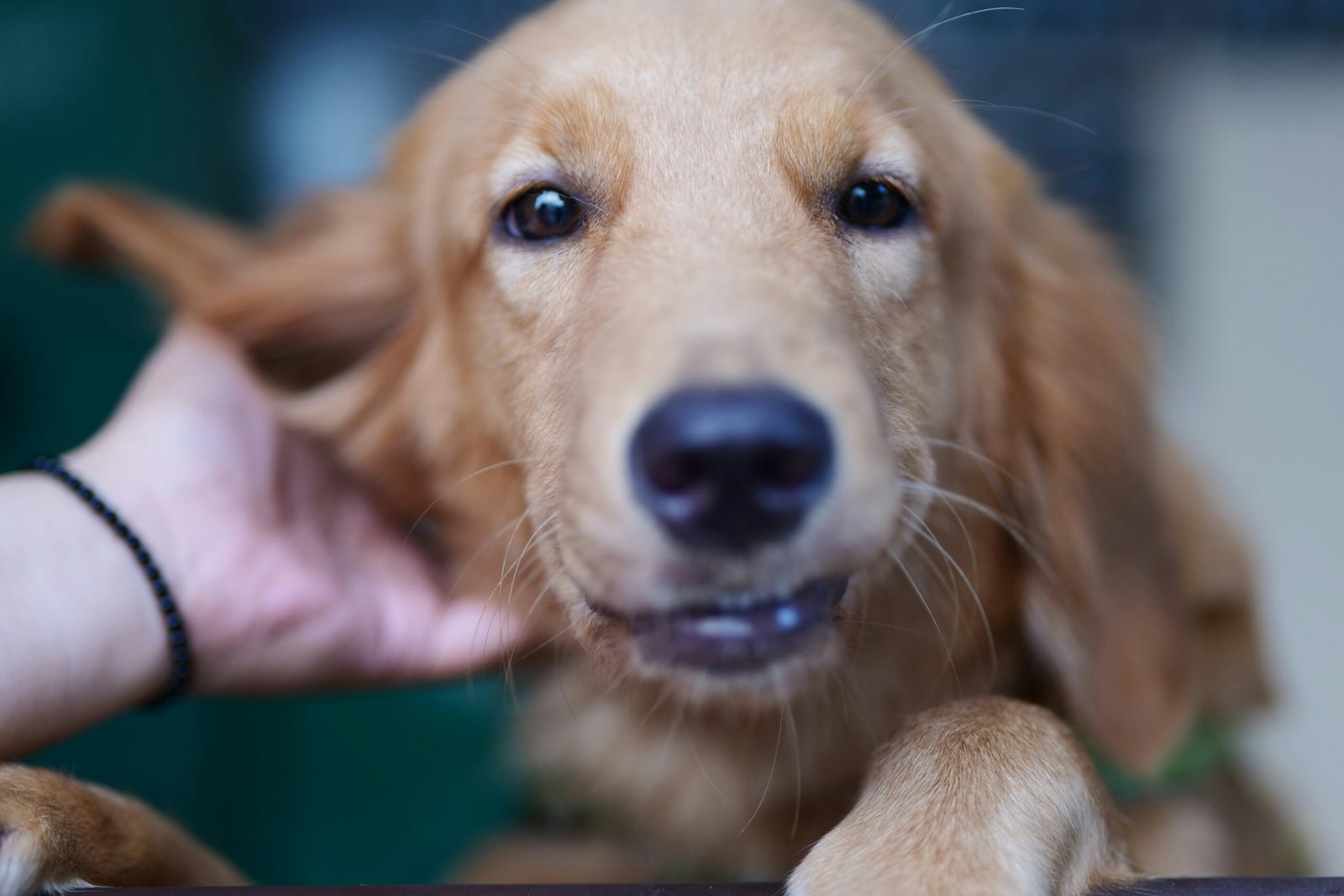
A dog that has always followed you at a consistent level is almost certainly expressing normal attachment and routine. A dog whose following behaviour has recently increased or changed in character is worth paying attention to.
Physical discomfort or illness
Dogs that are unwell or in pain often seek closer proximity to their owners. Increased following alongside other changes such as reduced appetite, lethargy, changes in movement, or unusual behaviour patterns can indicate that the dog is not feeling well and is seeking reassurance. If following behaviour increases suddenly alongside other changes, a vet check is worth doing.
Environmental stress
Changes in the home environment, a new person or animal, building work, changes in routine, or external stressors like fireworks or construction noise nearby can cause a previously independent dog to become more clingy. The following behaviour is a response to feeling less secure in their environment. Addressing the stressor and providing extra reassurance usually resolves the increased clinginess over time.
Life stage changes
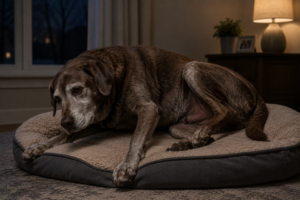
Senior dogs often become closer to their owners as they age. Reduced sensory acuity, cognitive changes, and reduced confidence in navigating the environment all contribute to seeking the reassurance of proximity to their person. An older dog that has become more following than they used to be is usually responding to the experience of aging rather than developing a behavioural problem.
Puppies go through developmental stages that affect how closely they follow. Young puppies follow instinctively for safety. Adolescent dogs sometimes become more independent before adult attachment patterns settle. The trajectory is normal even when it does not feel consistent.
Should You Be Concerned?
For the vast majority of dogs that follow their owners everywhere, the honest answer is no. The behaviour is normal, healthy, and a reflection of a positive bond between dog and owner.
The cases that warrant attention are a small minority. If the following is accompanied by visible anxiety, if the dog cannot settle even in your presence, if they show distress at any separation however brief, or if the behaviour has changed suddenly alongside other symptoms, those are signals worth investigating.
For a dog that simply loves being near you, follows your routine with enthusiasm, and is otherwise relaxed and well-adjusted, the following behaviour is not a problem to solve. It is a feature of having a dog.
How to Encourage Independence Without Damaging the Bond
Some owners find constant following physically inconvenient or are concerned about creating a dog that cannot cope without them. Encouraging some independence is reasonable and does not require reducing the affection or quality of the bond.
Teach a settle command
Training your dog to go to a specific spot and lie down on cue gives you a tool to direct them when you need space. With consistent practice and positive reinforcement, the settle spot becomes a comfortable place the dog goes to willingly rather than a banishment.
Reward independent behaviour
When your dog chooses to settle somewhere other than directly at your feet, reward that choice with quiet praise or a treat. Reinforcing independent settling makes it more likely to happen again without punishing the following behaviour directly.
Practice brief separations within the home
Moving to another room and closing the door briefly, returning before any distress develops, and gradually increasing the duration helps dogs become comfortable with brief separation. This is particularly useful for puppies and for dogs showing early signs of separation anxiety before the pattern becomes entrenched.
Avoid making departures and arrivals dramatic
Emotional departures and enthusiastic arrivals reinforce the idea that your absence is a significant event. Calm, matter-of-fact departures and low-key returns reduce the emotional charge around separation and make it easier for the dog to accept.
For more help on dogs with separation anxiety: How to Help a Dog with Separation Anxiety – DogCat-care
FAQ
Is it bad that my dog follows me everywhere?
No, in most cases it is a sign of a healthy attachment and a positive bond. It only becomes a concern if the following is driven by anxiety, if the dog cannot cope with any separation, or if it is accompanied by other signs of distress.
Why does my dog follow me and not other family members?
Dogs typically form a primary attachment to one person, usually the person who provides the most consistent care, feeding, and positive interaction. This does not mean they do not have affection for other family members but the strongest following behaviour tends to be directed at the primary attachment figure.
My dog only follows me to certain rooms but not others. Why?
Dogs learn which rooms lead to interesting events and which do not. A dog that follows you to the kitchen but not to the home office has figured out the probability distribution of positive outcomes in different locations. It is pattern recognition rather than selective affection.
Should I let my dog sleep in my bedroom if they follow me there?
This is a personal choice rather than a welfare issue. Dogs that sleep near their owners are not being spoiled or made more dependent. There is no evidence that co-sleeping with dogs increases separation anxiety. If it works for everyone in the household, it is fine.
My dog started following me more after we moved house. Is that normal?
Yes. A new environment is unfamiliar and potentially stressful. Staying close to their person provides reassurance while everything else is unfamiliar. Most dogs settle into a new home within a few weeks and return to their baseline following behaviour once the environment feels familiar and safe.
Why does my dog follow me to the bathroom specifically?
The bathroom is a room you go to regularly, close the door, and come back out of. From the dog’s perspective this is a small, frequent disappearance that they learn to monitor. There is nothing special about the bathroom specifically. It is the closing of the door and the temporary invisibility that motivates the waiting.
Final Thoughts
Why does my dog follow me everywhere almost always has a simple and positive answer. Love, loyalty, routine, and the entirely reasonable preference of a social animal to be near the person they trust most.
There is usually more behind it than pure affection. Breed instincts, learned behaviour, and the comfort of predictable routine all contribute. But none of these are problems. They are the normal texture of living with a dog that has formed a genuine bond with you.
The small number of cases where following behaviour signals something worth addressing involve anxiety, sudden changes, or physical discomfort. For the vast majority of dogs that follow their owners everywhere, the behaviour is not something to change. It is something to appreciate.
For more on dog behaviour, read our guide: How to Calm an Anxious Dog at Home
Sources
- https://www.akc.org/expert-advice/training/why-does-my-dog-follow-me-everywhere/
- https://www.aspca.org/pet-care/dog-care/common-dog-behavior-issues/separation-anxiety
- https://www.ncbi.nlm.nih.gov/pmc/articles/PMC3566579/
- https://vcahospitals.com/know-your-pet/bonding-with-your-dog
- https://www.pdsa.org.uk/pet-help-and-advice/looking-after-your-pet/puppies-dogs/separation-anxiety-in-dogs
Pingback: How to Calm an Anxious Dog at Home: What Actually Works
Pingback: How to Help a Dog with Separation Anxiety - DogCat-care