Introduction
How to get your cat used to a carrier is one of those things most owners only think about five minutes before they need to leave the house. The carrier comes out of the closet, the cat disappears under the bed, and what follows is twenty minutes of stress for everyone involved. It does not have to be this way. But fixing it requires understanding why it happens in the first place, and most owners skip straight to the wrong part.
The carrier itself is not the problem. Your cat is not afraid of a box. What your cat has learned, over time, is that the carrier is a reliable signal that something unpleasant is about to happen. For most cats, that means a vet visit. The carrier appears, they get put inside, they feel the movement and the sounds of the car, and then they arrive somewhere unfamiliar that smells like other animals and stress. That pattern repeats enough times that the sight of the carrier alone triggers the anxiety response. Your cat is not being dramatic. They are doing exactly what their brain trained them to do.
The good news is that the brain that learned one association can learn another. That is the whole basis of carrier training, and it works. It just takes longer than five minutes.
By Dogcat-Care.
Table of Contents
Why Most Cats Fear the Carrier and Why It Starts With the Vet
The vet association is the root cause for the majority of cats that resist carriers. A lot of owners assume their cat is just “not a carrier cat” or that some cats are simply too anxious to tolerate travel. That is rarely true. What is true is that the carrier has been used exclusively as a transport vessel for experiences the cat did not enjoy, and the cat made the logical connection.
Think about how this builds over time. The first time a kitten goes in a carrier, they may be nervous but they do not yet have a strong association. By the third or fourth vet visit, the pattern is established. The carrier comes out, something stressful follows. After a year or two of that, your cat knows exactly what the carrier means before you have even opened the door.
There is a second layer to this that is worth understanding. Cats are creatures of environmental predictability. Their sense of safety comes from knowing their territory and knowing what objects in it mean. When the carrier only appears on vet days, it becomes an object with a single, negative meaning. It is not neutral furniture. It is a warning sign.
This is why the most common advice, “just put them in when you need to go,” does not work long term. You might get the cat in the carrier once using that approach, but you are reinforcing the exact association you need to break.
How to Get Your Cat Used to a Carrier Step by Step
The process works in stages, and the stages build on each other. Trying to skip ahead is the most common reason carrier training fails.
Stage one: Make the carrier permanent furniture.
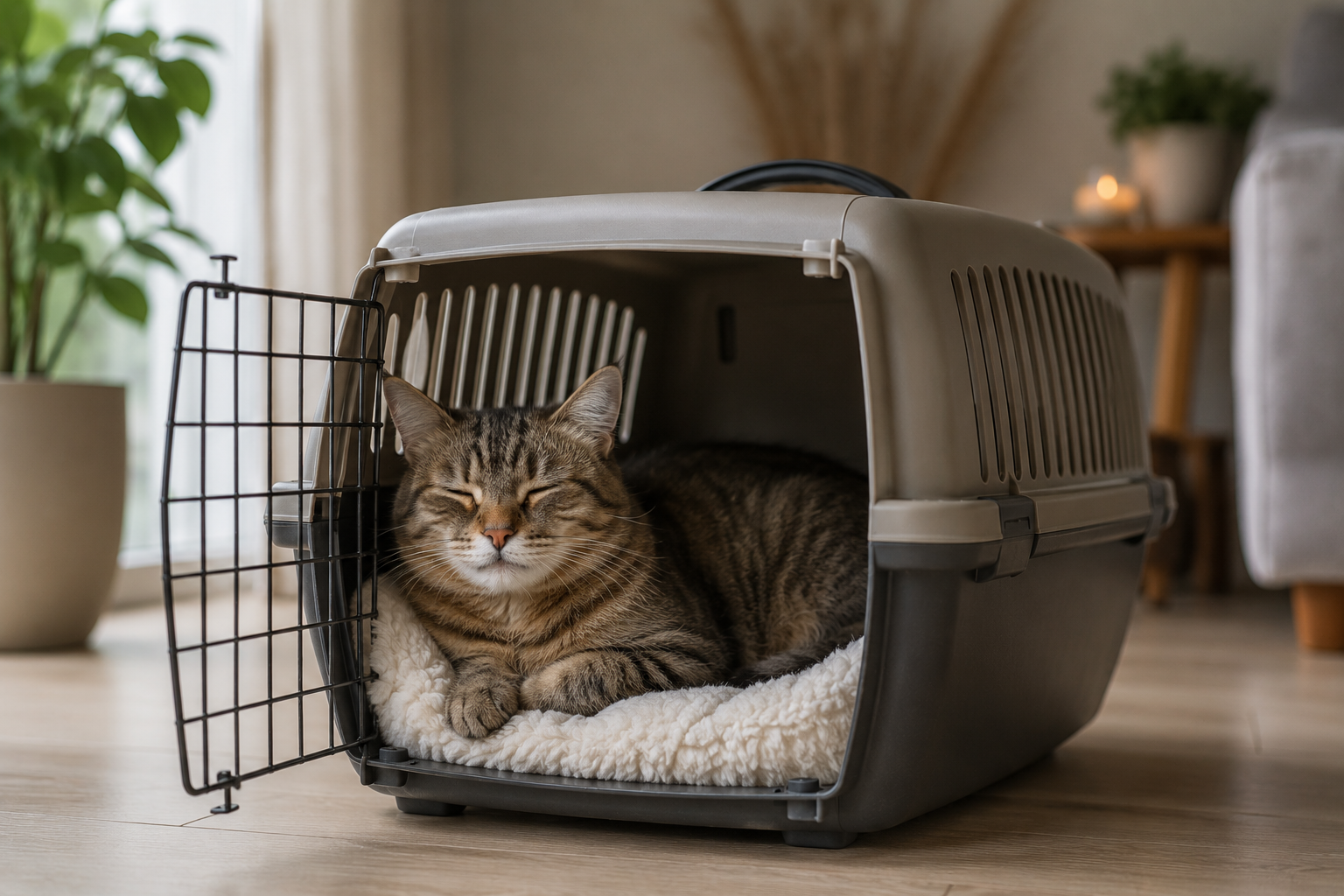
The single most important thing you can do is stop putting the carrier away between uses. Leave it out in a room your cat spends time in. Leave the door open or remove it entirely. Put a familiar blanket or a piece of your clothing inside. Do not do anything else yet. Just let the carrier exist as a normal object in your cat’s environment. This alone begins to break the vet-day association.
Most cats will investigate the carrier within a few days. Some will sleep in it. Do not rush this stage. If your cat ignores the carrier for a week, that is still progress. Ignoring something is a neutral response. Neutral is where you need to get to before you can build anything positive.
Stage two: Create positive experiences near and inside the carrier.
Once your cat is comfortable being near the carrier without reacting to it, start placing treats just inside the entrance. Do not try to close the door or pick up the carrier. The goal at this stage is simple: your cat goes near or into the carrier, something good happens. Repeat this over days or weeks depending on how anxious your cat is. What to Put in a Cat Carrier to Keep Your Cat Calm – DogCat-care
You can also feed your cat near the carrier during regular mealtimes. Moving the food bowl progressively closer to the carrier entrance, and eventually just inside it, is one of the most effective ways to build a positive association because food is a daily, reliable reward.
Stage three: Close the door briefly.
Once your cat is comfortable eating inside the carrier or resting in it voluntarily, begin closing the door for a few seconds at a time. Open it before your cat shows any sign of stress. The goal is to close and reopen the door before anxiety has a chance to build. Reward calmness after the door opens again.
Gradually extend the time the door stays closed. This should happen over multiple sessions across several days, not within a single training session.
Stage four: Lift the carrier.
Pick the carrier up for a few seconds with your cat inside, then set it back down and open the door. Keep your movements slow and deliberate. Reward your cat when they come out calm. Repeat this, gradually increasing the time you hold the carrier and eventually walking a short distance with it.
Stage five: Short trips that do not end at the vet.
Drive your cat around the block. Walk them to the end of the street and back. Take them to a friend’s house. The goal is to break the pattern where every carrier trip ends at the vet. Even one or two trips per month that end somewhere neutral or positive will significantly change how your cat relates to the carrier over time.
If your carrier choices are still limited or you are finding that your cat is more comfortable with certain designs, it is worth reading through the options in the guide to the best cat carriers for travel before you commit to a single carrier for training.
The Biggest Mistake Owners Make During Carrier Training
The biggest mistake is forcing the pace. When owners have a vet appointment coming up in two weeks, they try to compress the entire training process into that window. That does not work, and it often makes things worse.
Carrier training is not a two-week project. For a cat with a strong negative association, it can take one to three months of consistent, low-pressure exposure before the cat is genuinely comfortable. For a kitten or a cat with minimal carrier history, it can happen faster. But the timeline is your cat’s timeline, not yours.
The second most common mistake is treating a setback as a failure. Your cat panicked when you closed the door. That is not failure. Go back a stage. Give your cat a few days with the door open again. Progress in carrier training is not linear, and cats read your stress. If you are rushing or frustrated, your cat senses it, and it becomes harder to build the calm associations you need.
A lot of owners also make the mistake of only using food rewards, when in reality some cats respond better to play or to a specific type of scent. Feliway spray, applied to the inside of the carrier thirty minutes before a session, can help reduce baseline anxiety during the training process. It is not a substitute for the training itself, but it lowers the starting stress level, which makes each positive experience slightly easier to establish.
How Long Does Carrier Training Take?
[likely] For a cat with no strong negative association, you can typically reach a reliable level of comfort in two to four weeks of daily low-key exposure. For a cat that already panics at the sight of the carrier, expect four to twelve weeks.
The variable that matters most is how consistent you are between sessions. A cat that has a positive carrier experience twice a week will make slower progress than one that has brief, positive interactions daily. Daily does not mean long sessions. It means five minutes of treats near the carrier, or letting your cat nap in it, or moving the food bowl slightly closer. Regularity matters more than intensity.
There is no end point where carrier training is “complete.” The goal is to maintain a positive association over your cat’s lifetime, which means keeping the carrier out permanently and continuing to create positive experiences inside it even when travel is not planned.
What to Do When Your Cat Still Refuses
Some cats have a deep enough anxiety response that standard desensitization moves slowly or stalls. If your cat is showing signs of significant stress, such as hiding for extended periods, refusing to eat near the carrier even after weeks of exposure, or becoming aggressive when the carrier appears, it is worth speaking to your vet about whether short-term anti-anxiety support is appropriate during the training period.
Gabapentin is a medication that vets sometimes prescribe for cats before stressful events. It does not sedate the cat, but it reduces the acute anxiety response enough that positive associations can be built more effectively. This is a conversation to have with your vet, not something to manage on your own.
If your cat’s anxiety is primarily about the vet rather than the carrier itself, it is also worth discussing low-stress handling techniques with your veterinary practice. Some clinics offer fear-free appointments that significantly reduce the stress of the visit, which in turn reduces the negative association that gets reinforced each time.
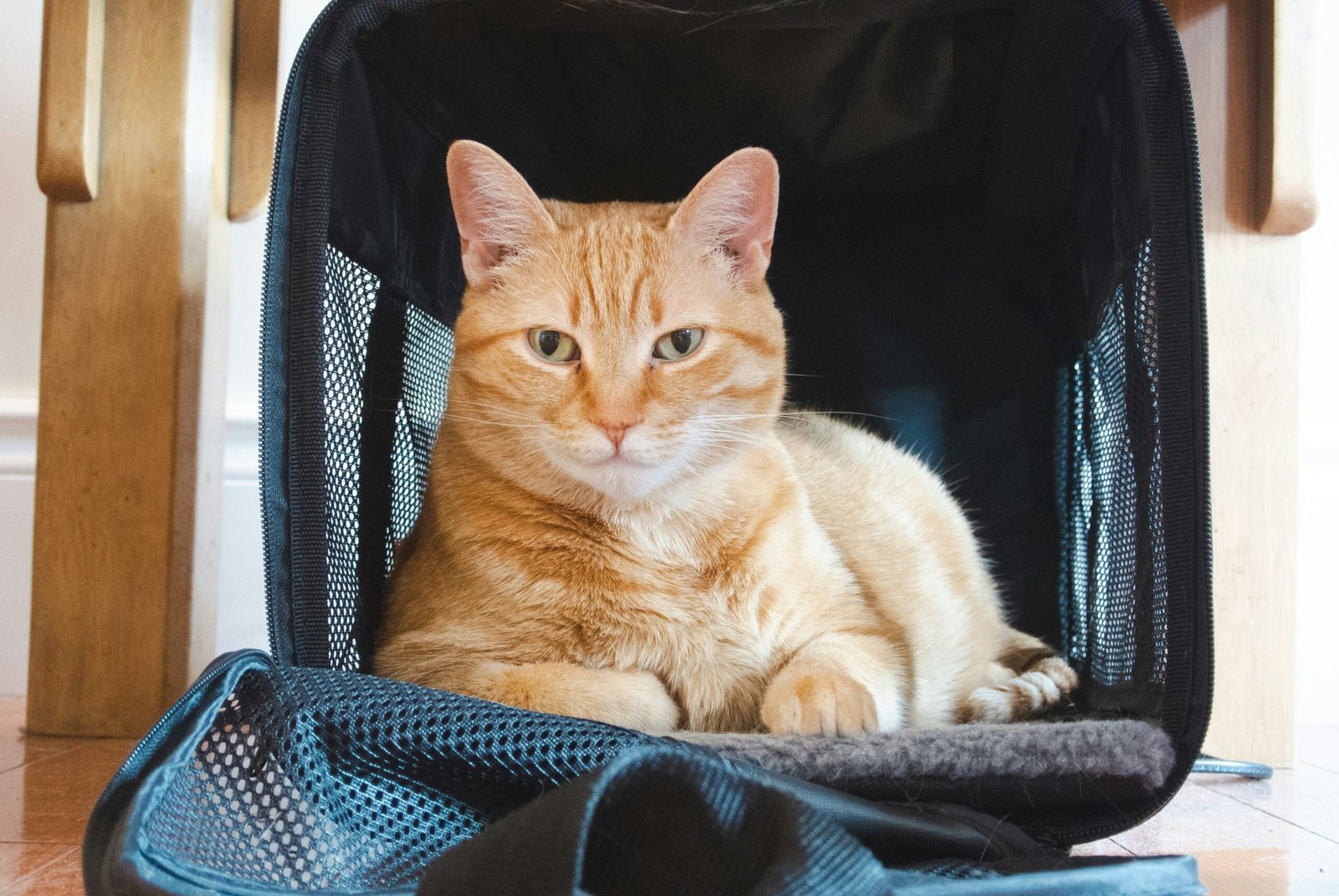
For cats that panic specifically during car travel, the issue may be the carrier design rather than the training approach. Cats that feel exposed tend to do worse in soft-sided mesh carriers. A carrier with limited visibility and solid sides often produces calmer travel behavior. If you want a breakdown of which designs work for which situations, the comparison in soft vs hard cat carrier is worth reading before you invest in a new carrier for training.
How to Use the Carrier Calmly on the Day of Travel
Even a well-trained cat can become anxious on travel days if the handling is rushed or the carrier is set up badly. A few things make a consistent difference.
Get the carrier out at least a day before travel, not the morning of. Your cat should already be comfortable with the carrier in its normal location. Bringing it out suddenly, even for a cat that is generally fine with it, can trigger a mild version of the old association.
Put a piece of your clothing inside. Your scent is calming to most cats, and it costs nothing. If you use Feliway spray, apply it thirty minutes before putting the cat inside so the alcohol carrier has time to evaporate. How to Travel Long Distance With a Cat by Car – DogCat-care
When you put your cat in, do it calmly and without chasing. If your cat does not walk in voluntarily, pick them up and place them inside gently. Do not close the door aggressively or immediately. Give your cat a second to settle.
Cover part of the carrier with a light cloth during transport. Reducing visual stimulation lowers arousal for most cats. Leave ventilation uncovered. In the car, place the carrier on the seat rather than the floor, secured with a seatbelt if possible, so the carrier does not slide.
Keep the car quiet. No loud music. Talk calmly if your cat is vocalizing. Cats often vocalize during travel not because they are in pain but because they are communicating distress. Responding calmly, without reinforcing the behavior with over-reassurance, is the right approach.
If travel anxiety is a consistent issue for your cat regardless of training, it is worth looking at carrier options that are specifically designed for anxious cats. The article on the best cat carrier for anxious cats covers the features that make the most difference for cats that remain sensitive to travel even after training.

FAQ
How do I get my cat into a carrier when they refuse completely?
Start by not using the carrier for actual travel until you have built a positive association through daily exposure. Leave the carrier out permanently, place treats inside, and feed near it. If your cat refuses to go near the carrier at all, begin with the carrier in a different room and work your way closer over days. Forcing the cat in when they are in full refusal mode damages the training process and makes the next attempt harder.
Should I leave the carrier out all the time?
Yes. This is one of the most effective changes you can make. A carrier that lives in a cupboard and only appears on vet days will always carry a negative association. A carrier that is a permanent piece of furniture your cat can choose to enter becomes neutral over time, and neutral is the foundation you need to build positive training on top of.
How do I get my cat in a carrier for an emergency when there is no time to train?
For genuine emergencies, use the top-loading method if your carrier has a top opening. Place the carrier on its end with the door facing up, pick up your cat from behind supporting their body, and lower them in gently. If your cat is aggressive during this, wrap them loosely in a towel first to protect your hands. This is not ideal for training, but it works for emergencies.
Can I use a carrier backpack instead of a traditional carrier?
Some cats tolerate backpack carriers well, particularly if they are curious or social. However, backpack carriers tend to have more movement and less stability than hard-sided carriers, which can increase anxiety in cats that are already nervous. If your cat is anxious about carriers, a stable hard-sided or structured soft-sided carrier is a better starting point for training.
Does Feliway actually work for carrier anxiety?
[likely] Feliway synthetic pheromone spray does reduce baseline anxiety in a meaningful proportion of cats. It is not effective for every cat, and it is not a replacement for desensitization training. Used together, they are more effective than either approach alone. Apply it to the inside of the carrier thirty minutes before use, not immediately before, so the alcohol in the spray has time to evaporate.
How do I get a kitten used to a carrier early?
Start early and keep early experiences positive. Take your kitten on short car trips to places that are not the vet. Feed them inside the carrier occasionally. Handle the carrier in their presence regularly. Kittens that have frequent, low-stakes carrier experiences before their first vet visit develop far fewer carrier issues as adults.
At what age is it too late to train a cat to accept a carrier?
It is never too late, but older cats with long-established negative associations require more patience and more time. The process is the same regardless of age. Progress may be slower with an older cat that has years of reinforced anxiety, but the association can still be changed with consistent, calm, positive exposure over months.
Final Thoughts
Learning how to get your cat used to a carrier is not complicated, but it does require consistency and patience that most owners do not apply until they are already frustrated. The core principle is simple: your cat needs to experience the carrier as a neutral or positive object, not a signal that something unpleasant is coming. That change happens through repetition, not force.
Leave the carrier out permanently. Create positive experiences inside it regularly. Keep early travel experiences short and low-stakes. When vet visits are necessary, use handling techniques that minimize stress rather than adding to it. Over time, this changes the association your cat holds about the carrier, and travel becomes manageable for both of you.
If your cat remains particularly anxious despite consistent training, the carrier design itself may be contributing to the problem. The right carrier reduces visual overwhelm, provides stability, and allows your cat to feel enclosed without feeling trapped. If you have not yet found a carrier that works for your cat’s temperament, the guide to the best cat carrier for anxious cats is the next place to look.


Pingback: Best Cat Carriers for Travel (2026) - DogCat-care
Pingback: How to Travel Long Distance With a Cat by Car - DogCat-care
Pingback: What to Put in a Cat Carrier to Keep Your Cat Calm - DogCat-care