Introduction
What to put in a cat carrier is one of those questions that sounds trivial until you watch your cat panic the moment the carrier door closes. Most owners put something soft inside and leave it at that. It helps a little. But there is a specific reason why some cats settle in a carrier and others do not, and it comes down to scent. Not just any scent. The right one.
A random blanket from the cupboard carries your scent faintly and the smell of fabric softener more prominently. A cushion your cat has slept on for months carries your cat’s own scent, the scent of your home, and the scent of safety. Those are not the same thing, and your cat’s nose knows the difference immediately.
By Dogcat-Care.
Table of Contents
Why What You Put in the Carrier Actually Matters
A carrier is a confined, unfamiliar space that moves, makes noise, and often ends somewhere the cat does not want to be. The cat cannot control any of that. What they can do is process the environment through scent, and scent is the most powerful sensory input a cat has for determining whether a situation is safe or threatening.
When a cat enters a carrier that smells familiar, the threat response is lower from the start. When a cat enters a carrier that smells like plastic, cleaning products, or a vaguely familiar blanket, there is nothing to signal safety and the anxiety response builds faster.
This is not about making the carrier comfortable in a human sense. A cat does not need a luxury interior. They need something that communicates, through scent, that this is a known and safe environment. Everything you put in the carrier should serve that purpose directly or not interfere with it.
The Scent Rule: Why It Has to Be the Right Fabric
The single most effective thing you can put in a cat carrier is a cushion or blanket that your cat already sleeps on regularly. Not a clean one from the linen cupboard. Not one that smells like you but that your cat has never chosen to lie on. The specific item your cat returns to consistently, whether that is a favourite cushion on the sofa, a blanket on their bed, or a soft toy they carry around.
The reason this works better than a general familiar-smelling item is layered. That specific object carries your cat’s own scent, which is the most calming signal possible for a cat in a stressful situation. It also carries the ambient scent of your home in a concentrated form, because your cat has transferred it through repeated contact. And it carries an association with rest and safety, because that is where your cat chooses to sleep.
A lot of owners put a clean blanket with their own scent in the carrier and wonder why it does not settle their cat. Your scent is calming to your cat, but your cat’s own scent is more so. The item that combines both, the cushion your cat has claimed as theirs that also smells like your home, is the most powerful calming object you can provide.
Do not wash it before a trip. The cleaning process removes exactly what makes it effective.
What to Put in a Cat Carrier: The Full List
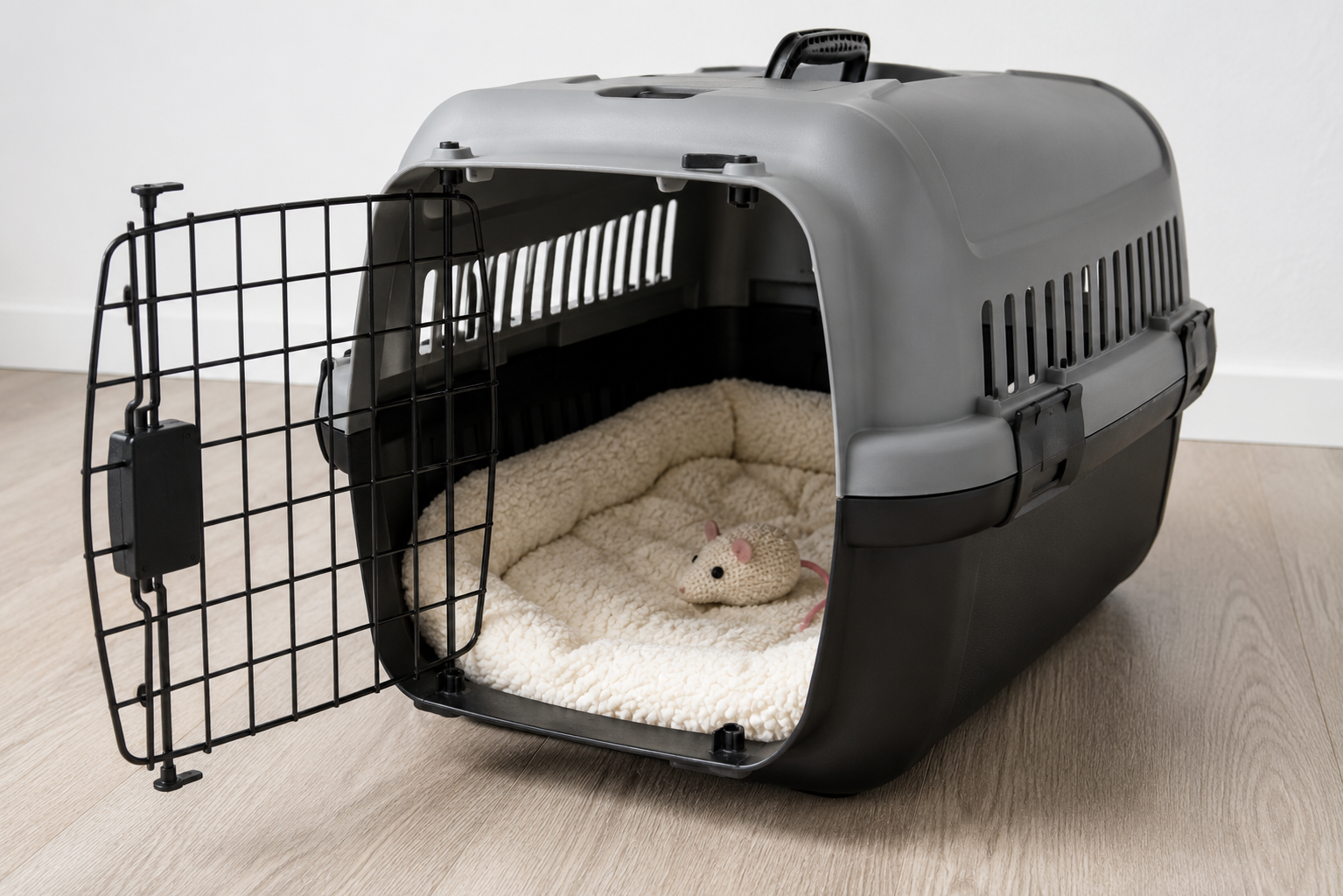
The cat’s own bedding or a favourite cushion
This is the foundation, as covered above. If your cat has one item they return to consistently, that is the first thing that goes in the carrier. It should fit without cramping the space so your cat can still lie down comfortably.
A piece of your clothing
An unwashed t-shirt or a worn sock placed alongside the bedding adds your scent to the carrier environment. Your cat finds your scent reassuring. This is a secondary layer, not a replacement for the cat’s own bedding. Used together, they create a scent environment that signals home.
A favourite toy
Not every toy. One specific toy your cat engages with regularly. A soft toy they carry around or a small toy they return to during play works better than a toy they rarely use. The purpose here is partly scent and partly familiarity. An object your cat knows and has positive associations with contributes to the overall sense that the carrier is a known environment.
Do not use battery-operated or noisy toys. The goal is calm, not stimulation.
Feliway spray, applied to the fabric
Feliway is a synthetic version of the feline facial pheromone that cats deposit when they rub their face against surfaces they consider safe. Applied to the bedding or a separate cloth inside the carrier, it reduces baseline anxiety for most cats. It does not work for every cat, but for a meaningful proportion it lowers the starting stress level enough to make a difference.
Apply it at least thirty minutes before putting your cat in the carrier, not immediately before. The alcohol in the spray needs time to evaporate. If your cat can smell the alcohol, it can actually increase rather than decrease agitation.
[likely] Feliway works better as a supporting measure alongside familiar scent objects than as a standalone solution. Owners who use it without also using familiar bedding get less consistent results.
A light cover over part of the carrier
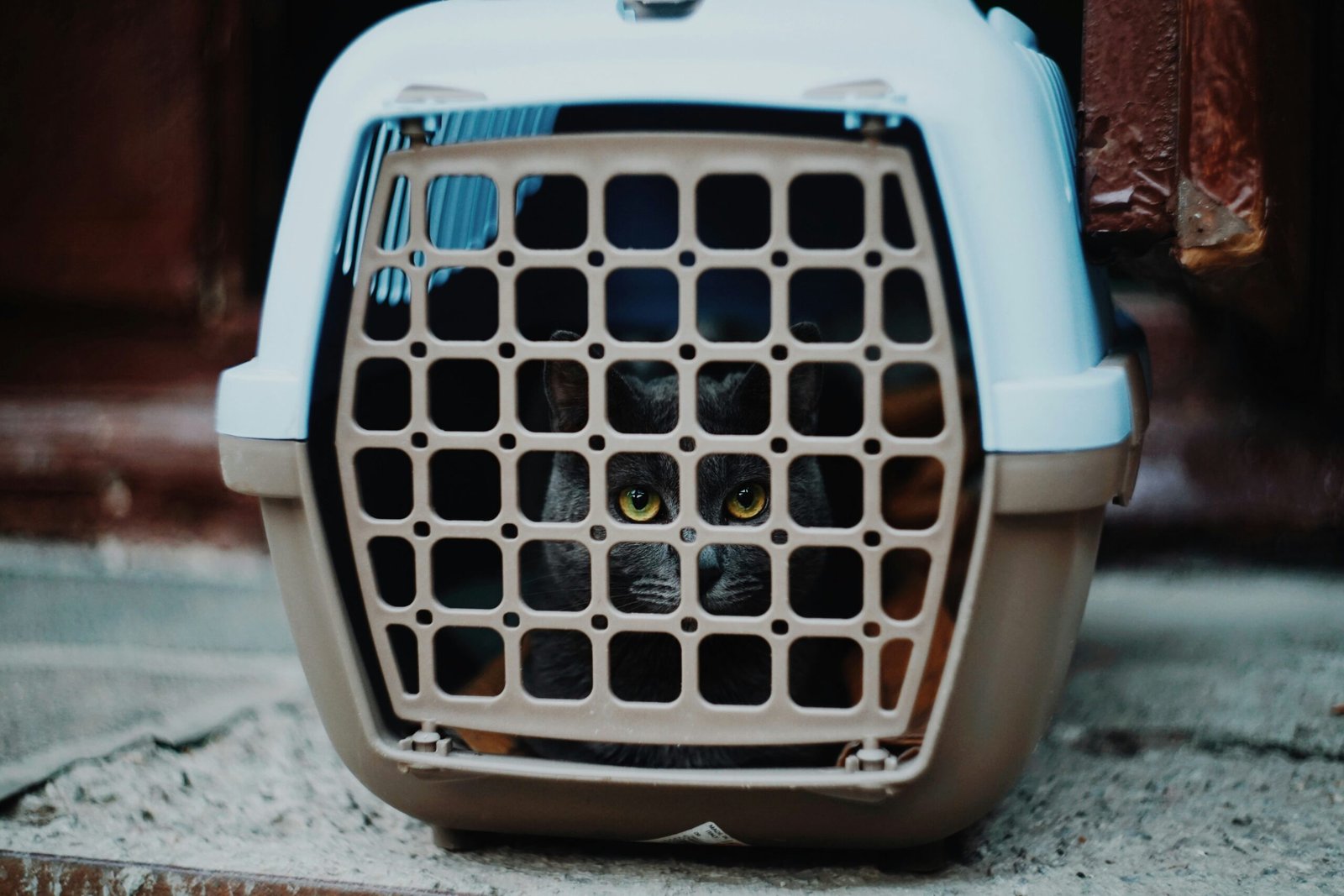
This is not strictly something you put inside the carrier, but it belongs in this section because it directly affects how settled your cat is during travel. Draping a light cloth or towel over the top and sides of the carrier, leaving the front or a ventilation panel uncovered, reduces visual stimulation during the journey. Less visual input means less arousal. Most cats travel more calmly in a partially covered carrier than in a fully visible one.
Use a cloth that also smells familiar if possible. The cover adds both a visual and a scent layer.
What NOT to Put in a Cat Carrier
Food immediately before travel
Some owners put food in the carrier to lure the cat in or to keep them occupied during travel. For short trips, this is mostly harmless. For trips over an hour, feeding inside the carrier increases the risk of motion sickness and vomiting. Feed your cat a small meal two to three hours before travel, not inside the carrier at departure time.
Strong-smelling products
Essential oils, heavily scented sprays, or perfumed fabric softener sheets are not calming for cats regardless of how pleasant they smell to humans. A cat’s sense of smell is far more sensitive than ours, and what registers as a subtle scent to you can be overwhelming to your cat. Keep the carrier environment as scent-neutral as possible apart from the specific familiar items you are using intentionally.
Catnip
Catnip is stimulating for most cats, not calming. It produces a short burst of excited behaviour followed by a period of disinterest. Putting catnip in a carrier before travel tends to produce an overstimulated cat in a confined space, which is the opposite of what you want. Save catnip for play outside the carrier.
Water bowls for short trips
A water bowl in a moving carrier tips over, soaks the bedding, and leaves your cat sitting in wet fabric for the rest of the journey. For short trips, skip the water bowl inside the carrier and offer water at stops instead. For very long trips, a small clip-on water bottle designed for travel use works better than an open bowl.
Too much
Overcrowding the carrier with multiple items removes the space your cat needs to lie down and turn around comfortably. A cramped cat is a more stressed cat. One piece of bedding, one small toy, and a treated cloth for the Feliway application is enough. Keep it simple.
How to Set Up the Carrier the Day Before Travel
Timing matters as much as content. Setting up the carrier the morning of a vet visit and expecting your cat to settle into a freshly arranged space within minutes does not give the scent environment time to establish itself.
Get the carrier out the day before travel if possible, or at minimum several hours before. Place the familiar bedding inside and leave the door open. Let your cat enter and investigate on their own terms. Many cats will go in voluntarily and rest in the carrier if it is set up correctly and left available. A cat that has already spent time resting in the carrier before travel begins is in a fundamentally different state than one that is placed in it cold.
Apply the Feliway spray to the bedding or a separate cloth thirty minutes before you need to close the door. Spray once, let it dry, and do not reapply immediately before putting your cat in.
Place your piece of clothing inside at the same time as the Feliway application, not earlier, so the scent is fresh when your cat enters.
When you do put your cat in the carrier, do it calmly and without rushing. If your cat walks in voluntarily, allow that. If you need to place them inside, do it with slow, deliberate movements. Close the door without force. Your own calm during this moment has a direct effect on how your cat responds.
If you are still working on getting your cat comfortable with the carrier itself, the process for that is covered in detail in the guide on how to get your cat used to a carrier. The setup described in this article works best once your cat already has a neutral or positive association with the carrier as an object.
When the Carrier Setup Is Not Enough
For most cats, the right carrier contents combined with consistent carrier training will produce a manageable travel experience. For some cats, particularly those with a long history of severe travel anxiety, the setup helps but does not fully resolve the problem.
If your cat shows extreme stress responses regardless of preparation, the carrier design itself may be contributing. A carrier with too much visibility, insufficient structure, or the wrong size for your cat creates baseline discomfort that no amount of familiar bedding can fully compensate for. A carrier that is too large allows your cat to slide around during movement, which increases anxiety. One that is too small prevents your cat from lying down comfortably, which prevents them from settling.
If you are not confident that your current carrier is right for your cat’s size and temperament, the guide to the best cat carrier for anxious cats breaks down which features matter most for cats that remain sensitive to travel despite good preparation.
For cats with severe anxiety that does not respond to environmental management, a conversation with your vet about short-term anti-anxiety support before travel is the appropriate next step. That is not a failure of preparation. Some cats need pharmacological support during travel, and that is a legitimate option.
FAQ
Does it matter what type of blanket I put in the carrier?
The type of fabric matters less than the scent history of the item. A cheap fleece blanket your cat has slept on for six months is more effective than an expensive bed that your cat has never used. Choose the item based on what your cat has claimed as theirs, not on what seems most comfortable from a human perspective.
How often should I wash the carrier bedding?
Wash it only when necessary, and never immediately before travel. The scent your cat has deposited over time is exactly what makes the item effective. If the bedding needs washing after a trip, let your cat spend time with it again before the next journey to rebuild the scent layer.
Can I use lavender spray to calm my cat in the carrier?
No. Lavender and other essential oils are not safe for cats and are not effective calming agents for feline anxiety. Some essential oils are toxic to cats when inhaled in concentrated amounts. Stick to Feliway or other products specifically formulated for cats.
My cat ignores the carrier even with familiar bedding inside. What should I do?
Ignoring the carrier is not the same as fearing it. A cat that walks past the carrier without reacting is making progress. The goal of the bedding and scent setup is to lower anxiety, not necessarily to draw the cat in. If your cat is not entering voluntarily, continue with the carrier training process while keeping the contents as described. The two approaches work together.
Should I put a litter box in the carrier?
For short trips under two hours, no. A litter box takes up space and most cats will not use it during a short journey anyway. For trips over four hours, a small travel litter box placed at one end of a larger carrier is worth including, provided the carrier is large enough that your cat can rest away from it.
Does Feliway work for all cats?
No. Studies suggest Feliway reduces stress behaviours in a significant proportion of cats, but it does not work for every individual. If your cat does not respond to Feliway, that is not unusual. Focus on familiar scent objects and carrier training as the primary approach, and treat Feliway as a supporting measure rather than a guaranteed solution.
Final Thoughts
What to put in a cat carrier is a more specific question than it first appears. The answer is not just something soft and familiar. It is the specific item your cat has already claimed, the cushion they return to, the blanket they sleep on most, the toy they carry around. That item carries your cat’s own scent in a concentrated form, and that scent is the most effective calming signal you can provide in a confined travel environment.
Build on that foundation with a piece of your clothing, a single familiar toy, and Feliway spray applied thirty minutes before travel. Set the carrier up the day before, not the morning of. Let your cat enter on their own terms if they will.
If the setup is right but your cat still struggles consistently, the carrier itself may be the limiting factor. A carrier that matches your cat’s size and reduces visual exposure during travel makes the contents work harder. The options that make the most difference for anxious cats are covered in the guide to the best cat carrier for anxious cats.


Pingback: How to Get Your Cat Used to a Carrier - DogCat-care