Introduction
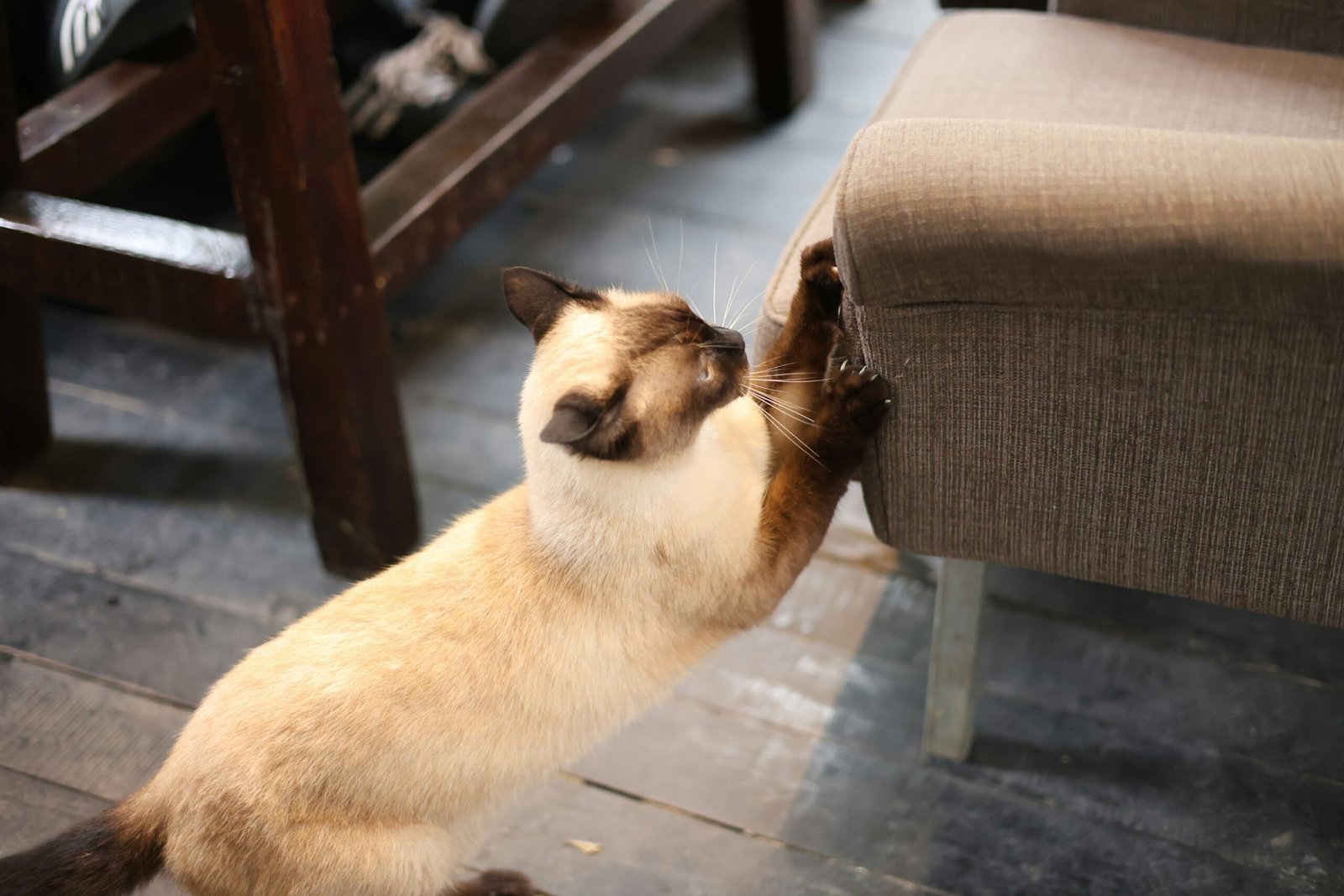
Why does my cat scratch furniture is one of the most common frustrations cat owners deal with. You buy a scratching post. You put it right next to the sofa. Your cat walks past it and scratches the sofa anyway.
The instinct is to assume the cat is being difficult or ignoring you on purpose. They are not. Scratching is a fundamental behaviour that cats cannot simply choose not to do. The question is never how to stop them scratching altogether. It is how to understand why they are scratching where they are scratching, and then give them something better.
Once you understand what is actually driving the behaviour, the solutions become much clearer. And there are solutions. A scratching post alone is often not enough, but that does not mean nothing works.
By Dogcat-Care.
This post contains affiliate links. If you buy through these links, I may earn a small commission at no extra cost to you.
Table of Contents
Why Cats Scratch: The Biology Behind the Behaviour
Scratching is not a bad habit cats develop. It is hardwired into their biology and serves several essential functions simultaneously.
The most obvious function is claw maintenance. When a cat scratches a surface, they remove the outer sheath of their claws, revealing the sharper layer underneath. Without regular scratching, claws become overgrown and uncomfortable. Cats do not scratch to sharpen claws in the way people imagine. They scratch to shed the worn outer layer and expose what is already there.
Scratching is also a marking behaviour. Cats have scent glands between their paw pads that release pheromones when they scratch. Every scratch leaves both a visual mark and a chemical signature that communicates territorial information to other cats and provides the scratching cat with the reassuring smell of their own scent in their environment.
Stretching is a third function. When a cat reaches up and drags their claws down a surface, they are doing a full upper body stretch that keeps muscles and tendons in good condition. This is why cats so often scratch immediately after waking up from a nap and why they gravitate toward tall, stable surfaces that allow a full extension.
Finally, scratching is an emotional outlet. Cats scratch when they are excited, when they are stressed, when they are frustrated, and when they are happy. It is a physical release for emotional states in both directions.
Why Your Cat Chooses the Furniture Specifically
Understanding why cats scratch in general is step one. Understanding why they choose your sofa over the scratching post you bought them is step two, and this is where most owners get stuck.
The furniture is in the right location
Cats scratch where they spend time. The sofa is where the family gathers, where the cat sleeps, and where the strongest concentration of familiar smells is. Scratching in this location deposits the cat’s scent in a place that matters to them socially. A scratching post in the corner of a spare room does not serve this function at all. Location is often the primary reason a post goes unused.
The furniture has the right texture
Cats have strong preferences for scratching surfaces. Most household furniture is upholstered in fabrics that feel satisfying to scratch, particularly woven textures that allow claws to grip and pull. A scratching post covered in carpet or a material the cat finds less satisfying will lose every time there is a sofa nearby. Research has shown that sisal rope and corrugated cardboard are the surfaces most cats prefer, but individual preferences vary significantly.
The furniture is the right height and stability
Scratching posts that wobble, tip, or are too short for a full stretch get ignored. A cat needs to be able to lean into the scratch with their full body weight without the surface moving. Most cheap scratching posts fail this test. The sofa never does.
It is where their scent already is
Once a cat has established a scratching spot, the scent already deposited there draws them back. The scratch marks and pheromones left behind create a self-reinforcing habit. This is why moving a scratching post next to an established furniture spot works better than putting the post somewhere new and hoping the cat finds it.
The Role of Stress and Anxiety in Furniture Scratching
This is something many owners overlook entirely. The amount a cat scratches, and where they choose to scratch, is directly connected to how secure and settled they feel in their environment.
A cat that is stressed, anxious, or feeling territorially insecure scratches more. The behaviour provides both a physical outlet for emotional tension and a way of reassuring themselves through the scent they deposit. A cat that has started scratching furniture more intensely or in new locations is often communicating that something in their environment has changed or is causing them distress.
Common triggers include a new pet or person in the household, changes in routine, building work or unusual noises outside, moving furniture, or a change in the owner’s schedule. Cats that scratch frequently around windows and doors are often responding to the presence of outdoor cats they can see or smell.
Addressing the underlying anxiety alongside providing better scratching options produces significantly better results than either approach alone. A cat that feels more secure in their environment simply scratches less in inappropriate places.
Cat Training & Behavior Explained: Proven Methods That Actually Work – DogCat-care
Why One Scratching Post Is Often Not Enough
Most owners buy one scratching post, put it somewhere convenient, and are surprised when the cat ignores it. The problem is usually one or more of the following.
Wrong location. The post is where you want it, not where the cat wants to scratch. Cats scratch where they spend time, near sleeping spots, near feeding areas, and near the main social areas of the home. A single post in an unused corner of the house is unlikely to compete with the furniture.
Wrong surface. If your cat is scratching woven upholstery, a carpet-covered post is not a meaningful alternative. The surface needs to approximate what the cat is currently going to. Sisal rope, corrugated cardboard, and wood are the surfaces most cats find satisfying.
Wrong height or stability. If the post wobbles when the cat scratches it, they will not use it. The post needs to be tall enough for a full stretch and heavy or stable enough that it does not move under pressure.
Only one option. Cats benefit from multiple scratching surfaces in different locations. Providing two or three options in different areas of the home, including at least one horizontal surface for cats that prefer to scratch carpets or flat surfaces, dramatically increases the likelihood that the cat will use them consistently.
Best Cat Trees for Large Cats: Safe, Sturdy Towers for Big Breeds – DogCat-care
How to Redirect Your Cat From Furniture to Appropriate Surfaces
This is the practical section. The approach that works is not punishment but redirection, making the furniture less appealing and the appropriate alternatives more appealing simultaneously.
Place scratching options next to the furniture being scratched
This is the single most effective change most owners can make. Do not put the post where it is convenient for you. Put it directly next to or in front of the furniture the cat has been scratching. Once the cat is consistently using the post, you can gradually move it a few centimetres at a time toward a more convenient location.
Match the surface to your cat’s preference
If your cat scratches woven upholstery, try a sisal rope post. If they scratch carpet, try a corrugated cardboard scratcher. If they scratch vertically, provide a tall vertical post. If they scratch horizontally, provide a flat scratcher on the floor. Observe what your cat is doing and replicate it in an acceptable form.
Make the furniture less appealing temporarily
Double-sided tape, plastic furniture protectors, or aluminium foil applied to the areas being scratched creates a texture cats find unpleasant. This is not a permanent solution but it reduces the immediate reinforcement of the furniture habit while the cat learns to use their new scratching options.
Make the appropriate surfaces more appealing
Rub catnip on new scratching posts. Hang toys near them. Use Feliscratch, a pheromone product that mimics the scent cats leave when scratching, to signal to your cat that this is an appropriate scratching location. Reward your cat with praise or treats when you see them using the post.
Never punish scratching
Shouting, spraying water, or physically moving your cat away from scratching never works as a long-term solution. It creates anxiety, which increases the urge to scratch, and damages the relationship between you and your cat without addressing any of the underlying causes. The behaviour will continue or worsen.
Protecting Your Furniture While You Retrain
Retraining takes time. In the meantime, there are practical ways to protect furniture without distressing your cat.
Furniture scratch guards are transparent plastic panels that attach to corners and surfaces being scratched. They make the surface unappealing without being visible from across the room and without requiring you to cover your furniture in tape or foil permanently.
Regular nail trimming reduces the damage scratching causes even when you have not yet fully redirected the behaviour. Most cats tolerate nail trims well when introduced gradually and with positive reinforcement. Trimming blunts the tips of the claws so that scratching leaves surface marks rather than deep damage.
Nail caps, small plastic covers that glue over the claws, are another option for cats whose scratching is causing significant damage. They are temporary, need replacing every four to six weeks, and most cats tolerate them after an initial adjustment period.
Best Interactive Cat Toys for Indoor Cats – DogCat-care
When Scratching Increases Suddenly
If a cat that previously had manageable scratching behaviour suddenly starts scratching more intensely or in new locations, something in their environment has changed.
Think through recent changes. New people or animals in the home. Changes to routine. Outdoor cats visible through windows. Rearranged furniture. A change in the owner’s schedule or stress levels. Any of these can trigger increased scratching as the cat tries to reassert their scent and feel more secure in an environment that feels less predictable.
Addressing the environmental trigger directly, alongside providing more appropriate scratching options, produces better results than trying to manage the scratching behaviour in isolation.
Best Cat Deterrent Spray for Furniture: Protect Your Couch & Chairs – DogCat-care
FAQ
Why does my cat scratch the sofa right in front of me?
This is often a combination of location, because the sofa is where the family gathers and where the cat’s scent is already established, and attention-seeking. Some cats learn that scratching the furniture gets a reaction, even a negative one. Ignoring the behaviour on the furniture while consistently rewarding scratching on the post works better than responding with frustration.
My cat has a scratching post but still scratches the furniture. Why?
Usually the post is in the wrong location, has the wrong surface, or is not stable enough. Try moving the post directly next to the furniture being scratched. If the surface is carpet or fabric, try a sisal rope post instead. Make sure the post does not wobble when your cat uses it.
Can I train an adult cat to use a scratching post?
Yes. Adult cats take longer than kittens but they can absolutely learn to use appropriate scratching surfaces. Consistent placement next to preferred scratching spots, the right surface material, and positive reinforcement when they use the post all contribute to successful redirection at any age.
Is it ever worth getting a cat tree instead of just a scratching post?
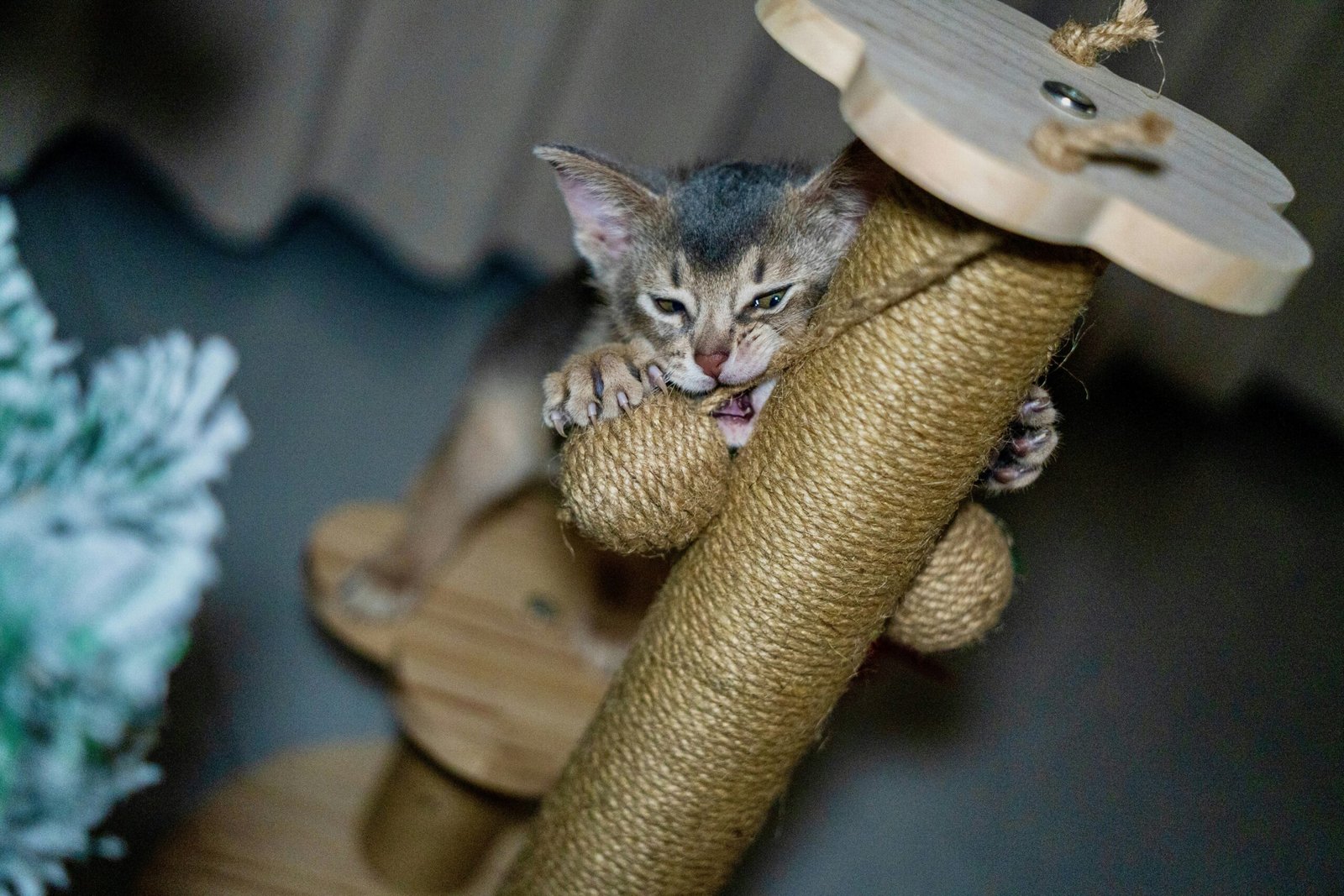
Yes, particularly for cats that scratch vertically and at height. A tall, stable cat tree with sisal-covered posts gives the cat scratching options, climbing options, and elevated resting spots simultaneously. Cats that use cat trees consistently tend to scratch furniture less because more of their natural behaviours are being met.
Does declawing solve the problem?
No, and it causes significant harm. Declawing is the amputation of the last bone of each toe and causes lasting pain, behavioural problems, and reduced quality of life. It is banned in many countries and strongly opposed by veterinary organisations worldwide. The scratching problem can be managed with behavioural approaches. Declawing is never an appropriate solution.
My cat scratches more when I am stressed. Is that connected?
Yes, this is well documented. Cats are highly attuned to their owner’s emotional state. An owner who is stressed, anxious, or experiencing significant life changes creates an environment the cat perceives as less stable. This increases their own anxiety and their urge to scratch as a territorial reassurance behaviour. Managing your own stress alongside providing appropriate scratching outlets helps.
Final Thoughts
Why does my cat scratch furniture almost always has a practical answer. The wrong location for the post. The wrong surface. Not enough options. Or an underlying anxiety that is increasing the behaviour regardless of what scratching options are available.
A single scratching post in the wrong location is rarely enough. But that does not mean the problem cannot be solved. Understanding what is driving the behaviour and addressing it directly, better placement, better surfaces, more options, and a more settled cat, works consistently when applied with patience.
Your cat is not trying to frustrate you. They are doing something their biology requires them to do. Your job is to give them a better option than your sofa.
For more on cat behaviour and what drives it, read our guide: Why Do Cats Hate Carriers?
Sources
- https://www.aspca.org/pet-care/cat-care/common-cat-behavior-issues/destructive-scratching
- https://www.vet.cornell.edu/departments-centers-and-institutes/cornell-feline-health-center/health-information/feline-health-topics/feline-behavior-problems-destructive-behavior
- https://pmc.ncbi.nlm.nih.gov/articles/PMC9559527/
- https://vcahospitals.com/know-your-pet/scratching-behavior-in-cats
- https://www.cats.org.uk/help-and-advice/cat-behaviour/scratching


Pingback: Best Cat Trees for Large Cats: Safe, Sturdy Towers for Big Breeds - DogCat-care
Pingback: Why Do Cats Hate Carriers? The Real Reason and How to Fix It
Pingback: Best Cat Deterrent Spray for Furniture: Protect Your Couch & Chairs - DogCat-care