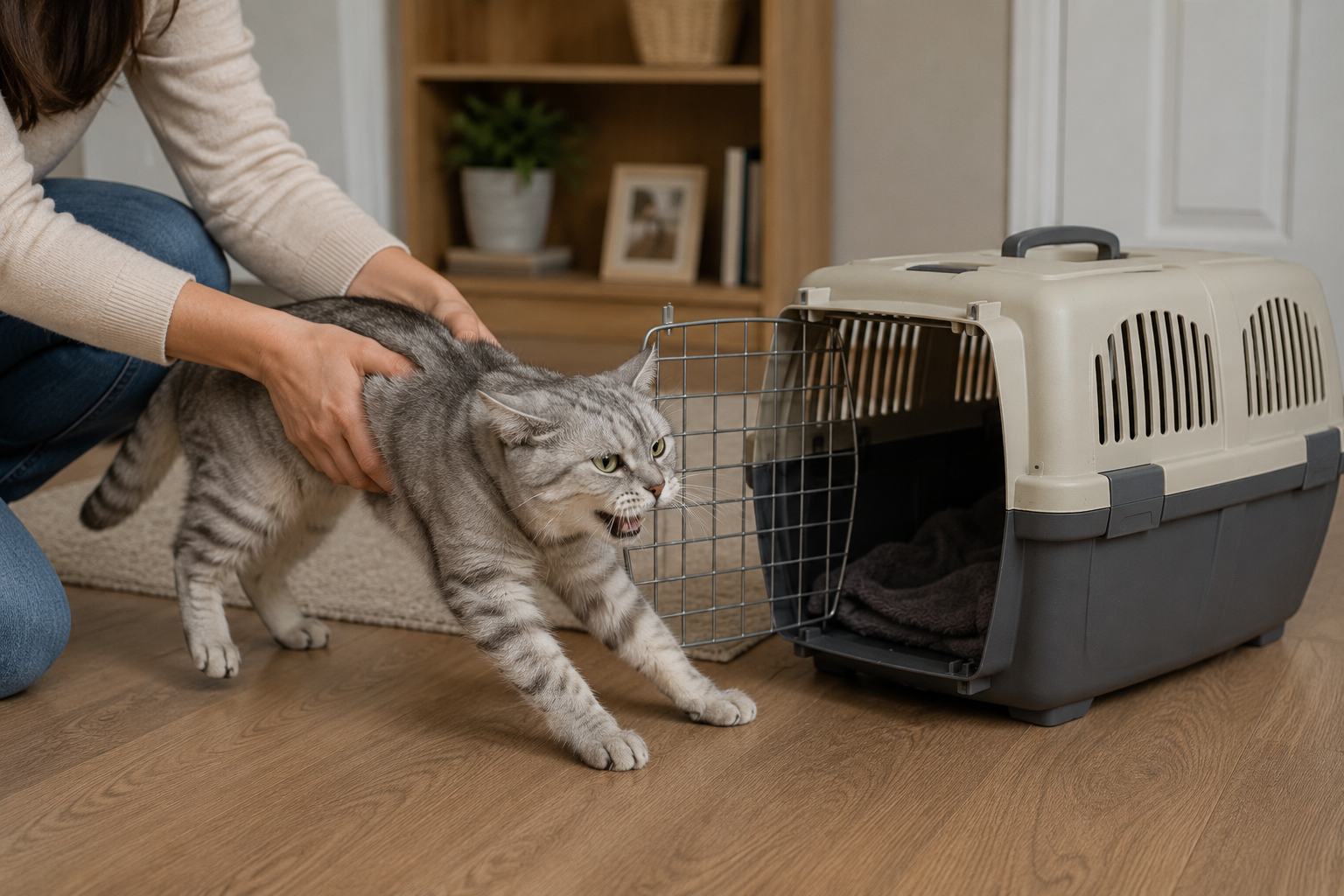
Why do cats hate carriers is one of those questions that seems straightforward until you actually think about it. Because cats do not hate small spaces. They sleep in boxes, squeeze into drawers, and curl up in the tightest corners they can find. The carrier itself is not the problem.
What cats hate is what the carrier predicts. And the fact that they did not choose to go in.
Every time your cat has been in a carrier, something stressful has happened afterwards. The vet. The groomer. A car ride to somewhere unfamiliar. Their brain has made that connection and stored it. Now the carrier does not just mean a small enclosed space. It means something unpleasant is coming and there is nothing they can do about it.
Understanding this changes how you approach the problem. The carrier is not the enemy. The association is.
By Dogcat-Care.
This post contains affiliate links. If you buy through these links, I may earn a small commission at no extra cost to you. As an Amazon Associate, I earn from qualifying purchases.
Table of Contents
Why Cats React So Strongly to Carriers
Cats are both predator and prey animals. That dual nature means they are hardwired to need control over their environment. They choose when to enter spaces, when to leave, and what to engage with. A carrier removes all of that choice instantly.
When you put a cat in a carrier, you are not just putting them in a small space. You are removing their ability to leave, eliminating their escape routes, and taking them somewhere they had no say in going. For an animal whose sense of safety depends heavily on control and predictability, that is genuinely distressing.
Add to that the fact that the carrier usually only appears when something stressful is about to happen, and you have an object that has become a reliable predictor of unpleasant experiences. Cats remember this. Their associative memory is strong and long-lasting. A cat that had a stressful vet visit two years ago still connects the carrier to that experience.
The smell matters too. Carriers often smell like old stress, car exhaust, and clinic smells from previous trips. Since cats navigate heavily by scent, climbing into something that smells like fear and discomfort is an immediate red flag.
Signs Your Cat Hates Their Carrier
Some are obvious. Some less so.
Obvious signs:
- Running away or hiding when the carrier appears
- Hissing, scratching, or biting when you try to put them in
- Vocalizing loudly inside the carrier
- Trying to escape continuously during travel
- Eliminating in the carrier from stress
Subtler signs:
- Becoming tense or watchful when the carrier appears even without trying to escape
- Refusing food or treats near the carrier
- Unusual stillness or freezing, which indicates fear rather than calm
- Heavy panting or drooling during travel
- Being unusually clingy or avoidant after carrier use
Why Does My Cat Scratch Furniture? The Real Reasons and What to Do
The Two Things That Actually Fix Carrier Anxiety
Most advice focuses on tricks to get a cat into a carrier quickly. That solves the immediate problem but does nothing for the underlying anxiety. The cat still hates the carrier. You have just temporarily outsmarted them.
The real fix addresses the association, not the moment of entry. It takes longer but it actually works.
1. Make the carrier part of normal daily life
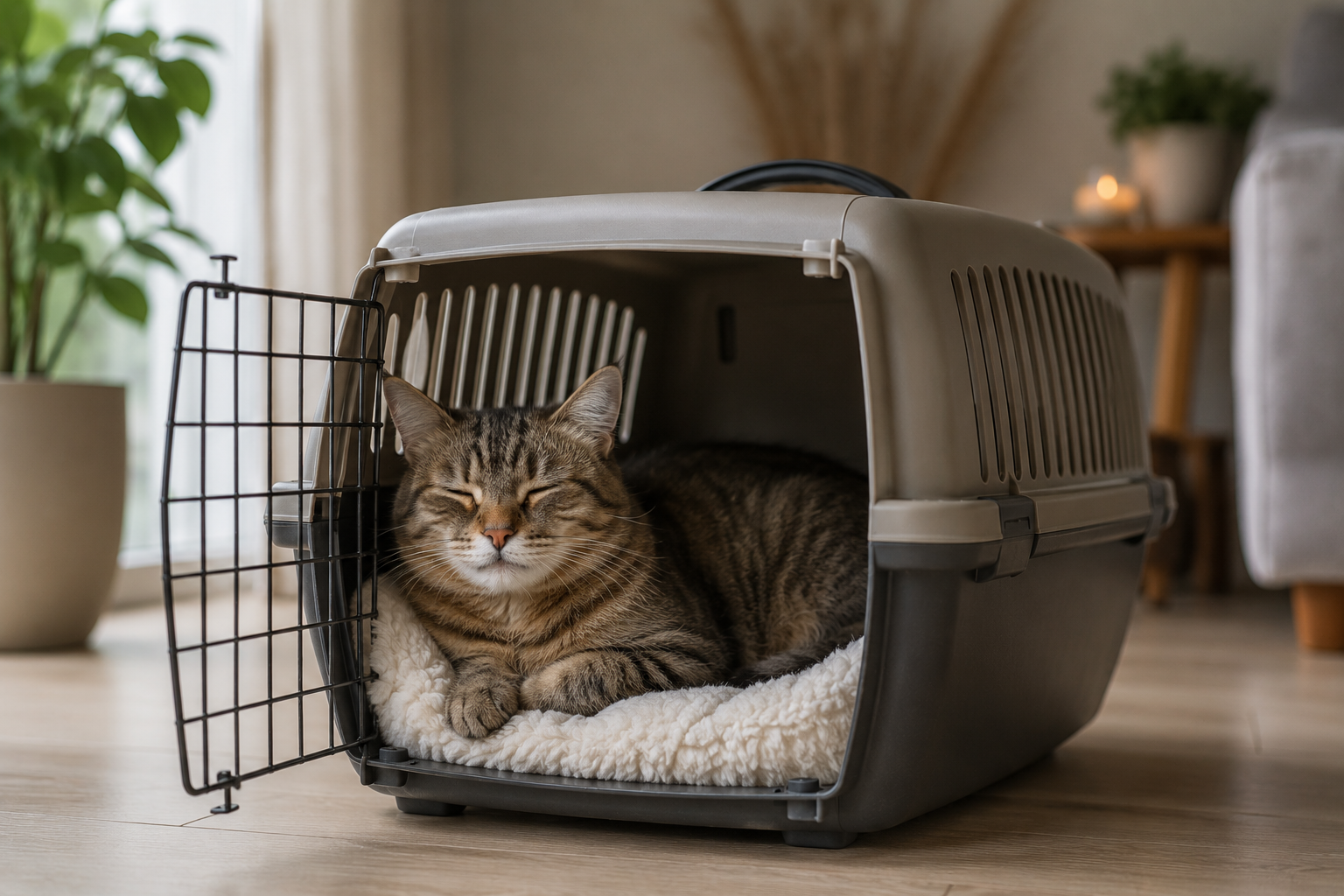
The single most effective change most cat owners can make is leaving the carrier out permanently. Not just a week before a vet visit. Always.
When the carrier is a permanent fixture in the home, it stops predicting vet visits and starts being furniture. Cats investigate it on their own terms, sleep in it occasionally, and stop treating its appearance as a warning signal.
Place it somewhere your cat already spends time. Add familiar bedding, a worn item of clothing with your scent, or their favorite blanket. Do not force them in. Let them discover it themselves.
This one change alone resolves mild carrier anxiety in many cats within a few weeks.
2. Build positive associations deliberately
Once the carrier is a normal part of the environment, start building positive connections with it.
Feed treats near the carrier. Then just inside the entrance. Then further back. Never close the door during this phase. The goal is for your cat to choose to go in, not to be lured in and trapped.
Over time, practice closing the door briefly, opening it, and letting them out immediately. Then a little longer. Then carry the carrier a few steps. Then to the car and back without going anywhere. Each step should be small enough that your cat remains calm throughout.
This process takes weeks for some cats and months for others. The pace is set entirely by your cat’s comfort level, not by your timeline.
Want to know how to choose the right carrier for your cat? Read our guide: Best Cat Backpack Carriers
What Your Cat Actually Needs in a Carrier
This is where most owners get it wrong. They buy the carrier that looks nice or is easiest to handle, not the one their cat will actually be comfortable in.
Familiarity over everything
The most important thing inside a carrier is something that smells familiar and safe. Your cat’s own blanket, a piece of your worn clothing, a toy they sleep with. Familiar scent communicates safety to a cat in a way nothing else can.
Consider your cat’s preference: visibility or hiding
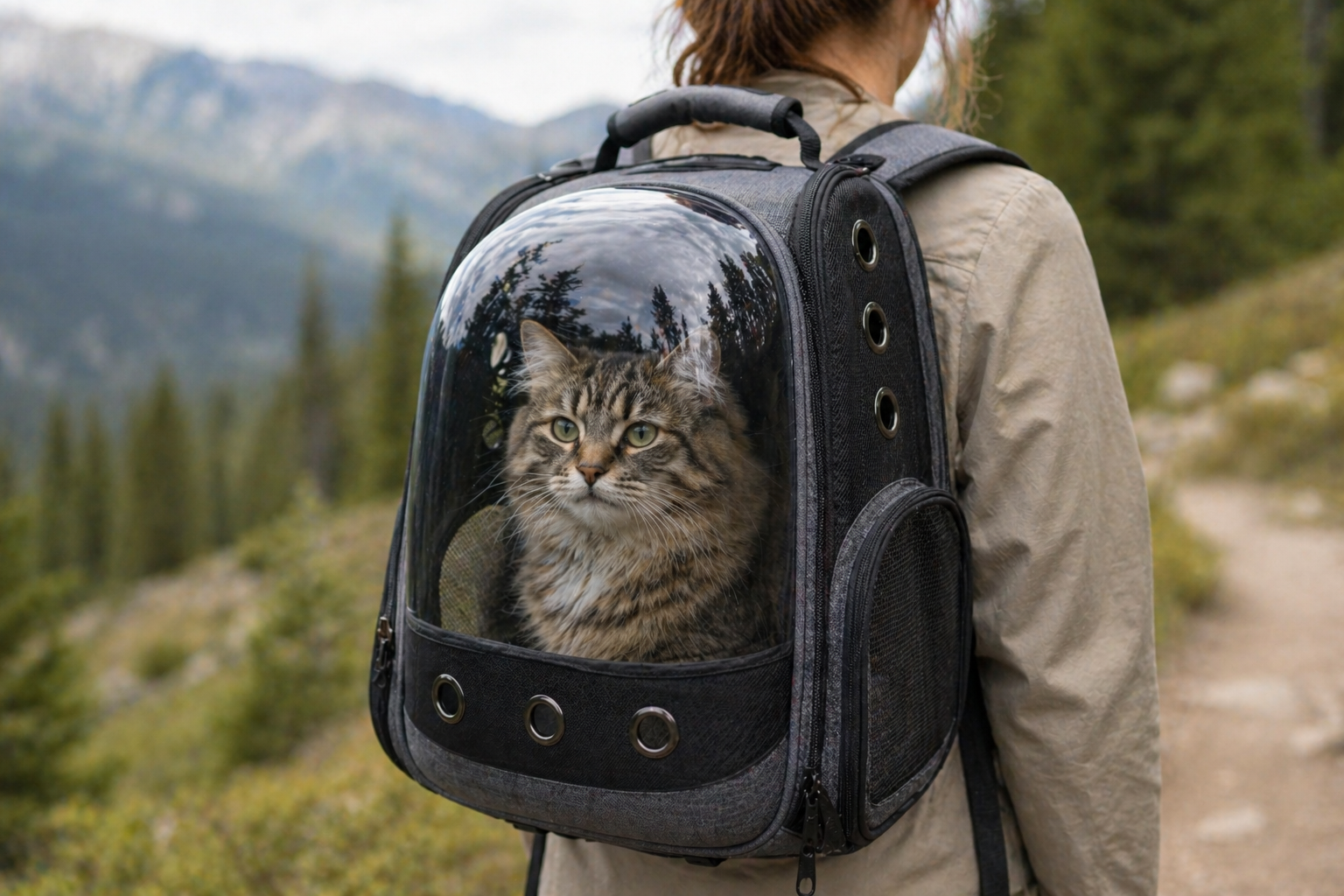
Cats differ significantly here. Some cats are calmer when they can see out and observe their surroundings. Others are calmer when they feel hidden and enclosed. Pay attention to how your cat naturally behaves when stressed. A cat that hides under the bed when anxious will likely prefer a more enclosed carrier with limited visibility. A cat that watches from elevated positions will often do better with more mesh or open viewing.
There is no universal right answer. Knowing your individual cat matters more than any general advice.
Size appropriate but not oversized
A carrier that is too large gives your cat no sense of containment, which paradoxically increases anxiety for most cats. The carrier should be large enough for your cat to stand, turn around, and lie down comfortably, but not so large that they slide around during movement.
Top loading option
For cats that resist entering through a front door, a top-loading carrier or one that comes apart in the middle removes the need to push them in horizontally. Many cats that resist front-entry carriers accept top loading much more readily.
Practical Tips for the Day of Travel
Even with the best preparation, some cats remain difficult to get into carriers. These approaches help on the day.
Stay calm
Your cat reads your stress. If you approach the carrier with tension because you are anticipating a fight, your cat picks that up and becomes more alert and defensive before you have done anything. Calm, matter-of-fact energy makes a real difference.
Do not chase
Chasing a cat to get them into a carrier triggers their flight response and makes the whole experience more traumatic. If your cat is hiding, wait for them to emerge rather than pursuing them.
Use a familiar scent spray
Feliway spray applied to the carrier bedding 15 to 30 minutes before travel releases synthetic calming pheromones. It does not sedate but it takes the edge off for many cats.
Cover the carrier during travel
Most cats are calmer in the car when the carrier is covered with a blanket. Less visual stimulation means less to process. Make sure airflow is maintained.
Short practice trips
If your cat only goes in a car to go to the vet, the car itself becomes part of the negative association. Short trips that go nowhere stressful, just around the block and back home, help break that connection over time.
For more on helping anxious cats during travel, read: How to Travel Without a Stressed Cat
FAQ
Why does my cat seem fine at home but panic in the carrier?
The carrier triggers a specific stress response based on past associations. Your cat is not anxious in general, they have learned that the carrier predicts something stressful. Their calm at home is genuine. Their panic in the carrier is also genuine. Both can be true at the same time.
My cat used to be fine with the carrier. Why do they suddenly hate it?
Usually a single very stressful experience is enough to create a strong negative association that overrides previous neutral ones. A particularly bad vet visit, a long journey, or a frightening experience during travel can reset a cat’s relationship with the carrier entirely.
Should I put food in the carrier to get my cat in?
During the desensitization process yes, as part of building positive associations. As a trick to lure them in just before a stressful trip, it can work short term but does not address the underlying problem and may make your cat distrustful of food near the carrier over time.
How long does it take to fix carrier anxiety?
Mild anxiety with the leave-it-out approach often improves within a few weeks. Established anxiety with a history of stressful experiences can take several months of consistent work. There is no shortcut that actually fixes the underlying association.
Is sedation an option for very anxious cats?
For cats with severe carrier anxiety that is causing genuine distress and cannot be managed with behavioral approaches, a vet can prescribe mild sedation for travel. This is a legitimate option for cats that need it, not a failure of training.
My cat is fine in the carrier but hates the car. Is that different?
Yes. Carrier anxiety and car anxiety are related but separate. A cat comfortable in the carrier may still find the movement, noise, and vibration of the car distressing. The short practice drive approach described above helps specifically with car anxiety.
Final Thoughts
Why do cats hate carriers comes down to two things. They did not choose to go in. And the carrier has always predicted something unpleasant.
Both of these are fixable with the right approach. Leave the carrier out permanently so it stops being a warning signal. Build positive associations gradually so your cat starts to see it as a safe, familiar space. Make sure what is inside matches what your individual cat finds comforting, familiar bedding, the right amount of visibility, the right size.
It takes time. But a cat that is genuinely comfortable with their carrier makes every trip significantly less stressful for everyone involved.
For help choosing the right carrier for your cat, read our guide: Best Cat Carriers for Travel For anxious cats specifically: Best Cat Carrier for Anxious Cats
Sources
- https://www.avma.org/resources-tools/pet-owners/petcare/feline-behavior-problems-house-soiling
- https://www.vet.cornell.edu/departments-centers-and-institutes/cornell-feline-health-center/health-information/feline-health-topics/cats-and-stress
- https://icatcare.org/advice/keeping-your-cat-calm-for-vet-visits
- https://www.ncbi.nlm.nih.gov/pmc/articles/PMC4856185/



Pingback: Best Cat Carriers for Travel (2026) - DogCat-care
Pingback: How to Travel Without a Stressed Cat (Complete Guide) - DogCat-care
Pingback: Signs of Stress in Cats: What to Look For and What to Do