Introduction
Signs of stress in cats are easy to miss. Not because they are subtle, but because they tend to look like something else entirely. A cat that hides more than usual. A cat that stops using the litter box. A cat that grooms obsessively or starts losing fur. These things get written off as personality quirks, bad habits, or just the way a particular cat is.
Most of the time, that is not what is happening. Cats that behave in ways that seem strange or frustrating are almost always communicating something about how they feel. Stress is one of the most common underlying causes, and it is one of the most consistently underidentified.
Understanding what stress looks like in cats means you can respond to it rather than just living with it. And responding to it makes a real difference to your cat’s quality of life.
By Dogcat-Care.
This post contains affiliate links. If you buy through these links, I may earn a small commission at no extra cost to you.
Table of Contents
Why Cats Hide Stress So Well
Cats are both predator and prey animals. In the wild, showing vulnerability makes you a target. This means cats are hardwired to mask signs of distress, pain, and discomfort. They do not show stress the way dogs do, with obvious panting, pacing, or vocalising. They adapt quietly and the signs show up in behavioural changes that are easy to attribute to other causes.
A stressed cat does not come to you and signal that something is wrong. They withdraw, they change their routines, they alter their behaviour in ways that build gradually over days or weeks. By the time most owners notice something is off, the stress has often been present for some time.
This is why knowing the specific signs matters. You cannot wait for obvious distress signals that cats rarely produce.
The Most Common Signs of Stress in Cats
Changes in Litter Box Behaviour
This is one of the most reliable stress indicators in cats and one of the most frequently misunderstood. A cat that starts eliminating outside the litter box is almost always communicating something, not being difficult or defiant.
Stress changes how cats relate to their territory. Urinating or defecating in unusual locations, particularly on soft surfaces like beds, sofas, or clothing, is often a cat trying to surround themselves with their own scent in places that feel important or vulnerable. It is a coping mechanism for feeling insecure in their environment.
Before assuming a litter box problem is behavioural, a vet visit to rule out urinary tract infections and other physical causes is always the right first step. Once physical causes are ruled out, stress is the most common explanation.
Increased Hiding
All cats hide sometimes. A cat that is hiding significantly more than usual, staying in concealed spots for extended periods, or retreating from normal social interactions they previously participated in is showing a classic stress response.
Hiding is how cats create safety when their environment feels threatening or overwhelming. A cat that used to sleep on the sofa and now spends most of the day under the bed is a cat that no longer feels safe enough to be visible. Something in their environment has changed or is causing ongoing anxiety.
Excessive Grooming or Fur Loss
Over-grooming is one of the clearest physical manifestations of chronic stress in cats. A stressed cat may lick, chew, or pull at their fur to the point of creating bald patches, most commonly on the belly, inner thighs, and base of the tail.
This behaviour, called psychogenic alopecia, is a displacement activity. When a cat cannot resolve the source of their stress, they redirect the anxiety into grooming. The repetitive motion provides temporary relief. Over time, the skin in affected areas becomes irritated and the hair loss becomes obvious.
Not all fur loss is stress-related. Allergies, skin conditions, and parasites can all cause similar symptoms. A vet check is needed to distinguish between physical and stress-related causes.
Reduced Appetite or Increased Food Obsession
Stress affects appetite in both directions. Some cats stop eating or eat significantly less when stressed. Others become obsessively food-focused, demanding food constantly or guarding their bowl. Both patterns represent anxiety around resources and routine rather than genuine hunger or lack of it.
A sudden change in eating behaviour in a cat whose routine has not changed is worth paying attention to. Prolonged reduced appetite in a cat carries real health risks beyond the stress itself, as cats that do not eat for more than two to three days are at risk of hepatic lipidosis, a serious liver condition.
Increased Vocalisation
A cat that suddenly starts vocalising more, meowing loudly, yowling, or making unusual sounds they did not make before, is often expressing distress or disorientation. This is particularly common in senior cats developing cognitive decline, but it can occur at any age in response to environmental stress.
Vocalisation that increases at night, or that seems directed at nothing in particular, suggests the cat is experiencing anxiety or confusion rather than communicating a specific need.
Aggression Toward People or Other Animals
A cat that becomes more aggressive, hissing, swatting, biting, or attacking without obvious provocation, is frequently a stressed cat rather than an aggressive one. Stress lowers the threshold for reactive behaviour. A cat that is already anxious has less tolerance for interactions it would ordinarily manage without difficulty.
Redirected aggression is a specific pattern worth knowing. A cat that sees an outdoor cat through the window and cannot reach it may redirect the resulting arousal onto the nearest person or animal. The aggression seems random and unprovoked but has a specific trigger that the owner has not connected to the behaviour.
Changes in Activity Level
Both increased restlessness and unusual lethargy can indicate stress. A cat that cannot settle, paces, or seems unable to relax is showing a stress response similar to anxiety in humans. A cat that becomes unusually inactive, disengaged, and withdrawn is showing a different but equally significant stress response.
Changes in play behaviour are particularly telling. A cat that previously engaged readily with toys and suddenly loses interest is showing reduced motivation and engagement that often accompanies chronic stress or mild depression.
Increased Scent Marking
Cats that start scratching furniture more intensely, rubbing their face on objects more frequently, or spraying urine in the home are engaging in territorial marking behaviour that increases significantly under stress. The cat is trying to make their environment smell more like themselves, which provides reassurance.
Spraying is distinct from normal urination. A cat spraying stands with their tail raised and deposits small amounts of urine on vertical surfaces. It is almost always a stress or territorial behaviour rather than a litter box problem.
Common Causes of Stress in Cats
Understanding what is causing stress is as important as recognising that stress is present. The most common causes include:
Changes in the household: A new pet, a new person, a baby, or the loss of a companion animal are among the most significant stress triggers for cats. Their social world has changed and they need time to adjust.
Changes in routine: Cats are creatures of habit. A change in feeding schedule, a change in the owner’s work schedule, or even rearranged furniture disrupts the predictability cats rely on to feel safe.
Outdoor cats: Cats that can see or smell outdoor cats through windows experience significant territorial stress even though they are safely inside. This is one of the most overlooked causes of indoor cat stress.
Environmental change: Moving home, renovation work, new appliances, or even a change in the type of litter used can trigger stress in cats that are sensitive to their environment.
Lack of resources: In multi-cat households, competition for resources including litter boxes, food bowls, resting spots, and high perches causes chronic low-level stress. The general guidance is one resource per cat plus one extra.
Medical issues: Pain, illness, and cognitive decline all increase stress. A cat that develops a new behaviour problem may be responding to physical discomfort. A vet check is always worth doing when behaviour changes appear.
How Stress Affects a Cat’s Physical Health
Chronic stress in cats does not just affect behaviour. It has real physical consequences that compound over time.
The immune system is directly affected by prolonged stress. A chronically stressed cat is more susceptible to infections, slower to recover from illness, and more prone to flare-ups of conditions like herpesvirus that the immune system normally keeps dormant.
Urinary health is particularly vulnerable. Feline idiopathic cystitis, a painful inflammatory condition of the bladder, is strongly associated with stress in cats. Cats experiencing this condition show signs of straining to urinate, blood in the urine, and frequent attempts to use the litter box. Stress management is a core part of treatment and prevention.
Digestive function is also affected. Stress commonly causes vomiting, diarrhoea, and changes in stool consistency in cats. A cat with recurrent digestive issues that has been medically cleared may be experiencing ongoing stress that is disrupting their gut function.
What to Do When Your Cat Is Stressed
Identify and Address the Trigger
The most effective intervention is addressing the cause directly. Think through what has changed recently. New people or animals, routine changes, environmental changes, and outdoor cat presence near windows are the most common triggers. If the trigger can be addressed or reduced, the stress usually resolves over time.
For outdoor cat triggers, frosted window film that reduces visibility at lower heights while maintaining light can significantly reduce the stress of seeing outdoor cats without removing the cat’s access to natural light.
Create a More Secure Environment
Providing high perches where the cat can observe the room from above gives them a sense of control over their environment. Cats feel safer when they can survey their territory from elevation. A cat tree, wall-mounted shelves, or access to high furniture provides this.
Multiple hiding spots in quiet areas give stressed cats the option to retreat when they need to without having to go far from the family. The key is that these spots are always available and never used as locations for the cat to be retrieved from against their will.
Use Pheromone Products
Feliway Classic is a synthetic version of the facial pheromone cats deposit when they rub their face on objects. This pheromone is associated with security and familiarity. A Feliway diffuser running in the room where the cat spends most time provides consistent background calming support that reduces baseline anxiety without sedation.
Feliway is not a cure for stress but it reduces the background anxiety level, which makes other interventions more effective and gives the cat more capacity to cope with their environment.
Maintain Consistent Routines
Feeding, play, and interaction at the same times each day reduces the unpredictability that cats find stressful. Even small consistencies, a play session before bed, feeding at the same time every morning, provide anchoring points that help cats feel more secure.
Provide Environmental Enrichment
A bored cat is a more anxious cat. Puzzle feeders, interactive toys, window perches with outdoor views of birds or garden activity, and regular play sessions give indoor cats appropriate mental stimulation and physical outlets for energy that would otherwise contribute to stress.
Best Interactive Cat Toys for Indoor Cats – DogCat-care
Consult Your Vet
For cats showing physical symptoms alongside behavioural changes, or for stress that does not improve with environmental management, a vet visit is the right next step. Some cats benefit from medication alongside behaviour and environment management, particularly for severe or persistent stress responses.
FAQ
How do I know if my cat is stressed or just has a difficult personality?
Behaviour that has changed from a previous baseline almost always indicates something has changed in the cat’s experience rather than a fixed personality trait. A cat that was previously relaxed and social but has become withdrawn and reactive is responding to something. A cat that has always been somewhat reserved may simply be an introvert. The change is the signal, not the behaviour in isolation.
Can stress in cats resolve on its own?
Sometimes yes, particularly if the trigger was temporary. A cat stressed by building work nearby often settles once the noise stops. A cat stressed by a new person in the household often adjusts over weeks as the new person becomes familiar. Chronic or ongoing triggers require active management rather than waiting.
Is it normal for cats to lose fur when stressed?
It happens but it is not something to simply accept. Psychogenic alopecia caused by over-grooming is a sign of significant chronic stress that is affecting your cat’s wellbeing and physical health. It warrants investigation and management rather than being treated as normal variation.
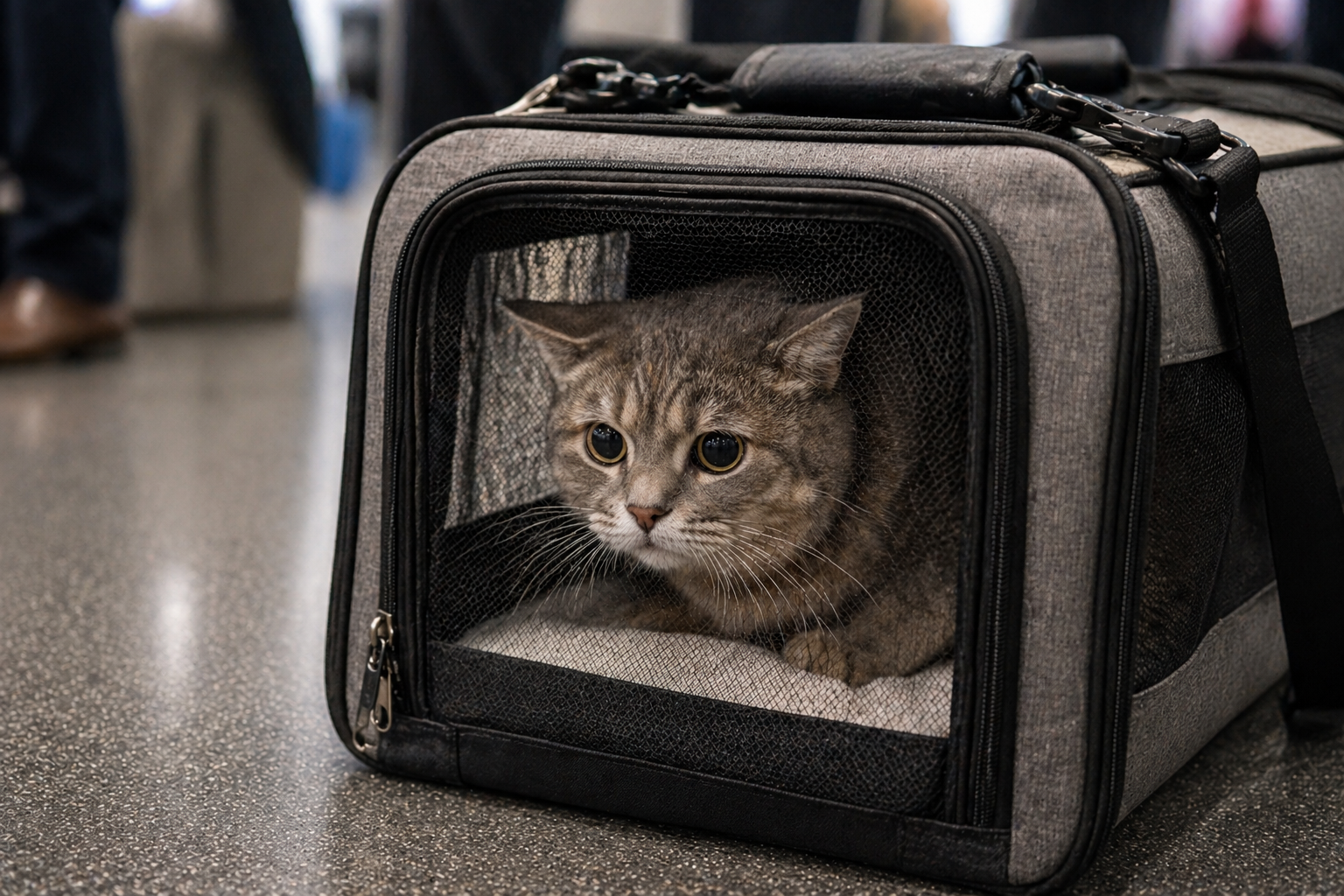
My cat is stressed in their carrier. Is that related to general stress?
Carrier anxiety and general environmental stress are different issues, though a generally anxious cat may have more intense carrier stress. For carrier-specific anxiety, gradual desensitisation and keeping the carrier out permanently as a normal piece of furniture are the most effective approaches.
For more on this: Why Do Cats Hate Carriers?
Do multiple cats in one household increase stress?
They can, particularly if resources are insufficient or if the cats were not introduced properly. Multi-cat stress is common and often overlooked. The key signs are one cat consistently blocking another from resources, reduced social behaviour between cats, and increased individual stress signs in one or more cats. Providing more resources and more space often resolves it without separating the cats.
How long does it take for a stressed cat to settle after a change?
It depends on the cat and the change. Minor changes in routine may take days to adjust to. Significant changes like a new pet or a house move can take weeks to months. Senior cats and cats with existing anxiety tend to take longer than younger, more resilient cats.
Final Thoughts
Signs of stress in cats are there if you know what to look for. Behaviour that seems difficult, random, or personality-based is often a cat communicating that something in their environment is not working for them.
The good news is that most causes of cat stress are addressable. Identifying the trigger, adjusting the environment, providing appropriate security and enrichment, and where needed involving your vet produces real improvement in most cases.
Your cat is not difficult. They are stressed. Those are different things, and one of them has solutions.
For more on cat behaviour and health, read our guides: Why Do Cats Hate Carriers? and How to Travel Without a Stressed Cat
Sources
- https://icatcare.org/advice/stress-in-cats/
- https://www.vet.cornell.edu/departments-centers-and-institutes/cornell-feline-health-center/health-information/feline-health-topics/cats-and-stress
- https://www.aspca.org/pet-care/cat-care/common-cat-behavior-issues
- https://pmc.ncbi.nlm.nih.gov/articles/PMC4856185/
- https://www.avma.org/resources-tools/pet-owners/petcare/feline-behavior-problems

Pingback: How to Travel Without a Stressed Cat (Complete Guide) - DogCat-care
Pingback: Why Do Cats Hate Carriers? The Real Reason and How to Fix It