Introduction
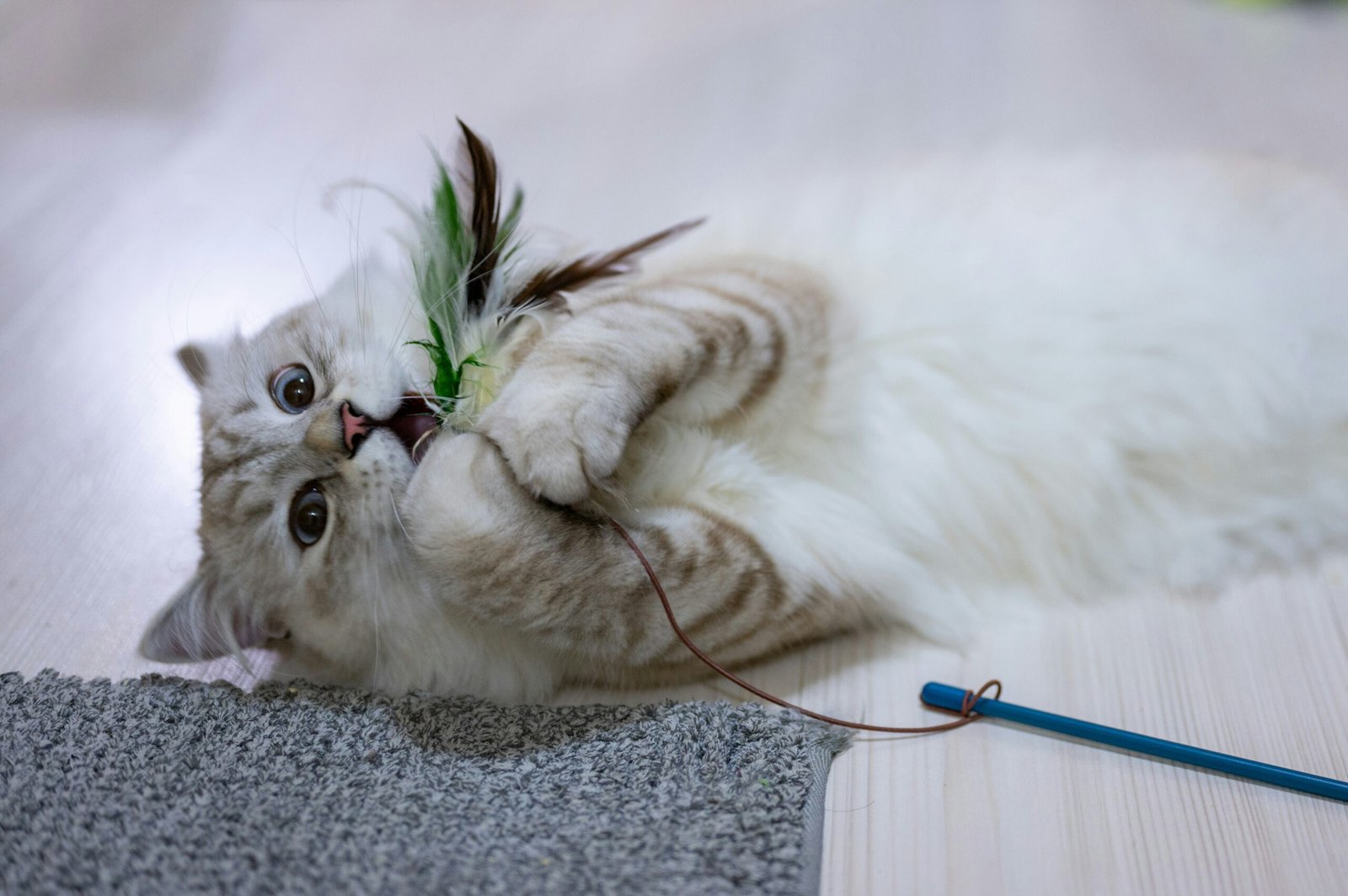
Interactive cat toys are one of the most important purchases you can make for a cat that lives indoors, and most owners underestimate this completely. My own cat is obsessed with anything that moves: strings, wands, trailing ribbons. The moment something twitches across the floor, the hunt is on. That response is not playfulness for its own sake. It is a hunting instinct that has nowhere else to go in a domestic environment.
Indoor cats do not stalk prey, patrol territory, or respond to the unpredictable stimuli of an outdoor environment. What they have instead is whatever their owner puts in front of them. When that amounts to a plastic ball in the corner of the room, it is not enough. Boredom in cats shows up as furniture scratching, overgrooming, aggression, weight gain, and low-level anxiety that owners often chalk up to personality. In most cases, it is simply under-stimulation.
The right interactive cat toys solve this directly. This article covers the types that actually work, what to look for, and the best options available right now.
By Dogcat-Care.
This post contains affiliate links. If you buy through these links, I may earn a small commission at no extra cost to you. As an Amazon Associate, I earn from qualifying purchases.
Table of Contents
Quick Picks
- Best overall: SmartyKat Hot Pursuit Electronic Concealed Motion Toy
- Best wand toy: Da Bird Feather Wand
- Best puzzle feeder: Trixie 5-in-1 Activity Center
- Best for solo play: Potaroma Flapping Bird Motion Toy
- Best budget pick: Petstages Tower of Tracks
- Best for bonding: Go Cat Teaser Wand with Mouse
Why Indoor Cats Need Interactive Toys
A cat that spends its entire life indoors is operating on the same neurological hardware as a cat that hunts six to eight times a day in the wild. The hardware does not switch off because the hunting opportunities are gone. What happens instead is that the drive accumulates without an outlet.
Cats sleep between 12 and 16 hours a day, but during their waking hours that hunting drive is active. Without anything to direct it toward, cats become restless, frustrated, or lethargic depending on their temperament. Both responses are signs of the same underlying problem: not enough to do.
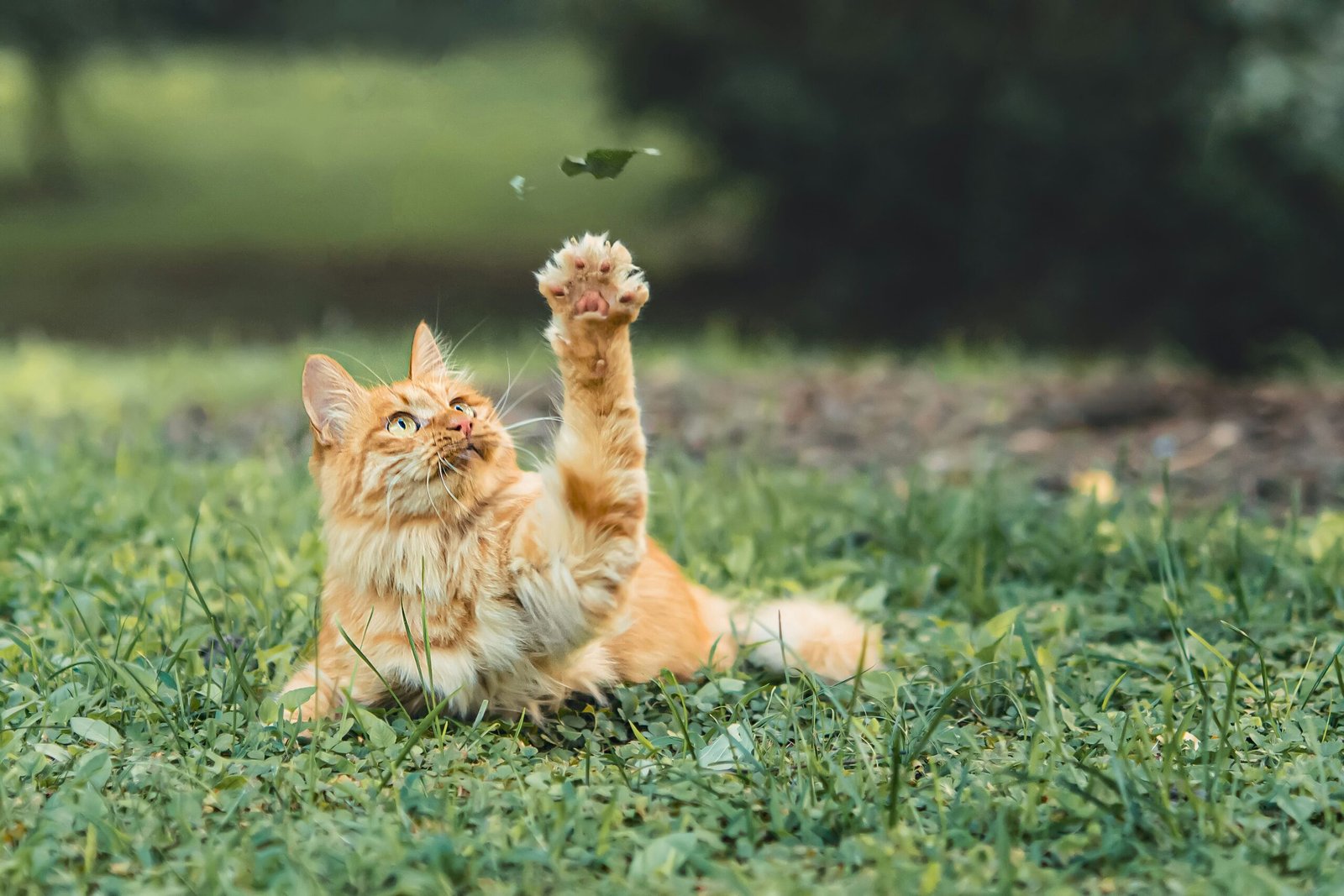
Interactive toys address this by giving the prey drive somewhere to go. A wand toy that moves unpredictably mimics the behaviour of a fleeing animal. A puzzle feeder that requires effort to release food mimics the work involved in catching a meal. A motion-activated toy that responds to touch mimics the erratic movement of living prey. None of these are perfect substitutes for the real thing, but they are enough to satisfy the instinct on a daily basis.
The result, for most cats, is a noticeable reduction in destructive behaviour, improved sleep quality, a healthier weight, and a calmer baseline temperament. Play is not a luxury for indoor cats. It is maintenance.
What to Look for in Interactive Cat Toys
Movement quality. The most important factor in any interactive cat toy is how it moves. Cats are not fooled by repetitive, mechanical movement for long. They respond to unpredictable motion: sudden direction changes, erratic speed, pauses followed by bursts of activity. This is why a simple wand toy in the hands of an engaged owner outperforms most automatic toys. You can vary the movement. When evaluating automatic or electronic toys, prioritise those that vary their pattern rather than loop the same sequence.
Durability. Cats play hard. Feathers get bitten off, strings get chewed through, and plastic tracks get flipped across the room. A toy that breaks in the first week is not a bargain at any price. Look for reinforced attachment points on wand toys, quality motor construction in electronic options, and materials rated for repeated rough play.
Safety. Loose feathers, small detachable parts, and thin strings are all potential choking hazards. Any toy used without direct supervision should have no components that can be separated and swallowed. Wand toys in particular should be put away after play sessions rather than left out unsupervised.
Engagement duration. Some toys hold a cat’s attention for five minutes and are then ignored forever. Toys that maintain engagement tend to either vary their stimulus (so the cat cannot fully predict them), involve food reward, or require active problem-solving. Rotation also helps: cycling three or four toys keeps them feeling novel longer than leaving one toy out permanently.
Ease of use for the owner. A toy you find annoying to set up is a toy you will use less often. Battery replacement, complicated assembly, and loud motors all reduce how frequently you reach for it. The best toy is the one that gets used daily, not the one with the most impressive feature list.
Top 7 Best Interactive Cat Toys
1. Da Bird Feather Wand
The Da Bird wand has been around for decades and remains one of the most effective interactive cat toys available. The design is simple: a long flexible rod with a swivel attachment and a feather cluster at the end. The swivel causes the feathers to rotate during movement, producing a sound and flutter that closely mimics a bird in flight. Most cats react immediately and intensely.
The quality is noticeably better than cheaper wand toys. The rod has flex without being flimsy, the swivel is robust, and replacement feather attachments are widely available. This is the toy I would recommend to any cat owner who wants something that requires direct participation and produces genuine excitement.
Pros: intensely effective, realistic movement and sound, durable, replacement heads available Cons: requires you to be present and actively playing, feathers wear out with heavy use Best for: daily bonding play sessions, cats that are hard to engage Not for: owners wanting a set-and-forget option
Verdict: Best for daily bonding play and high engagement
Who should NOT buy this: Owners wanting a set-and-forget toy
2. SmartyKat Hot Pursuit Electronic Concealed Motion Toy
The Hot Pursuit works by concealing a motorised wand beneath a fabric cover, so the cat can only see the erratic movement of the tip emerging from slits around the edge. The concealment is the key feature: it removes the mechanical appearance of the toy and makes the movement feel more unpredictable and prey-like.
It has two speed settings, runs on batteries, and is one of the few automatic toys that consistently holds cat attention beyond the initial novelty phase. The fabric cover is replaceable when it wears out. The main limitation is battery consumption: heavy users will go through batteries at a notable rate.
Pros: concealed motion maintains novelty, two speed settings, good build quality Cons: requires batteries, fabric cover wears with heavy use Best for: cats that lose interest quickly in obvious mechanical toys, solo playtime Not for: cats that immediately flip the toy and lose interest in concealed targets
Verdict: Best automatic toy for cats that lose interest quickly
Who should NOT buy this: Cats that immediately go for the base rather than the moving tip
3. Trixie 5-in-1 Activity Center
Puzzle feeders are a different category of interactive toy. Rather than simulating prey movement, they engage problem-solving instincts by requiring the cat to work for food. The Trixie Activity Center offers five different puzzle formats in one unit: a tunnel, pegs, a bowl, a maze, and a flip cover. Each format works at a slightly different difficulty level, which means the cat does not plateau quickly.
Using a puzzle feeder for part of your cat’s daily food intake removes the experience of eating from a bowl in 90 seconds and replaces it with ten to fifteen minutes of engaged foraging behaviour. The difference in a cat’s demeanour after this kind of meal versus a standard bowl feed is often visible. They are more settled, less restless, and more ready to sleep.
Pros: five challenge formats, dishwasher safe, works with kibble or treats, genuinely extends engagement Cons: not suited to all cats initially (some need gradual introduction), not the most durable plastic Best for: fast eaters, overweight cats, cats that seem bored during the day Not for: cats with no patience for puzzle-solving (though most adapt with a few days practice)
Verdict: Best for mental enrichment and cats that eat too fast
Who should NOT buy this: Owners looking for active movement-based play
4. Potaroma Flapping Bird Motion Toy
Motion-activated toys that respond to the cat’s touch are a strong solo play option. The Potaroma Flapping Bird moves its wings and produces sound when touched or when motion nearby triggers it. The unpredictability of the response means the cat cannot easily predict when it will activate, which sustains engagement longer than toys that move continuously.
It is USB rechargeable, which removes the ongoing battery cost. The feather attachment adds realistic texture. It does not replace the engagement of a human-led play session, but for periods when you cannot be present it provides a meaningful alternative.
Pros: rechargeable, motion-activated response is more engaging than continuous movement, realistic texture Cons: some cats lose interest once they have ‘caught’ it repeatedly, feathers need replacing over time Best for: households where the cat spends time alone during the day Not for: replacing all human-led play
Verdict: Best for households where the cat is alone during the day
Who should NOT buy this: Owners expecting it to fully substitute active play
5. Petstages Tower of Tracks
The Tower of Tracks is three stacked circular tracks containing balls that spin when batted. It requires no batteries, no setup, and no involvement from the owner. The design is robust and hard to break. Cats can engage with it at any time, which makes it a solid base-level environmental enrichment option.
It will not produce the intensity of engagement that a wand session generates, but it does not need to. Its role is to give a cat something to do when the alternative is staring at a wall. As a permanent fixture in the environment, it earns its place.
Pros: no batteries, durable, works for multiple cats, inexpensive Cons: some cats lose interest fairly quickly, lightweight tracks can flip Best for: budget-conscious households, multi-cat homes, background enrichment Not for: high-drive cats that need serious engagement
Verdict: Best low-cost background enrichment option
Who should NOT buy this: Cats that need serious stimulation or are hard to engage
6. Go Cat Teaser Wand with Mouse
Where Da Bird mimics a bird, this teaser mimics a small rodent. The mouse attachment drags and skids across surfaces in a way that triggers ground-level hunting behaviour: the stalk, the crouch, the pounce. Some cats respond more strongly to ground prey than aerial prey. If your cat seems indifferent to feather wands but will chase anything that moves along the floor, this is the format to try.
The build quality is good, the attachment is secure, and the mouse holds up reasonably well to repeated rough play. It is a direct complement to a feather wand rather than a replacement.
Pros: ground-level movement triggers different hunting response, good build quality Cons: mouse attachment wears over time, requires owner participation Best for: cats that prefer ground prey, alternating with a feather wand for variety Not for: owners wanting an automatic option
Verdict: Best complement to a feather wand for variety
Who should NOT buy this: Owners wanting a toy that runs without involvement
7. PetFusion Ambush Interactive Electronic Toy
The Ambush uses a rotating base with a feather that emerges and retreats from ports around the unit. The feather appears unpredictably, creating the impression of prey hiding and re-emerging. It runs on batteries and has a timer function so it can switch off automatically after play sessions.
The unpredictable disappearance and reappearance of the target is more sophisticated than toys that simply move continuously. It works particularly well for cats that stalk before striking, as the concealment phase gives them something to respond to.
Pros: unpredictable target appearance holds attention well, timer function, good build quality Cons: battery-powered, some cats learn the pattern over time Best for: stalking cats, cats that enjoy the build-up before a strike Not for: impatient cats that need immediate target engagement
Verdict: Best automatic toy for cats that stalk before striking
Who should NOT buy this: Cats that need instant target access rather than the build-up of concealment
Comparison Table
| Toy | Type | Best For | Requires Owner | Price Tier |
|---|---|---|---|---|
| Da Bird Feather Wand | Wand toy | Bonding, high engagement | Yes | Budget |
| SmartyKat Hot Pursuit | Electronic automatic | Solo play, varied movement | No | Mid |
| Trixie Activity Center | Puzzle feeder | Mental enrichment, slow feeding | No | Mid |
| Potaroma Flapping Bird | Motion-activated | Solo play, daytime | No | Mid |
| Petstages Tower of Tracks | Track toy | Background enrichment | No | Budget |
| Go Cat Teaser Wand | Wand toy | Ground prey response | Yes | Budget |
| PetFusion Ambush | Electronic automatic | Stalking cats | No | Mid |
How Much Playtime Does an Indoor Cat Actually Need?
Two dedicated play sessions per day of ten to fifteen minutes each is a reasonable minimum for most adult indoor cats. This is enough time to work through a full hunting sequence: the stalk, the chase, the catch, and the wind-down. Ending a play session by letting the cat catch the toy is important. A cat that never catches anything during play becomes frustrated rather than satisfied.
Kittens and younger cats need more: three to four shorter sessions spread through the day tends to work better than one long one. Older cats may prefer gentler movement and shorter sessions, but the need for engagement does not disappear with age.
Puzzle feeders can supplement active play by extending the time the cat spends mentally engaged during mealtimes. Using one for at least one meal per day adds meaningful enrichment without requiring your direct involvement.
If your cat is showing signs of stress alongside under-stimulation, more play is part of the solution but not all of it. The article on signs of stress in cats covers the full picture of what to look for and how to respond. And if scratching is already a problem in your household, why cats scratch furniture explains what is driving it and what actually redirects it.
FAQ
What is the best interactive cat toy for a cat that ignores everything?
Start with a wand toy operated by you rather than an automatic option. A toy that moves in genuinely unpredictable ways, controlled by a human, is harder for a disengaged cat to ignore than a mechanical toy running a predictable loop. Da Bird is the most consistently effective option for cats that seem uninterested in other toys. If that still produces no response, try just before a meal when the cat is hungry.
Are laser pointers good interactive toys for cats?
Laser pointers produce intense engagement but have a significant problem: the cat can never catch the target. This leaves the hunting sequence permanently incomplete, which over repeated sessions can increase frustration rather than reduce it. If you use a laser, always end the session by redirecting the cat onto a physical toy it can actually catch and bite.
How often should I rotate my cat’s toys?
Rotating every few days keeps toys feeling novel. A toy that has been sitting in the same corner for two weeks is effectively invisible to the cat. Putting it away for five days and reintroducing it can restore most of the original interest. Keeping three or four toys in active rotation is more effective than owning ten toys that are always available.
Is it safe to leave automatic cat toys running unsupervised?
For most electronic toys without detachable small parts, yes. Check the toy for anything that can be chewed off and swallowed before leaving it unsupervised. Wand toys with strings and feather attachments should always be put away when you are not present, as the string is a strangulation and ingestion hazard.
My cat plays for two minutes and then walks away. Is that normal?
Yes and no. Some cats have short attention spans for any single toy, which is why variety and rotation matter. But if your cat consistently disengages very quickly from everything, it may be that the movement quality is not triggering the hunting instinct effectively. Try a Da Bird wand with full, fast, unpredictable movement at varying heights. If that does not produce sustained engagement, the issue may be something other than toy choice.
Final Thoughts
The best interactive cat toys are the ones that give the hunting drive somewhere to go. For most indoor cats, that drive is running constantly in the background with nowhere to direct it. Interactive cat toys are not entertainment in the way a television is entertainment for a human. They are a functional need.
My top recommendation for any cat owner starting from scratch is simple: buy a Da Bird wand for daily sessions with you, and a Trixie puzzle feeder to replace at least one bowl feed per day. Those two things together cover the active hunting element and the foraging element, and they cost very little. Build from there based on what your cat responds to.
Sources
- https://www.scienceinsights.org/how-to-provide-enrichment-for-cats-indoors/
- https://savingninelives.com/mental-stimulation-indoor-cats/
- https://baypathhumane.org/mental-stimulation-for-cats/
- https://ingridking.com/2023/10/30/unleashing-the-power-of-play-why-cats-need-mental-stimulation/
- https://www.dakinhumane.org/blog-full/unlocking-a-better-life-for-your-indoor-cat-the-power-of-enrichment

Pingback: Why Does My Cat Scratch Furniture? The Real Reasons and What to Do
Pingback: Signs of Stress in Cats: What to Look For and What to Do