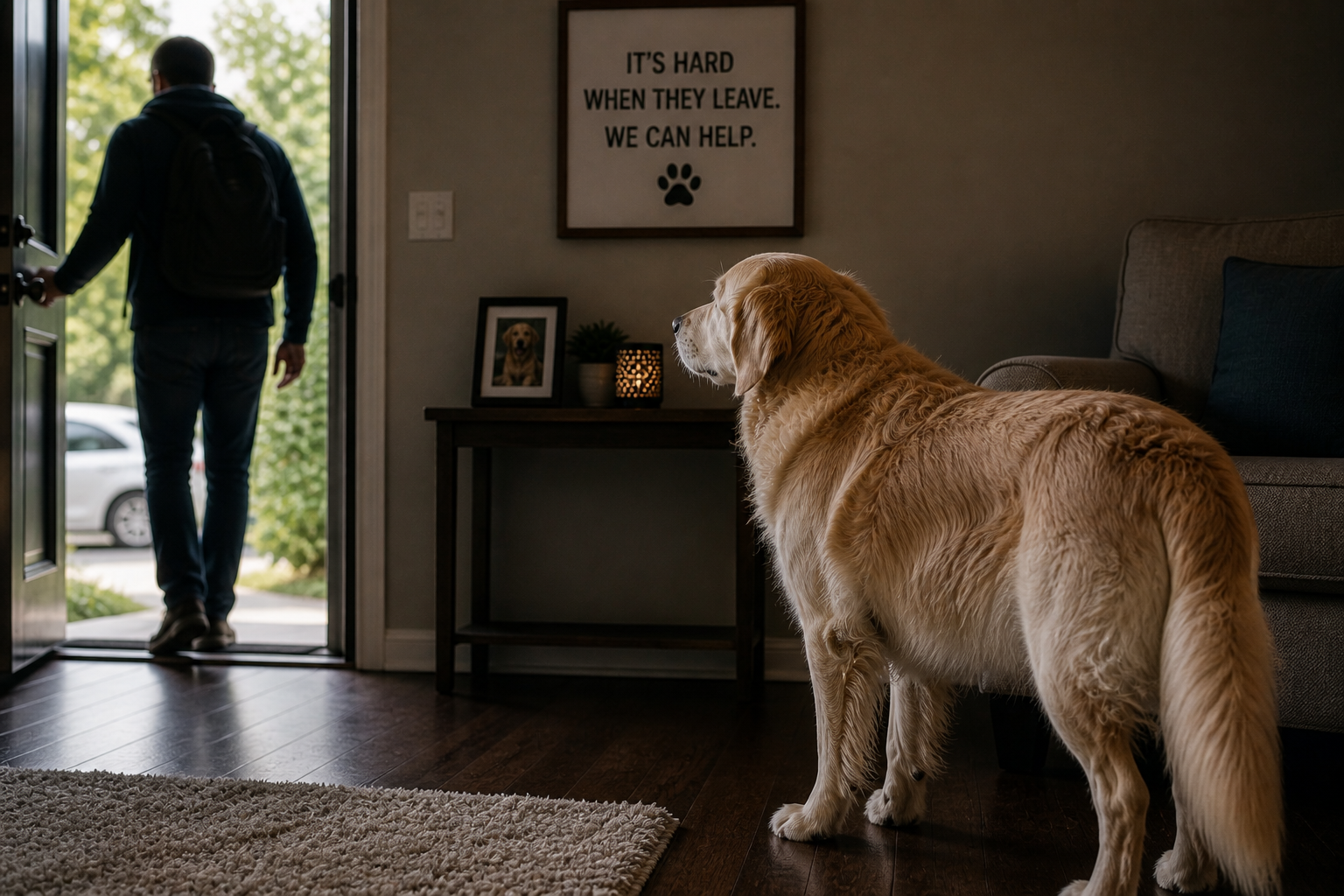
You grab your keys, put on your shoes, and your dog’s entire demeanor shifts. They start pacing. They whine. By the time you’re out the door, they’re already barking. And when you come home two hours later, the couch cushion is in pieces. In other words: Dog separation anxiety.
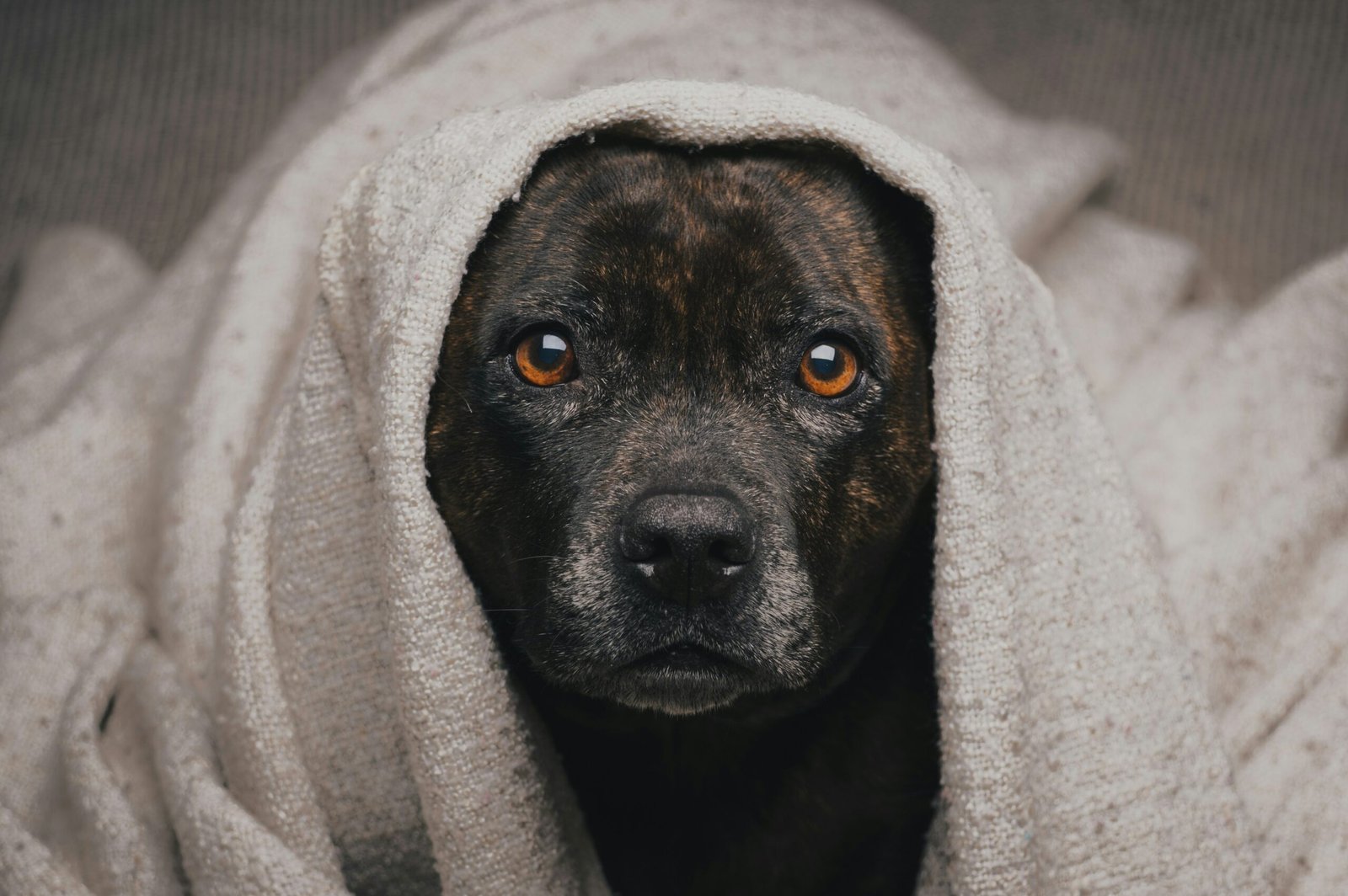
This is separation anxiety. And it’s one of the most distressing things a dog can go through, not because they’re being naughty, but because they’re genuinely panicking about being left alone.
In our guide to dog anxiety, we covered the full picture of anxiety in dogs. This article goes deeper on separation anxiety specifically: what it actually is, why it happens, and exactly what you can do to help your dog feel safe when you’re not home.
By Dogcat-Care.
This post contains affiliate links. If you buy through these links, I may earn a small commission at no extra cost to you. As an Amazon Associate, I earn from qualifying purchases.
What Is Separation Anxiety in Dogs?
Separation anxiety is a condition where a dog experiences extreme distress when left alone or separated from their primary attachment figure. It’s not just missing you. It’s a panic response that can kick in within minutes of you walking out the door and last until you come back.
It’s worth knowing the difference between true separation anxiety and isolation distress, because they’re not the same thing.
True separation anxiety is tied to one specific person. The dog may be completely fine if another family member stays home, but falls apart the moment that one person leaves. Isolation distress is broader. The dog struggles with being alone in general, regardless of who is or isn’t home.
Both are real problems that need attention, but the distinction matters when it comes to choosing the right approach.
Signs Your Dog Has Separation Anxiety
The most reliable way to confirm separation anxiety is to record your dog after you leave. Many owners are shocked by what they see, because the behavior often starts immediately and can be intense.
Common signs include:
- Barking, whining, or howling that starts within minutes of you leaving
- Destructive behavior focused around exits like doors, windows, and gates
- House soiling even in fully housetrained dogs
- Pacing, spinning, or inability to settle
- Refusing to eat food or treats left behind
- Attempts to escape that can result in self-injury
- Excessive drooling or salivation when alone
- Excessively excited greetings when you return, far beyond normal happiness
That last one is easy to overlook. An over-the-top reunion greeting, where your dog acts like you’ve been gone for weeks rather than an hour, is often a sign that the time apart was genuinely stressful for them.
One thing worth noting: destructive behavior and house soiling that happens in your presence, or spread evenly throughout the day, is less likely to be separation anxiety. True separation anxiety behaviors happen specifically when your dog is alone or anticipates being left.
What Causes Separation Anxiety?
There’s rarely one single cause. Separation anxiety usually develops from a combination of factors.
Genetics and breed predisposition play a role. Some breeds are simply more prone to forming intense attachments and struggling with alone time. Labrador Retrievers, Vizslas, Border Collies, and German Shepherds are among the breeds most commonly associated with separation anxiety.
Life changes and disruptions are a very common trigger. A change in your work schedule, a move to a new home, the loss of another pet, or a change in household routine can destabilize a dog that was previously fine alone. Many cases of separation anxiety appeared or worsened after the pandemic, when dogs got used to their owners being home all day and then suddenly weren’t.
Lack of early independence training is another factor. Dogs that were never taught to be comfortable alone as puppies, or that spent the first months of their life in constant company, often struggle more when they’re eventually left alone.
Past trauma or rehoming can also contribute. Rescue dogs and dogs that have been rehomed multiple times are at higher risk, though separation anxiety is by no means limited to dogs with difficult histories.
More on why your dog follows your everywhere in our article: Why Does My Dog Follow Me Everywhere? What It Really Means
How to Help a Dog with Separation Anxiety
The core of treating separation anxiety is teaching your dog that being alone is safe and that you always come back. This takes time and there are no overnight fixes. But with consistency, most dogs make real progress.
Start with Independence Training
Before working on your dog’s behavior when you’re gone, start by building their comfort with independence while you’re still home.
Practice having your dog settle in one place while you move to another room. Start with just a few seconds and gradually build up. The goal is to break the habit of constant physical contact and help your dog learn that distance from you is not a threat.
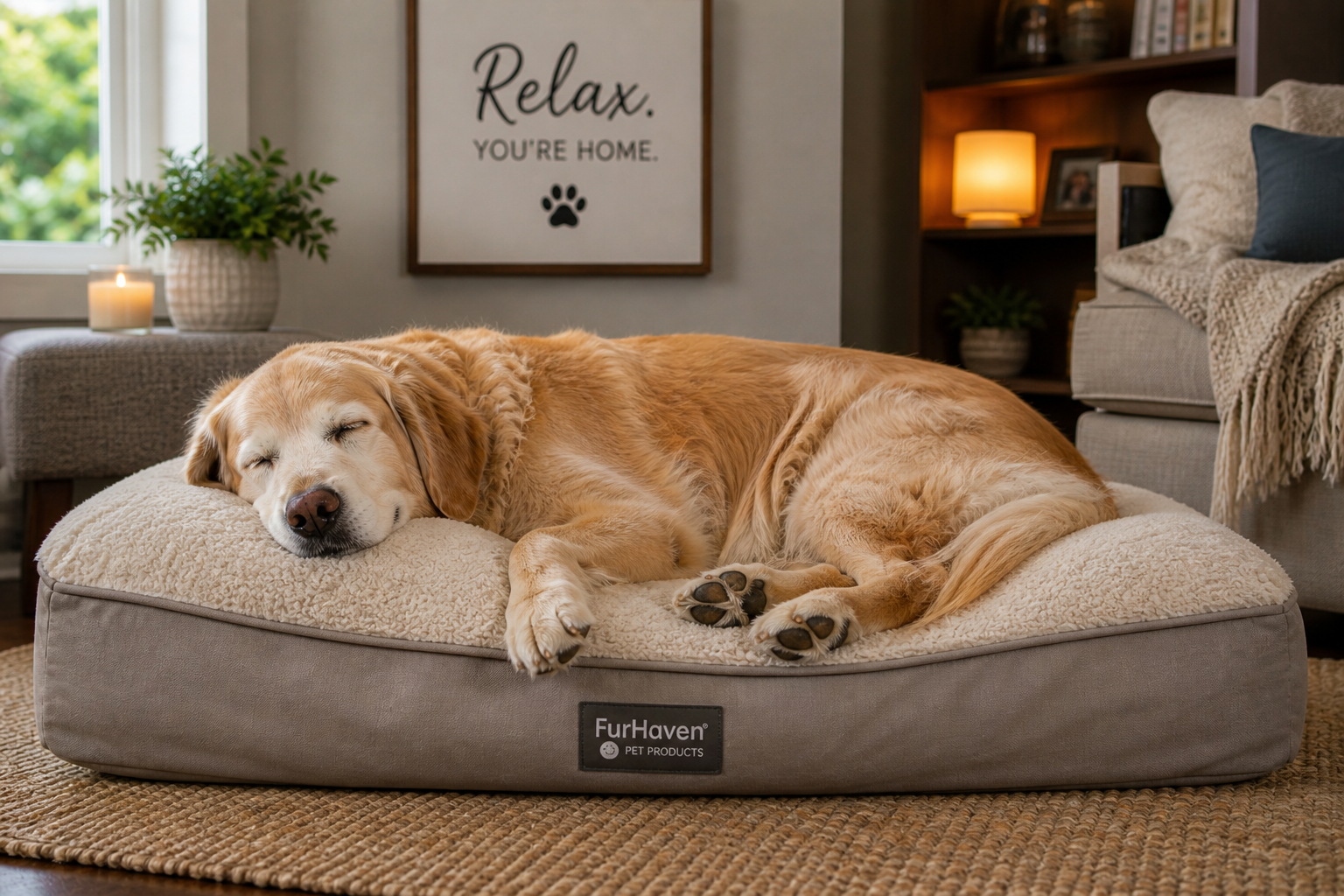
A comfortable dog bed or mat that your dog associates with rest and calm is useful here. Give your dog something good to do on their mat, like a chew or a stuffed Kong, and gradually increase the distance and duration over many short sessions throughout the day.
Desensitize Your Departure Cues
For many dogs with separation anxiety, the panic starts before you even leave. They learn to read your pre-departure routine: picking up keys, putting on shoes, grabbing your bag. By the time you reach the door, they’re already in full distress.
Desensitization means breaking that association by doing your departure cues without actually leaving. Put on your shoes, then sit back down. Pick up your keys, then put them back. Grab your bag, then take it off and watch TV.
Do this repeatedly and randomly throughout the day until your dog stops reacting to these cues. It sounds tedious, but it removes a significant part of the anxiety cycle before it even starts.
Practice Very Short Departures
Once your dog is calmer around departure cues, start practicing actual departures but keep them extremely short. Step outside for 10 seconds, come back calmly, and go about your day. Gradually extend the time as your dog stays below their anxiety threshold.
The key is gradual. Pushing too fast and leaving your dog in a state of full panic undoes the progress you’ve made. You want your dog to experience you leaving and returning before they have time to escalate into distress.
Keep your departures and arrivals low-key. No emotional farewells and no overly exciting reunions. Matter-of-fact is the tone you’re going for. This signals to your dog that leaving and coming back is completely normal.
Give Them Something to Do
A dog with something engaging to focus on is less likely to spiral into anxiety. The goal is to create a positive association around you leaving rather than just a void.
A stuffed Kong frozen the night before is one of the most effective tools for this. Fill it with something your dog loves like peanut butter, wet food, or banana, and only bring it out when you leave. Over time your dog can start to associate your departure with getting something amazing rather than something terrifying.
Lick mats work in a similar way. The act of licking activates the parasympathetic nervous system, which is the part responsible for rest and calm. Spreading a lick mat with soft food and leaving it when you go gives your dog both mental engagement and a natural calming effect at the same time.
Use a Pet Camera
One of the most practical things you can do when working on separation anxiety is actually see what your dog is doing when you’re gone. A pet camera lets you monitor your dog’s behavior in real time, track progress over weeks, and step in early if needed using the two-way audio to calmly talk to your dog.
Some cameras even have treat dispensers built in, which lets you reward calm behavior remotely. For separation anxiety specifically, being able to see exactly when your dog settles and when they escalate helps you understand how to adjust your training approach.
Try Calming Products
Calming products won’t fix separation anxiety on their own, but they can take the edge off enough to make training more effective. These are the options that work best for separation anxiety specifically:
Adaptil Collar releases dog-appeasing pheromones continuously throughout the day. These are synthetic versions of the calming pheromones that mother dogs naturally produce. The collar format means your dog gets constant exposure rather than just when they’re near a diffuser at home. It’s one of the most well-researched calming products available and works particularly well for separation-related anxiety.
ThunderShirt applies gentle, constant pressure that has a calming effect on many dogs. It’s most commonly associated with noise anxiety, but it also helps dogs that become distressed during the lead-up to your departure. Low-risk, easy to use, and worth trying.
Calming supplements containing L-theanine, L-tryptophan, or melatonin can reduce baseline anxiety enough to make the training process smoother. They work best as a complement to behavioral work rather than a standalone solution. Two brands worth looking at specifically are Innovet Pet and Honest Paws, both of which offer well-formulated calming supplements made with natural ingredients and backed by solid customer feedback. Innovet’s Calm Chews and Honest Paws’ Calm CBD Oil are particularly popular for dogs with separation anxiety. Always check with your vet before starting any supplement, especially for older dogs or dogs on medication. Best Dog Anxiety Supplements 2026 – DogCat-care
Build a Consistent Daily Routine
Dogs with separation anxiety do significantly better when their day is predictable. Knowing when walks happen, when feeding happens, and roughly when you come and go reduces the background level of stress that keeps anxious dogs on edge even between departures.
A solid walk or exercise session before you leave also helps. A physically and mentally tired dog has a lower stress baseline and more capacity to settle while alone. Even a 30 minute walk before a longer absence makes a real difference.
What Not to Do
A few common mistakes that make separation anxiety worse:
Punishing the behavior. Coming home to a destroyed couch and scolding your dog does nothing to address the underlying anxiety. Your dog wasn’t being destructive to punish you. They were in a panic. Punishment adds stress to an already stressful situation.
Making emotional departures. Long, drawn-out goodbyes ramp up your dog’s anxiety before you’ve even left. Keep it brief and calm.
Getting a second dog to solve the problem. This sometimes helps with isolation distress, where the dog just needs any company. But true separation anxiety is about your specific absence, and many dogs stay just as distressed with another dog present. It’s a big commitment to make based on an uncertain outcome.
Pushing through too quickly. Leaving your dog in full panic for extended periods doesn’t teach them to cope. It reinforces that being alone is exactly as bad as they feared. Progress needs to happen gradually, below the anxiety threshold.
How to Calm an Anxious Dog at Home: What Actually Works
When to Get Professional Help
If your dog’s separation anxiety is severe, if they’re injuring themselves trying to escape, or if you’ve been working on it consistently for several weeks without meaningful progress, it’s time to bring in professional support.
A certified separation anxiety trainer (CSAT) specializes specifically in this condition and can build a structured desensitization program tailored to your dog. This is different from a general obedience trainer and worth seeking out for serious cases.
Your vet is also an important resource. For moderate to severe separation anxiety, medication alongside behavioral training produces significantly better outcomes than training alone. Commonly used options include fluoxetine, clomipramine, and trazodone. These are not sedatives. They reduce anxiety enough that your dog can actually learn during training. Medication combined with behavioral work is the most effective approach for dogs that are genuinely struggling.
FAQ
How long does it take to fix separation anxiety in dogs? It depends on the severity. Mild cases can improve noticeably within a few weeks of consistent work. Moderate to severe separation anxiety can take several months. The key is progressing gradually and not rushing the process by pushing your dog past their threshold.
Can separation anxiety get better on its own? Rarely. Without intervention, separation anxiety tends to stay the same or get worse over time. The earlier you start working on it, the faster and easier the progress tends to be.
Should I crate my dog if they have separation anxiety? It depends on the dog. Some dogs feel safer in a crate because it’s a small, enclosed space they associate with rest. Others panic more intensely in a crate because they feel trapped. If your dog has never been crate trained, introducing one during separation anxiety treatment is not the right move. If they already love their crate, it can be a useful tool.
Does getting a second dog help with separation anxiety? Sometimes, but not reliably. If the anxiety is true separation anxiety tied to your absence specifically, another dog often doesn’t help. If it’s isolation distress and the dog just needs any company, a second dog sometimes does. It’s a big commitment to make based on an uncertain outcome.
Can I use a dog sitter or doggy daycare while working on separation anxiety? Yes, and it’s often recommended. Every time your dog reaches full panic in your absence it reinforces the anxiety. Minimizing how often they go over threshold while you work through gradual desensitization helps the process move faster.
Is separation anxiety more common in rescue dogs? Rescue dogs do have higher rates of separation anxiety, likely due to past instability and multiple rehomings. But it’s common across all dogs regardless of background. A dog raised in a stable home from puppyhood can still develop it, especially after a significant life change.
What products help most with separation anxiety? The Adaptil collar, a pet camera, frozen Kongs, and lick mats are the most useful tools specifically for separation anxiety. Calming supplements can also help reduce baseline anxiety during the training process.
The Bottom Line
Separation anxiety is genuinely hard on dogs and on the people who love them. But it’s not a life sentence. With patience, a structured approach, and the right support tools, most dogs learn that being alone is safe and that their person always comes back.
Start small, go slow, and celebrate every bit of progress. Your dog isn’t trying to make your life difficult. They’re asking for help feeling safe.
Also read: Dog Anxiety: Signs, Causes, and How to Actually Help Your Dog | Best Calming Supplements for Dogs
Sources
- https://www.akc.org/expert-advice/training/treating-dog-separation-anxiety/
- https://vcahospitals.com/know-your-pet/separation-anxiety-in-dogs
- https://www.aspca.org/pet-care/dog-care/common-dog-behavior-issues/separation-anxiety
- https://www.petmd.com/dog/behavior/separation-anxiety-dogs
- https://www.whole-dog-journal.com/behavior/separation-anxiety-in-dogs/



Pingback: Dog Anxiety: Signs, Causes, and How to Actually Help Your Dog
Pingback: How to Calm an Anxious Dog at Home: What Actually Works
Pingback: Why Does My Dog Follow Me Everywhere? What It Really Means
Pingback: Dog Won't Settle at Night: Causes and What Actually Helps
Pingback: Best Dog Anxiety Supplements 2026 - DogCat-care