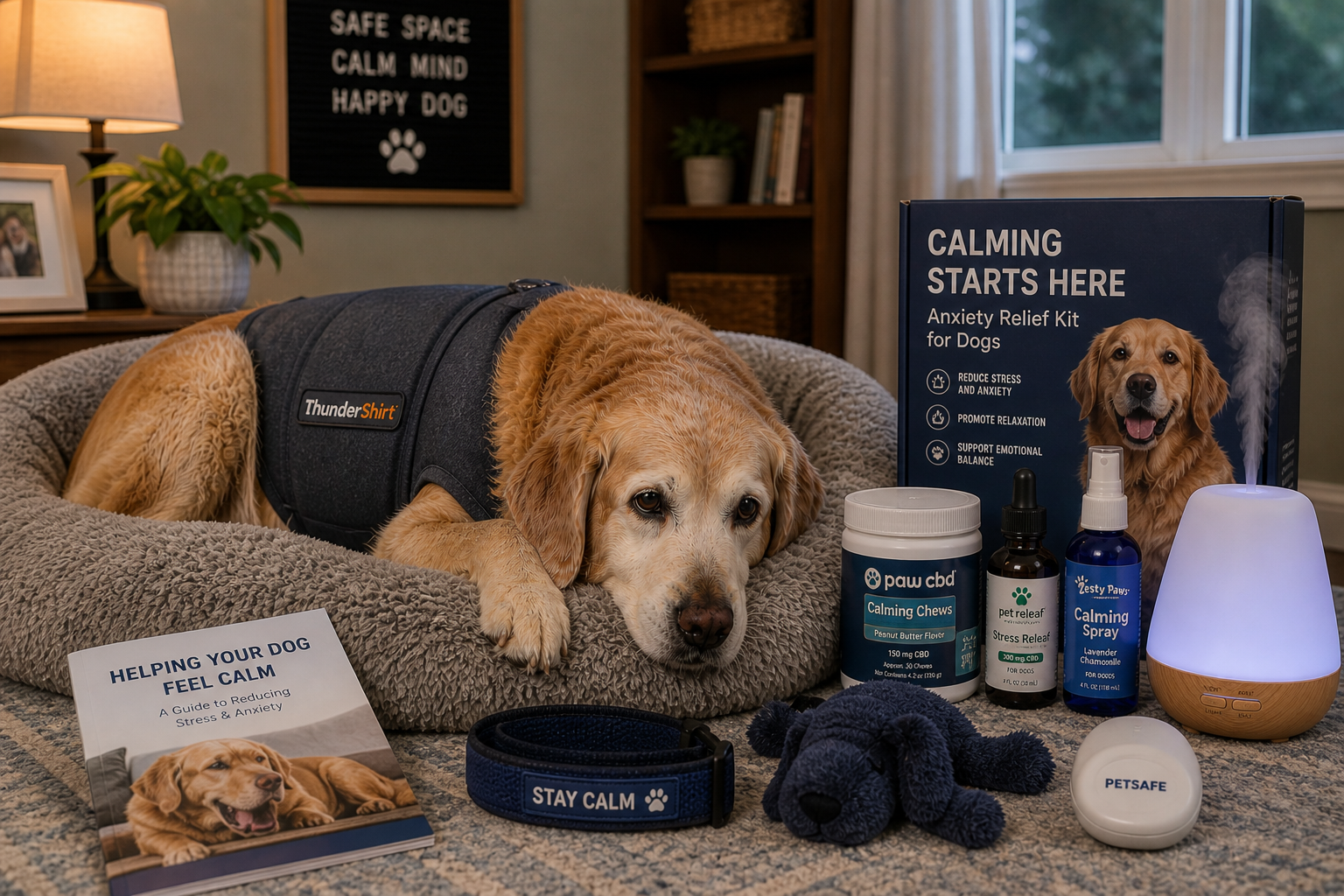
If your dog is restless, clingy, destructive, or constantly barking the moment you leave the house, anxiety is probably the reason. And it’s far more common than most dog owners realize.
Dog anxiety isn’t just “bad behavior.” It’s a real emotional response that can make your dog’s daily life genuinely miserable. The frustrating part is that anxious dogs often get labeled as difficult, stubborn, or poorly trained, when in reality they’re struggling with something they can’t control.
The good news is that anxiety is treatable. Most dogs improve significantly with the right combination of understanding, routine, training, and support. But it starts with knowing what you’re actually dealing with.
This guide covers everything you need to know: how to recognize anxiety in dogs, what causes it, how it shows up differently across life stages, and which strategies and products actually make a difference.
By Dogcat-care.
This post contains affiliate links. If you buy through these links, I may earn a small commission at no extra cost to you. As an Amazon Associate, I earn from qualifying purchases.
Table of Contents
What Is Dog Anxiety?
Anxiety in dogs is a state of excessive fear, worry, or stress that goes beyond a normal reaction to a specific situation. It’s important to understand the difference between fear, nervousness, and anxiety, because they’re not the same thing.
A nervous dog might tense up when a stranger approaches, then fully relax once that person walks away. That’s a normal, short-term stress response. Anxiety is different. An anxious dog stays on edge long after the trigger is gone. Sometimes there’s no clear trigger at all. The dog just lives in a state of low-level tension that can spike into panic with very little provocation.
Over time, untreated anxiety tends to escalate. What starts as mild restlessness can develop into destructive behavior, aggression, or complete shutdown. It affects your dog’s quality of life, disrupts your household, and puts real strain on your relationship with your dog.
The earlier you recognize it and take action, the better the outcome.
Signs of Anxiety in Dogs
Signs of Anxiety in Dogs
Anxiety looks different from dog to dog. Some dogs become loud and destructive. Others shut down completely. Knowing what to look for in both behavior and body language is the first step.
Behavioral Signs
- Excessive barking or whining, especially when alone
- Destructive behavior like chewing furniture, scratching doors, or shredding bedding
- Pacing or inability to settle in one place
- Attempting to escape the house, yard, or crate
- Aggression toward people or other animals
- House soiling despite being fully housetrained
- Clinginess and constantly following you from room to room
- Refusal to eat when left alone
- Repetitive behaviors like tail chasing or excessive licking of paws or surfaces
Physical Signs
- Panting without having exercised
- Trembling or shaking
- Excessive yawning or lip licking
- Increased shedding during stressful situations
- Drooling more than usual
- Ears pinned back, tail tucked low, crouched body posture
- Whites of eyes visible (often called “whale eye”)
- Refusing food even when hungry
The tricky part is that many of these signs are easy to misread. Destructive behavior looks like disobedience. House soiling looks like stubbornness. Aggression looks like a bad temperament. Dogs don’t act out of spite. If your dog is consistently doing things that seem inexplicable, anxiety is one of the first things worth investigating.
The 4 Main Types of Dog Anxiety
Not all anxiety is the same. Understanding which type your dog is dealing with helps you choose the right approach.
1. Separation Anxiety
Separation anxiety is the most common form of anxiety in dogs. Dogs with separation anxiety become extremely distressed when left alone or separated from their primary attachment figure. It’s estimated to affect around 14% of dogs, though many more cases go undiagnosed.
The distress typically starts within minutes of you leaving and can include frantic barking, destructive behavior, house soiling, and attempts to escape. Some dogs pace the entire time. Others fixate on the door or windows waiting for you to return.
An important distinction: not every dog that barks when you leave has true separation anxiety. Some dogs are just bored or under-stimulated. True separation anxiety involves a level of panic that goes well beyond simply wanting company.
Signs that it’s genuinely separation anxiety include destruction focused around doors and windows, house soiling even in housetrained dogs, and behavior that only happens when the dog is alone or anticipates being left alone.
Want to Know more about Separation anxiety read our full guide here: How to Help a Dog with Separation Anxiety – DogCat-care
2. Fear-Related Anxiety
Fear-related anxiety is triggered by specific stimuli. Common triggers include loud noises like thunderstorms, fireworks, and construction, but also unfamiliar people, other dogs, car rides, vet visits, and new environments.
Some dogs are sensitive to a wide range of things. Others have one very specific trigger that sends them into a spiral while remaining calm in every other situation.
The challenge with noise phobias in particular is that they tend to worsen over time. A dog that was mildly bothered by thunder at age two can develop a full panic response to distant rumbling by age five if nothing is done.
3. Social Anxiety
Social anxiety in dogs centers around interactions with people or other dogs. It’s more common in dogs that were not properly socialized during the critical window between 3 and 14 weeks of age, or in dogs that had negative experiences with people or other animals.
Socially anxious dogs may freeze, cower, growl, or become aggressive when approached by strangers. They may struggle in busy environments like parks, pet stores, or any situation involving a lot of foot traffic and unpredictable movement.
This type of anxiety is often misread as aggression, which leads to owners trying to correct the behavior rather than addressing the fear underneath it.
4. Age-Related Anxiety
As dogs get older, some develop anxiety connected to cognitive decline. Canine cognitive dysfunction syndrome, often compared to Alzheimer’s in humans, causes confusion, disorientation, and disrupted sleep cycles that can lead to significant anxiety, particularly at night.
Older dogs with this condition may pace at night, seem lost in familiar spaces, forget their housetraining, or become suddenly clingy or fearful in situations that never bothered them before.
Age-related anxiety requires a different approach than other types, and a veterinarian should always be involved in managing it.
Dog Anxiety Across Life Stages
Anxiety doesn’t look the same at every age. Knowing what’s normal and what’s a red flag at different stages helps you respond appropriately.
Puppies
Some degree of anxiety is completely normal in puppies. Being separated from their mother and littermates, adjusting to a new home, and encountering the world for the first time is inherently stressful. Most puppies settle within a few weeks as they build trust and routine.
What to watch for is anxiety that doesn’t improve or that gets worse over time. The socialization window between 3 and 14 weeks is critical. Positive, gentle exposure to a wide variety of people, sounds, environments, and animals during this period dramatically reduces the likelihood of anxiety developing later in life.
If your puppy is showing extreme distress beyond normal adjustment, early intervention with a trainer or behaviorist is much more effective than waiting and hoping they grow out of it.
Adult Dogs
Adult dogs can develop anxiety at any point, sometimes after a significant life change like a move, the loss of a companion animal, a change in the owner’s schedule, or a traumatic experience. It can also develop gradually with no obvious trigger.
Anxiety in adult dogs is very treatable, but it rarely resolves without some active effort. Behavioral training, routine, and the right support tools make a real difference at this stage.
Senior Dogs
Senior dogs face a combination of potential anxiety triggers: physical pain, cognitive decline, sensory loss (reduced hearing and vision), and the general disorientation that comes with aging. Anxiety in older dogs is often underdiagnosed because the signs get attributed to “just getting old.”
If your senior dog is suddenly more restless, clingy, or confused, especially at night, it’s worth a vet visit to rule out pain, cognitive dysfunction, or other age-related conditions that could be driving the anxiety.
How to Help an Anxious Dog
There’s no single fix for dog anxiety. The right approach depends on the type of anxiety, the severity, and your individual dog. The strategies below are the most effective and most widely supported by veterinarians and behavioral science.
1. Create a Safe Space
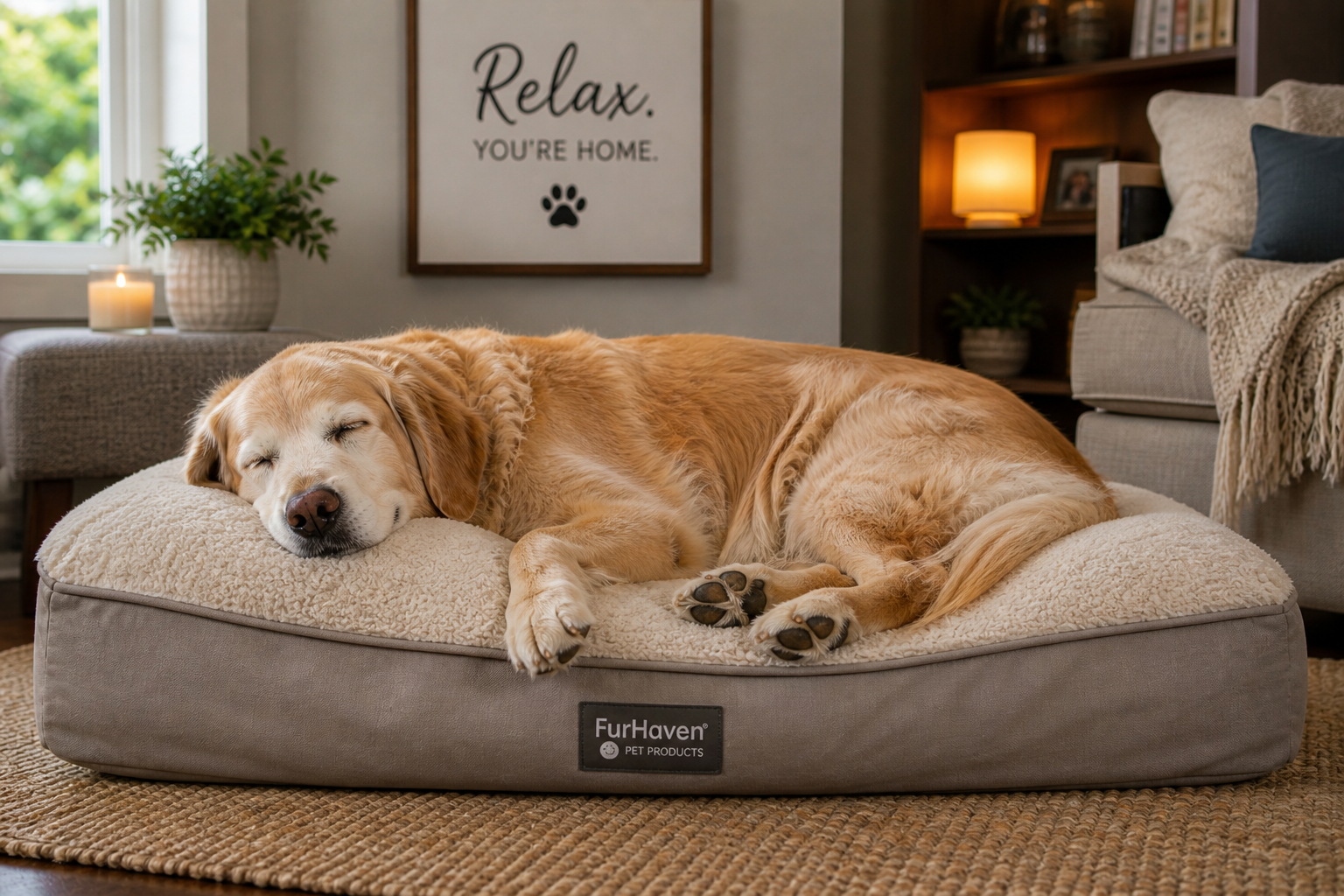
Every anxious dog needs a place they associate completely with safety and calm. This could be a crate with a comfortable bed inside, a quiet corner of a room, or a specific area of the house away from foot traffic and noise.
The key is consistency. The safe space should always be positive. Never use it as punishment. Build the association slowly by placing treats and familiar-smelling items there, letting your dog explore it at their own pace. Once the association is strong, your dog will naturally retreat there when they feel overwhelmed.
A portable dog mat or bed extends this safety net to new environments. Taking a familiar, comfort-associated item to the vet, car, or a new place can noticeably reduce your dog’s anxiety in those settings.
How to Calm an Anxious Dog at Home: What Actually Works
2. Exercise and Mental Stimulation
Physical exercise is one of the most powerful natural anxiety reducers available for dogs. Research has consistently shown that dogs with higher daily activity levels have significantly lower rates of fear, aggression, and separation anxiety.
Aim for at least 30 to 60 minutes of physical activity per day, adjusted for your dog’s age, breed, and health. But don’t underestimate mental exercise. A dog that’s physically tired but mentally bored is still an anxious dog.
Puzzle feeders, snuffle mats, nose work games, and training sessions all give your dog’s brain something to focus on. Ten minutes of nose work can tire a dog out as much as a 30 minute walk. For dogs home alone, leaving a stuffed Kong or a lick mat gives them something constructive to do instead of spiraling.
3. Routine and Predictability
Anxious dogs are fundamentally dogs that feel unsafe. One of the most effective things you can do is make their world more predictable. Consistent feeding times, walk schedules, and bedtime routines give your dog a framework they can rely on.
When a dog knows that X always leads to Y, their nervous system can relax. Unpredictability, even in small things, keeps an anxious dog in a constant state of low-level alertness that’s exhausting and unhealthy over time.
This doesn’t mean your life needs to be perfectly rigid. But even small consistencies like always feeding at the same time or having a predictable wind-down routine before bed can make a noticeable difference.
4. Desensitization and Counterconditioning
These two behavioral techniques are the gold standard for treating anxiety long-term. They take time and consistency, but they produce real, lasting results rather than just managing symptoms.
Desensitization involves gradually exposing your dog to whatever triggers their anxiety, starting at a very low intensity that doesn’t provoke a full fear response, then slowly increasing the intensity over many sessions as your dog builds tolerance.
Counterconditioning pairs the trigger with something your dog loves, usually high-value food, to change the emotional association from negative to positive. The goal is for your dog to eventually hear the trigger and think “treats are coming” rather than panic.
For example, if your dog is terrified of thunderstorms, you might start by playing a barely audible recording of thunder while feeding their favorite treats. Over weeks, you gradually increase the volume while always keeping the experience positive and ending before your dog reaches their threshold.
Working with a certified dog trainer or veterinary behaviorist makes this process significantly more effective, especially for severe anxiety.
5. Physical Touch and Calm Energy
For many dogs, your physical presence is the single most powerful calming influence available. Calm, slow petting and massage help reduce cortisol levels and give your dog something grounding to focus on.
Start at the neck and work down the spine with long, slow strokes. Keep one hand in contact with your dog while the other works along the back and sides. Over time you’ll learn where your dog holds tension and can focus there specifically.
The most important part is your own energy. Dogs are extraordinarily sensitive to human emotional states. An anxious or frustrated owner amplifies an anxious dog’s fear response. Staying calm and matter-of-fact during anxious episodes, rather than overly soothing or frustrated, helps your dog regulate more quickly.
6. Calming Products That Actually Work
Behavioral strategies alone aren’t always enough, especially for moderate to severe anxiety. These products have the strongest evidence base and the most consistent real-world results:
ThunderShirt applies gentle, constant pressure to your dog’s torso, similar in principle to swaddling a baby or using a weighted blanket. It’s most effective for situational anxiety like thunderstorms, fireworks, vet visits, and car travel. It doesn’t work for every dog, but it works for enough dogs that it’s consistently recommended by vets and trainers as a low-risk first option.
Adaptil products release synthetic versions of the dog-appeasing pheromone that mother dogs naturally produce when nursing. These pheromones have a calming effect that’s specific to dogs. The plug-in diffuser is best for home use. The spray works well for short-term situations like car rides or vet visits. The collar provides continuous exposure throughout the day. Adaptil is backed by more clinical research than most calming products on the market.
Calming supplements are widely used for mild to moderate anxiety. The most researched ingredients include L-theanine (found in green tea and known for promoting relaxation without sedation), L-tryptophan (an amino acid precursor to serotonin), melatonin (particularly useful for noise phobias and nighttime anxiety), and chamomile. Many products combine several of these. Always consult your vet before starting any supplement, especially in older dogs or dogs on other medications. Best Dog Anxiety Supplements 2026 – DogCat-care
Snuffle mats and lick mats are low-tech but genuinely effective. Sniffing and licking both activate the parasympathetic nervous system, which is the part responsible for rest and calm. A lick mat spread with peanut butter or wet food gives an anxious dog something to focus on that naturally counteracts the stress response. These are particularly useful for dogs left alone, during grooming, or in any high-stress situation where you need your dog occupied and calm.
White noise machines and calming music work by masking the unpredictable sounds that trigger anxiety. For noise-sensitive dogs, the randomness of thunder, fireworks, or street noise is part of what makes it so distressing. A consistent background sound reduces that unpredictability. Several apps and playlists are specifically curated for dogs, and research from the Scottish SPCA found that classical music significantly reduced stress behaviors in shelter dogs.
When to See a Vet
If your dog’s anxiety is severe, getting noticeably worse, or significantly affecting their quality of life despite your efforts, it’s time to involve a veterinarian.
A vet can rule out underlying medical conditions that might be contributing to or causing the anxiety, including pain, thyroid issues, neurological problems, and age-related cognitive decline. Physical discomfort is a surprisingly common driver of anxiety that gets overlooked.
If the anxiety warrants it, your vet may recommend medication. This is not a last resort. For many dogs, medication brings anxiety down to a level where behavioral training can actually work, rather than the dog being too overwhelmed to learn anything. Commonly prescribed options include fluoxetine, sertraline, and trazodone for ongoing anxiety. For situational anxiety around specific events, shorter-acting medications like alprazolam or gabapentin may be used.
Medication without behavioral work rarely produces lasting results. But behavioral work is also much harder and slower without medication for dogs with severe anxiety. The two approaches work best together.
For complex cases, a referral to a board-certified veterinary behaviorist is worth considering. These are specialists with advanced training specifically in animal behavior and anxiety disorders.
FAQ
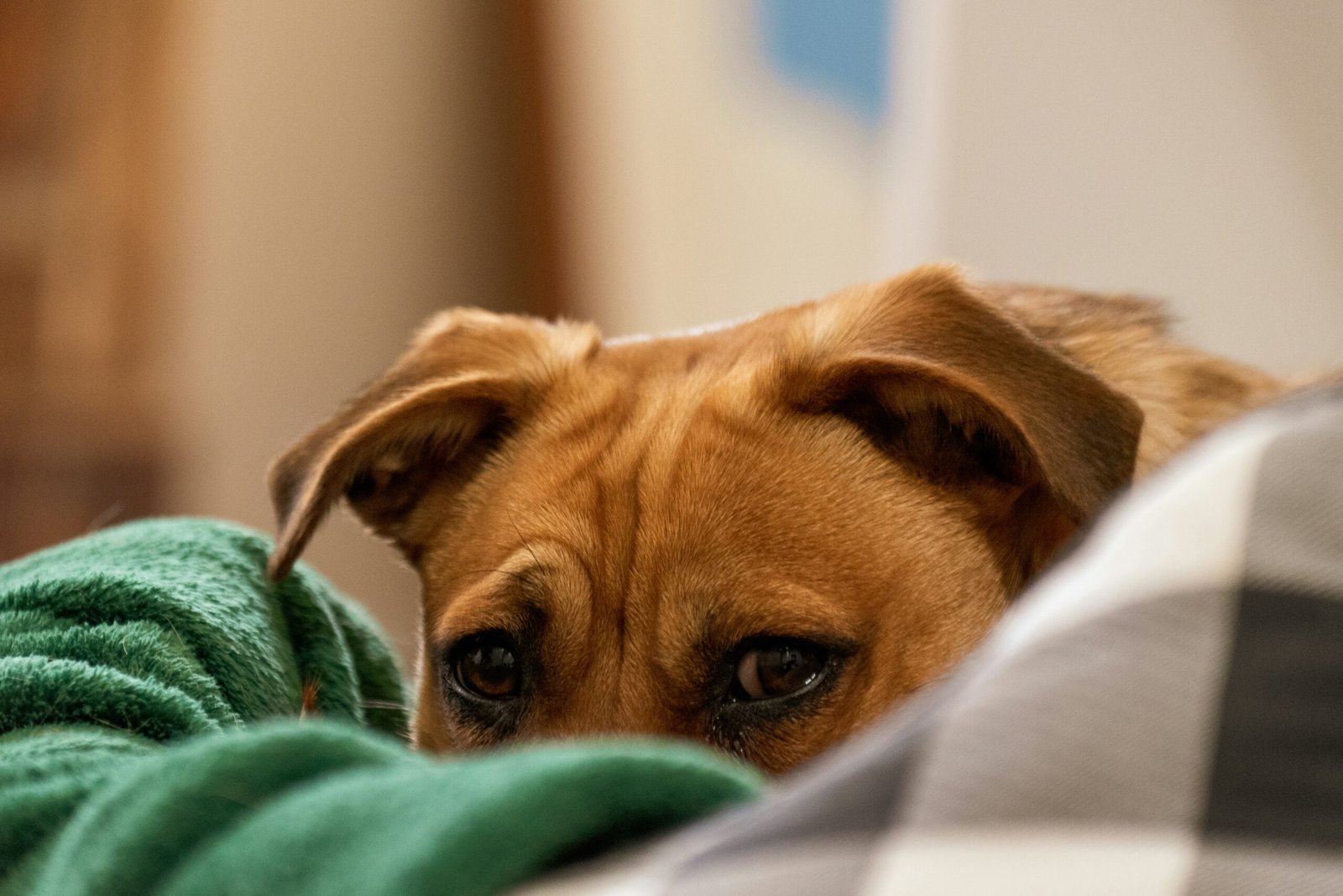
What are the most common signs of anxiety in dogs? The most common signs are excessive barking or whining when alone, destructive behavior, pacing, trembling, panting without exercise, and house soiling despite being housetrained. Subtler signs include excessive yawning, lip licking, whale eye, and clinginess.
What causes anxiety in dogs? The most common causes are separation from their owner, loud noises like thunderstorms or fireworks, unfamiliar people or environments, lack of socialization as a puppy, past trauma or neglect, and age-related cognitive decline. Genetics and breed also play a role, with some breeds being naturally more prone to anxiety.
Can dog anxiety go away on its own? In most cases, no. Anxiety that isn’t addressed tends to worsen over time. The earlier you start working on it, the better the outcome. Some mild situational anxiety can improve naturally as a puppy matures, but established anxiety in adult dogs rarely resolves without active intervention.
What is the fastest way to calm an anxious dog? For immediate relief, remove your dog from the trigger if possible, bring them to their safe space, and use calm, slow physical contact. A ThunderShirt or Adaptil spray can also provide quick situational relief. Long-term, behavioral training and routine produce the most lasting results.
Is a ThunderShirt actually effective? For many dogs, yes. ThunderShirts work by applying gentle, constant pressure that has a calming effect similar to swaddling. They work best for situational anxiety like thunderstorms, fireworks, and car rides. They don’t work for every dog, but they’re low-risk, affordable, and consistently recommended by vets as a first option worth trying.
When should I take my anxious dog to the vet? If your dog’s anxiety is severe, worsening, or significantly affecting their daily life despite your efforts, see a vet. They can rule out underlying medical conditions and discuss whether medication might help alongside behavioral work. There’s no need to wait until things become unmanageable.
Can I give my dog something natural for anxiety? Yes. Supplements containing L-theanine, L-tryptophan, melatonin, or chamomile are commonly used for mild to moderate anxiety. Adaptil pheromone products are another well-researched natural option. Always check with your vet before starting any supplement, particularly for older dogs or those on other medications.
Does exercise really help with dog anxiety? Absolutely. Regular physical exercise is one of the most effective natural anxiety reducers available. Research consistently shows that more active dogs have significantly lower rates of fear, aggression, and separation anxiety. Mental exercise through puzzle feeders, nose work, and training sessions is equally important and often underused.
What is the difference between separation anxiety and normal clinginess? A clingy dog wants to be near you and may follow you around the house, but is able to settle when you leave. A dog with separation anxiety experiences genuine panic when left alone, which shows up as frantic barking, destructive behavior, or house soiling that only happens in your absence.
Can anxiety in dogs lead to aggression? Yes. Anxiety is one of the most common underlying causes of aggression in dogs. A dog that bites out of fear is an anxious dog that felt cornered or overwhelmed. Addressing the anxiety is essential to addressing the aggression. Punishing fear-based aggression without treating the underlying anxiety almost always makes things worse.
Is dog anxiety more common in certain breeds? Yes. Some breeds are genetically predisposed to higher anxiety levels. Border Collies, German Shepherds, Labrador Retrievers, Vizslas, and Bichon Frises are among the breeds most commonly associated with anxiety and separation-related issues. That said, anxiety can develop in any breed.
Can a second dog help with separation anxiety? Sometimes, but not reliably. Some dogs do better with a companion. Others are anxious regardless of whether another dog is present because the anxiety is specifically about being separated from their human. Getting a second dog to solve separation anxiety is a big commitment that doesn’t always pay off.
The Bottom Line
Dog anxiety is common, genuinely difficult for the dogs that experience it, and very treatable when you take the right approach.
Start with the fundamentals: a consistent daily routine, adequate exercise, a designated safe space, and calm, predictable interactions. Layer in calming products based on your dog’s specific triggers. If you’re not seeing progress, work with a trainer or your vet rather than waiting for things to improve on their own.
Your dog can’t tell you they’re struggling. But the signs are there if you know what to look for. The fact that you’re reading this already puts your dog in a better position than most.
Sources
- https://www.akc.org/expert-advice/health/treating-dog-anxiety/
- https://www.chewy.com/education/dog/health-and-wellness/how-to-calm-an-anxious-dog
- https://vcahospitals.com/know-your-pet/signs-your-dog-is-stressed-and-how-to-relieve-it
- https://www.vet.cornell.edu/departments-centers-and-institutes/riney-canine-health-center/canine-health-topics/anxious-behavior-how-help-your-dog-cope-unsettling-situations
- https://www.petmd.com/dog/behavior/evr_dg_how-to-calm-down-an-anxious-dog


Pingback: How to Help a Dog with Separation Anxiety - DogCat-care
Pingback: How to Calm an Anxious Dog at Home: What Actually Works
Pingback: Best Dog Anxiety Supplements 2026 - DogCat-care