Introduction
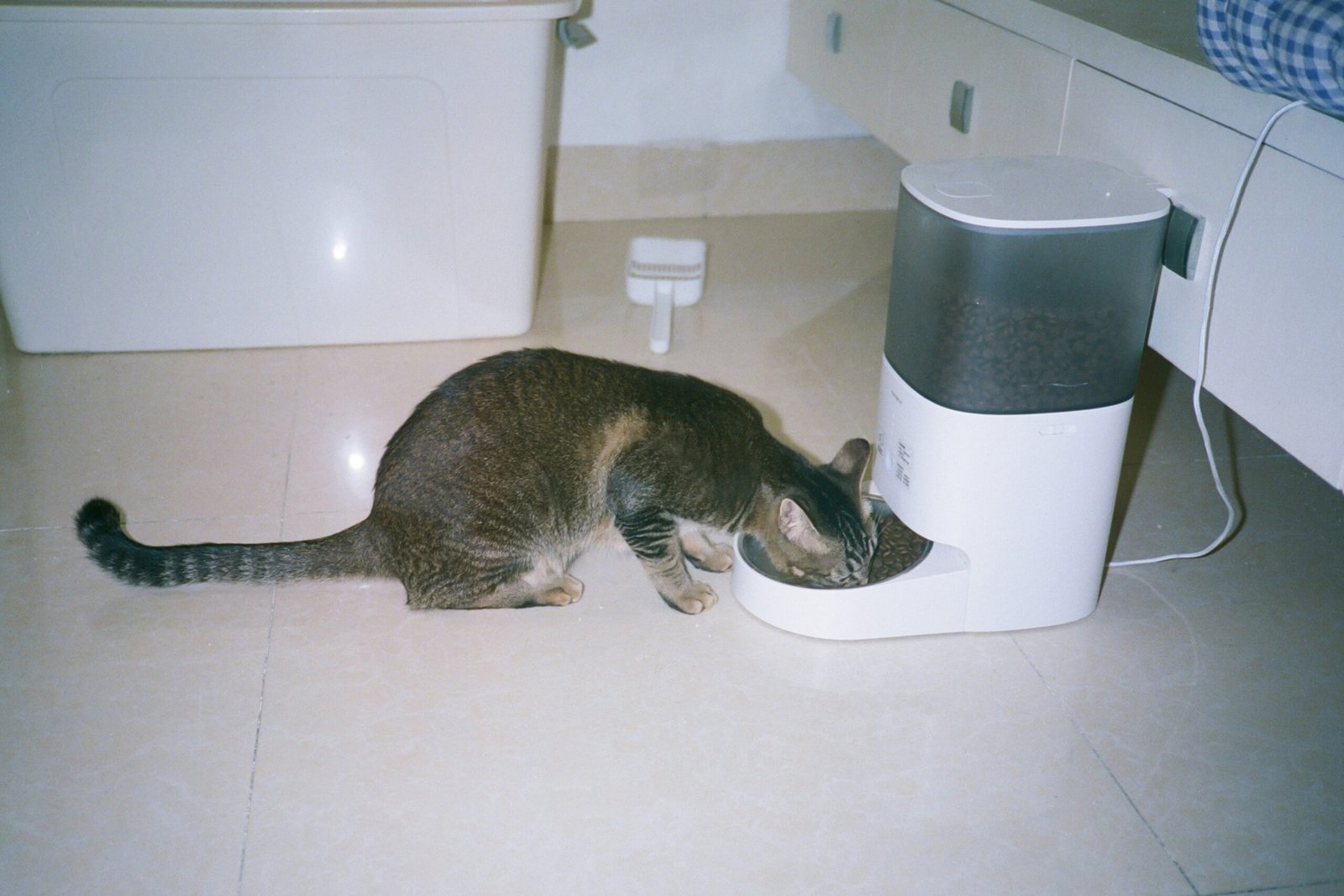
Knowing how much to feed a cat per day sounds like a simple question. In practice, most owners get it wrong in one of two ways. Either the cat leaves half the bowl untouched every meal, which means the portions are too large. Or the cat sprints to the automatic feeder the moment it clicks open, which usually means the intervals are too long or the portions are too small. Both patterns are common, and both are easy to miss because owners assume the cat will self-regulate. Most cats will not.
Getting the daily amount right matters more than most people realise. Overfeeding by even a small margin every day compounds into significant weight gain over months. Underfeeding leads to nutritional deficiency and chronic low-level hunger that affects behaviour and wellbeing. The right amount is specific to your cat, not a generic scoop from a bag.
This guide covers how much to feed a cat per day based on the factors that actually determine the answer.
By Dogcat-Care.
Table of Contents
Why There Is No Single Answer for Every Cat
The most honest starting point for how much to feed a cat per day is that the number varies significantly between individual cats. A flat recommendation of “one cup of dry food per day” is not useful, because it ignores the variables that determine what any specific cat actually needs.
Weight is the most direct factor. A 4 kg cat has fundamentally different caloric needs than a 6 kg cat, even if they are the same breed and age. Feeding both the same amount means one is consistently overfed or the other is consistently underfed.
Age changes requirements substantially. Kittens under one year are growing rapidly and need significantly more calories per kilogram of body weight than adult cats. Adult cats between one and seven years have relatively stable needs. Senior cats over ten often need fewer calories as their metabolism slows and their activity level drops, though some senior cats actually lose weight and need more.
Activity level affects daily burn. An indoor cat that sleeps 18 hours a day expends far less energy than a cat with outdoor access that hunts and explores. The same food amount that maintains a healthy weight in an active cat can cause obesity in a sedentary one.
Neutered status reduces caloric needs by roughly 20 to 30 percent compared to intact cats of the same size. This is one of the most overlooked factors in cat feeding. Many owners continue feeding the same amount after neutering and wonder why their cat gains weight.
Health conditions change requirements in both directions. Hyperthyroidism causes weight loss despite adequate intake. Diabetes requires carefully controlled portions and timing. Kidney disease often requires specific protein and phosphorus management. Any cat with a diagnosed condition needs feeding guidance from a veterinarian rather than general guidelines.
How to Calculate How Much to Feed a Cat Per Day
The most reliable way to determine how much to feed a cat per day starts with calories, not volume. Volume is unreliable because different foods have different caloric densities. A cup of one dry food may contain 300 calories. A cup of another may contain 500. Feeding by volume without knowing the caloric content of the specific food leads to significant errors.
Step one: find your cat’s daily caloric need.
The standard formula used in veterinary nutrition is based on resting energy requirement, or RER, calculated as:
RER = 70 x (body weight in kg)^0.75
For a typical indoor, neutered adult cat this is then multiplied by a life stage factor. For a neutered adult cat at rest, the factor is approximately 1.2. For an active adult, closer to 1.4. For a kitten under six months, up to 2.5.
For practical purposes, most healthy adult indoor cats need roughly 200 to 250 calories per day. A 4 kg neutered indoor cat needs approximately 200 calories. A 5 kg cat needs approximately 230 to 250. These are starting points, not precise targets, because individual variation is real.
Step two: find the caloric content of your cat’s food.
Every commercial cat food must list caloric content somewhere on the packaging, usually expressed as kcal per cup for dry food or kcal per can or per 100g for wet food. This number is what you use to calculate the actual amount to feed.
If your cat needs 220 calories per day and your dry food contains 350 kcal per cup, the daily portion is roughly 220 divided by 350, multiplied by the cup measurement, which gives you approximately 0.63 cups per day, split across meals.
If you cannot find the caloric content on the packaging, most manufacturers list it on their website or you can contact them directly.

How Much to Feed a Cat Per Day: Dry Food
Dry food is the most commonly used cat food type, partly because of convenience and cost, and partly because of the common belief that it supports dental health. The dental benefit is debated, but the convenience is real.
The typical range for how much dry food to feed a cat per day is 50 to 80 grams for an average adult cat, depending on the caloric density of the specific food and the cat’s weight and activity level. This is significantly less than most owners assume, and far less than the generous guidelines printed on many bags.
A key point about dry food is that it is calorie-dense. Because the water has been removed, a small volume contains a lot of energy. This makes portion control particularly important with dry food. An owner who pours what looks like a reasonable amount into the bowl may be providing 30 to 50 percent more calories than the cat needs.
Dry food also does not satisfy hunger as effectively as wet food for many cats, because the high carbohydrate content is processed quickly. Some cats on a dry-only diet are persistently hungry despite consuming adequate calories, which leads owners to top up the bowl more frequently than necessary.
If you are feeding dry food, weigh it rather than measuring by volume. A digital kitchen scale gives you far more accuracy than a scoop or cup, which varies depending on how densely the food is packed.
How Much to Feed a Cat Per Day: Wet Food
Wet food has a much higher water content than dry, typically 70 to 80 percent water compared to around 10 percent in dry food. This means it is much lower in calories per gram, which in turn means cats need a larger physical volume to meet their daily caloric need.
A typical adult cat of around 4 to 5 kg needs approximately two to three 85-gram pouches or half to a full 400-gram tin of wet food per day, depending on the caloric content of the specific product. Again, checking the kcal per 100g on the packaging is the only reliable way to calculate the correct amount for your specific food.
Wet food has genuine advantages for cat health. Cats evolved as desert animals with a low thirst drive and are designed to get most of their water from prey. Wet food supports hydration in a way that dry food does not, which is relevant for urinary tract health and kidney function. Cats on a wet-food diet typically drink less from their water bowl but have significantly higher total water intake.
The practical challenge with wet food is that uneaten portions spoil quickly, particularly in warm environments. Food left out for more than two hours in a warm room should be discarded. If your cat consistently leaves wet food uneaten, the portions are too large for one sitting and should be split into smaller, more frequent meals.
How Much to Feed a Cat Per Day: Mixed Feeding
Many owners feed a combination of wet and dry food, using dry food as the main daily ration and wet food as a supplement or morning and evening meal. This is a valid approach but requires calculating the total daily calories from both sources to avoid overfeeding.
The most common mistake with mixed feeding is treating the wet food as an addition to the existing dry food portion rather than as a partial replacement. If your cat needs 220 calories per day and you give a pouch of wet food containing 80 calories, the dry food portion for that day should be reduced accordingly to around 140 calories worth.
A simple way to manage this is to calculate the total daily caloric target, then decide what proportion will come from wet versus dry, and portion each accordingly. Keeping the proportion consistent day to day makes it easier to monitor whether the overall amount is right.

How Much to Feed a Cat Per Day by Age
Age is one of the most important variables in determining how much to feed a cat per day. Here is how requirements change across life stages.
Kittens under 6 months. Growing kittens need up to twice the calories per kilogram of body weight compared to adult cats. They also need more frequent meals, ideally three to four times per day, because their small stomachs cannot hold enough food in a single sitting to fuel their growth. At this stage, feeding a kitten-specific formula and following package guidelines adjusted for body weight is appropriate. Kittens rarely overeat to the point of obesity at this age.
Kittens 6 to 12 months. Caloric needs begin to reduce as growth slows but remain higher than adult requirements. Two to three meals per day is appropriate. Start transitioning toward adult feeding guidelines as the cat approaches 12 months.
Adult cats 1 to 7 years. This is the most stable period for feeding. The guidelines in the previous sections apply here. Two meals per day is standard and appropriate for most adult cats. Free feeding, where food is left out all day, is not recommended for most cats because it makes portion control impossible and is a primary driver of feline obesity.
Senior cats over 10 years. Some senior cats maintain weight easily and need no adjustment. Others lose muscle mass and bodyweight as they age and need higher calorie or higher protein intake. A third group gains weight as activity decreases. The right approach depends on the individual cat. Senior cats should be weighed regularly, at least every one to two months, and feeding amounts adjusted based on body condition rather than age alone.
Signs You Are Feeding the Wrong Amount
The clearest feedback on how much to feed a cat per day comes from the cat itself, but only if you know what to look for.
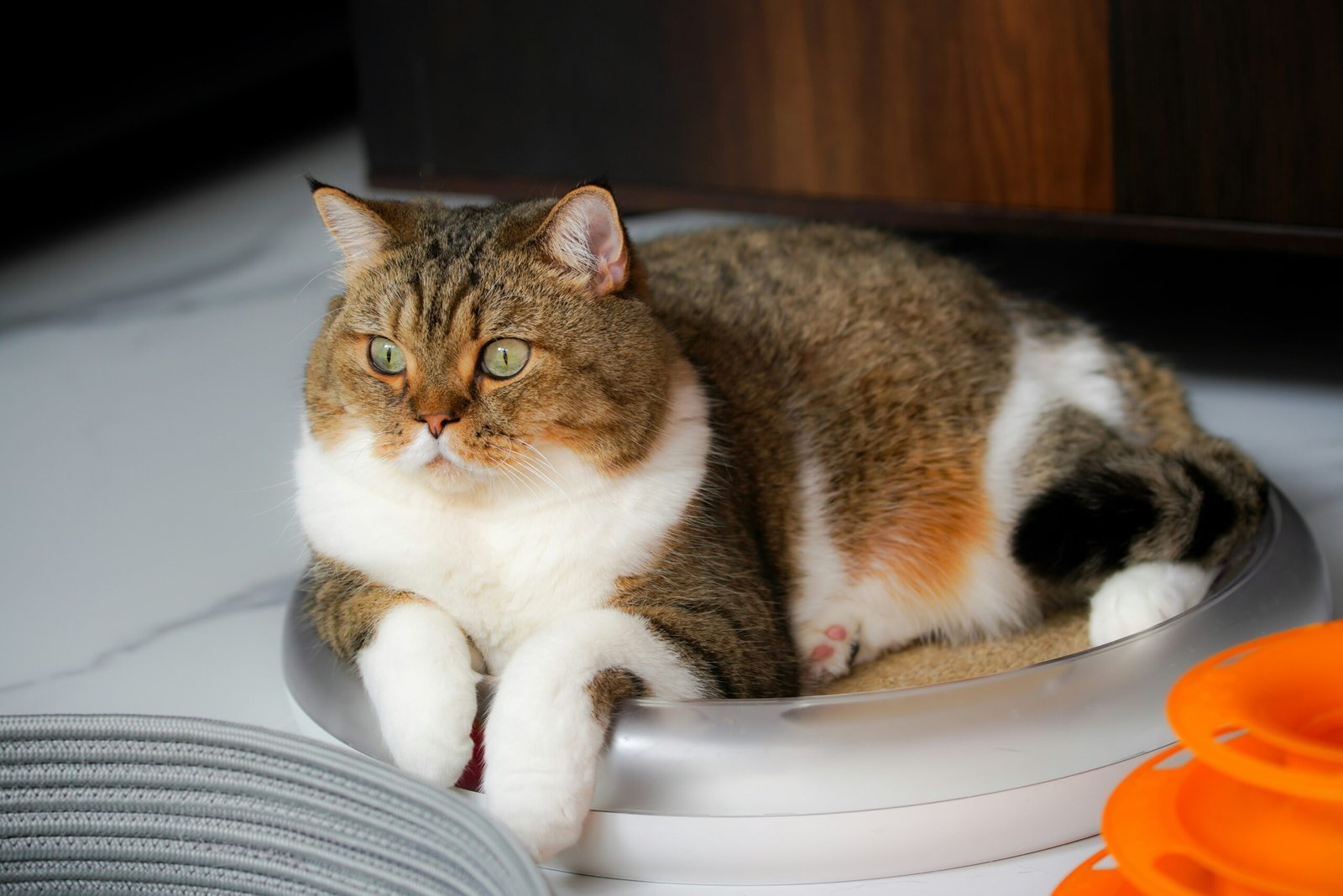
Signs of overfeeding: consistent weight gain over months, food left in the bowl at the end of every meal, a rounded belly without a visible waist when viewed from above, ribs that are difficult to feel under a layer of fat. A cat that finishes every meal and then immediately seeks more is not necessarily underfed. It may simply be eating too fast, which is a different problem.
Signs of underfeeding: consistent weight loss, visible ribs or spine, excessive vocalisation around meal times, rushing to the feeder the moment it activates, finishing food within seconds and searching for more. A cat that sprints to the bowl and finishes every meal immediately is telling you the portions may be too small or the time between meals too long.
The body condition score check. Run your hands along your cat’s ribcage. You should be able to feel individual ribs without pressing hard, with a thin layer of tissue over them. Looking from above, there should be a visible waist narrowing behind the ribcage. Looking from the side, the belly should tuck upward slightly. If you cannot feel the ribs or there is no visible waist, the cat is likely overweight. If the ribs are very prominent or the belly is deeply tucked, the cat may be underweight.
Why Is My Cat Not Eating? Causes, What to Do and When to Act
How Often Should You Feed a Cat Per Day
How much to feed a cat per day and how often to feed are two separate questions that work together. The total daily amount stays the same regardless of how many meals it is split into, but the number of meals affects how the cat experiences its food.
Most adult cats do well with two meals per day, one in the morning and one in the evening, spaced roughly 10 to 12 hours apart. This mirrors a natural feeding rhythm and gives the digestive system adequate time between meals.
Some cats, particularly those prone to digestive sensitivity or vomiting on an empty stomach, benefit from three smaller meals spread across the day. Others manage well with two. The key is consistency. Cats adapt to a schedule quickly and become distressed when meal timing is erratic.
Free feeding, where dry food is left available at all times, works for some cats that self-regulate naturally. These cats are the exception. Most cats fed on a free-access basis gradually consume more than they need, and weight gain is slow enough that owners do not notice until it is significant. Scheduled meals give you control over the daily intake and make it easy to spot changes in appetite, which are often an early sign of illness.
Why Is My Cat Always Hungry? Causes and What to Do – DogCat-care
FAQ
How do I know if I am feeding my cat enough?
The most reliable indicators are body condition and behaviour. A cat at a healthy weight has palpable ribs without visible prominence, a visible waist from above, and a slight abdominal tuck from the side. Behaviourally, a well-fed cat is not frantic at meal times, does not vocalise excessively around feeding, and does not finish every meal in seconds and immediately seek more.
My cat leaves food in the bowl every day. Should I reduce portions?
If your cat consistently leaves the same amount at every meal, yes, the portions are likely slightly larger than necessary. Reduce by a small amount and observe whether the cat now finishes the meal and remains satisfied. If the cat finishes and immediately seeks more, the new portion is too small. Adjust gradually rather than making large changes at once. Best Cat Food for Indoor Cats (Top Rated Brands for Health & Weight) – DogCat-care
Can I feed my cat once a day?
Once a day is not recommended for most adult cats. A 24-hour gap between meals is too long for a cat’s digestive system and can lead to stomach acid build-up, vomiting on an empty stomach, and excessively hungry behaviour around feeding time. Two meals minimum is the standard recommendation for adult cats.
Do indoor cats need less food than outdoor cats?
Generally yes. Outdoor cats with access to hunting and exploration expend significantly more energy than sedentary indoor cats. An indoor cat that primarily rests needs fewer calories to maintain weight. This is particularly relevant when a previously outdoor cat transitions to indoor living or when activity level changes with age or health.
Should I follow the feeding guidelines on the cat food packaging?
Packaging guidelines are a reasonable starting point but are often calculated for a slightly more active or larger cat than the average indoor neutered adult. They also cannot account for your specific cat’s individual metabolism. Use them as a starting point, then adjust based on your cat’s actual body condition over four to six weeks.
My cat seems hungry all the time. Does that mean I am underfeeding?
Not necessarily. Some cats are persistent beggars regardless of whether they are adequately fed. Check the body condition score first. If the cat is at a healthy weight, the hunger signals are likely behavioural rather than a genuine caloric deficit. Switching from free feeding to scheduled meals often reduces persistent begging behaviour because the cat adapts to a predictable feeding rhythm.
How much wet food should I give my cat per day alongside dry food?
Calculate the total daily caloric target for your cat, then subtract the calories provided by the dry food portion, and feed enough wet food to make up the remainder. For a typical 4 to 5 kg adult cat needing around 200 to 220 calories per day, one small pouch of wet food alongside a reduced dry food portion covers the daily requirement, but the specific amounts depend on the caloric content of the products you are using.
Final Thoughts
Knowing how much to feed a cat per day is not about following a single rule. It is about understanding the variables that make your cat’s needs different from another cat’s, calculating a reasonable starting point based on those variables, and then adjusting based on what the cat’s body and behaviour tell you over time.
A cat that leaves food behind every meal and a cat that sprints to the feeder and finishes in seconds are both giving you useful information. The first is probably getting too much. The second may not be getting enough, or the meals are too far apart. Both patterns are easy to correct once you recognise them.
Start with the caloric content of your food, calculate a daily target based on your cat’s weight and life stage, split it into two meals, and monitor body condition every few weeks. That approach gets most owners to the right amount faster than any general guideline can.
Cat Health & Care: The Complete Guide to Keeping Your Cat Healthy at Every Life Stage – DogCat-care
Sources
- https://www.petmd.com/cat/nutrition/how-much-to-feed-a-cat
- https://www.cats.com/how-much-to-feed-a-cat
- https://www.catster.com/cat-health-care/how-much-to-feed-your-cat/
- https://www.wsava.org/WSAVA/media/PDF_old/Global-Nutrition-Committee-Tools.pdf
- https://www.vet.cornell.edu/departments-centers-and-institutes/cornell-feline-health-center/health-information/feline-health-topics/feeding-your-cat


Pingback: Why Is My Cat Not Eating? Causes, What to Do and When to Act
Pingback: Best Cat Food for Indoor Cats (Top Rated Brands for Health & Weight) - DogCat-care
Pingback: Cat Health & Care: The Complete Guide to Keeping Your Cat Healthy at Every Life Stage - DogCat-care
Pingback: Why Is My Cat Always Hungry? Causes and What to Do - DogCat-care