Introduction
Choosing the right cat carrier size is more important than most people think.
Too small, and your cat feels cramped, stressed, and uncomfortable. Too big, and your cat slides around during travel, which can actually make things less safe. The goal is not the biggest carrier. It’s the right fit.
A proper cat carrier size should allow your cat to stand, turn around, and lie down comfortably without extra empty space. This balance is what keeps your cat calm and secure during travel.
The problem is that many owners guess. They buy based on looks or general size labels like “medium” or “large,” which often don’t match their cat at all.
In this guide, you’ll learn:
- How to choose the right cat carrier size step by step
- A simple way to measure your cat correctly
- A clear cat carrier size chart based on weight
- And how to avoid common sizing mistakes
If you get the sizing right, everything else becomes easier.
By Dogcat-care.
This post may contain affiliate links. If you buy through these links, I may earn a small commission at no extra cost to you. As an Amazon Associate, I earn from qualifying purchases.
Table of Contents
Quick Answer
If you’re wondering about the right cat carrier size, here’s the simple rule:
Your cat carrier should be big enough for your cat to:
- Stand up without crouching
- Turn around easily
- Lie down in a natural position
That’s the ideal cat carrier size for comfort and safety.
Simple sizing formula
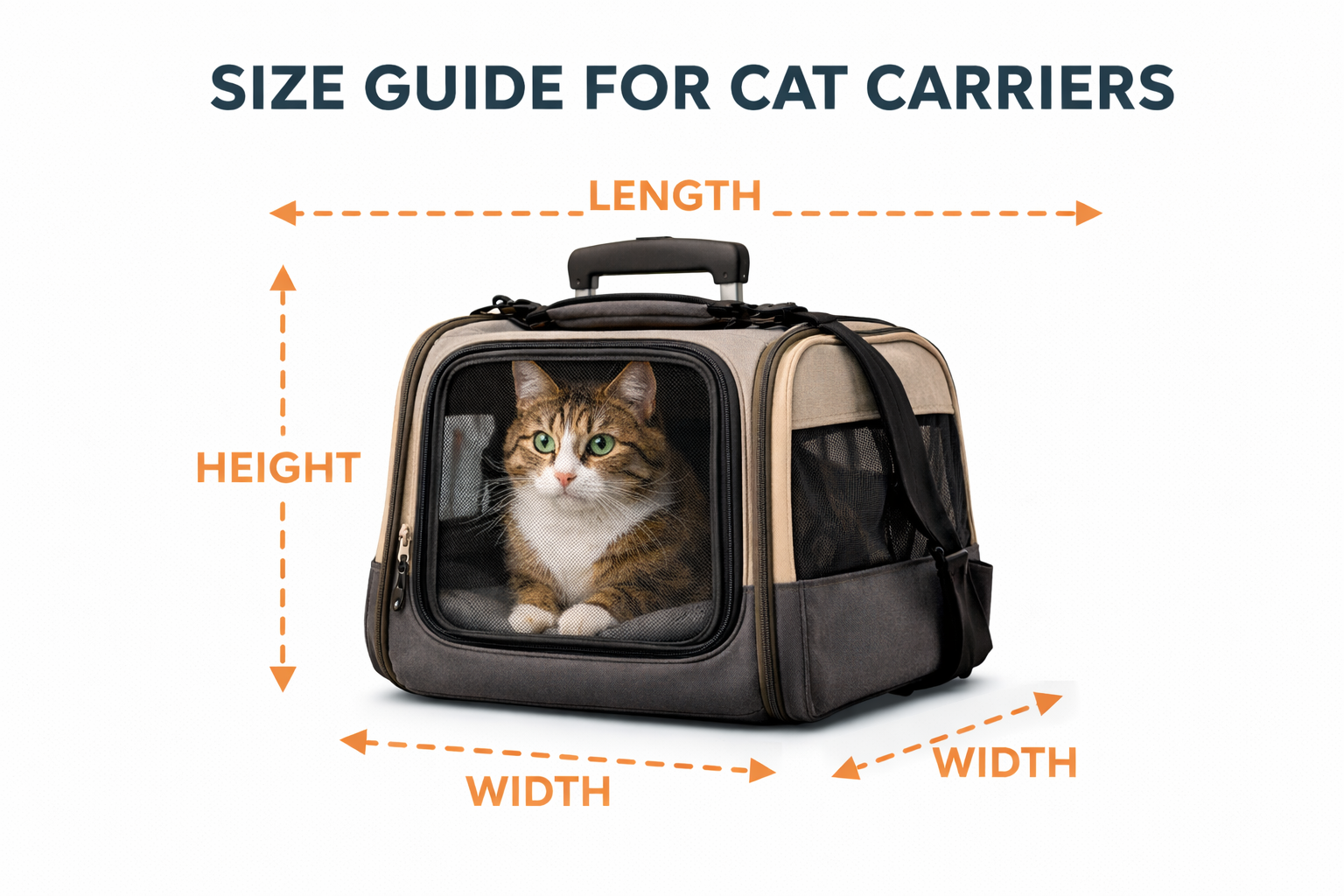
To find the correct cat carrier dimensions, use this:
- Length: nose to base of tail + 2–4 inches
- Height: floor to top of head + 2–3 inches
This is the most reliable way for how to measure cat for carrier and avoid guessing.
Quick examples
- Small cat (6–8 lbs) → small carrier
- Medium cat (9–12 lbs) → medium carrier
- Large cat (13+ lbs) → large carrier
If you’re asking what size cat carrier for 10 lb cat, most will need a medium carrier with enough room to turn and lie down comfortably.
Key takeaway
The best cat carrier size guide is simple:
- Not too tight
- too big
- Just enough space to move comfortably
Cat Carrier Size Chart
Use this cat carrier size chart as a quick reference based on weight and typical dimensions.
| Cat Weight | Recommended Carrier Size | Typical Dimensions (L x W x H) |
|---|---|---|
| Up to 8 lbs | Small | 16–18″ x 10–11″ x 10–11″ |
| 9–12 lbs | Medium | 18–20″ x 11–13″ x 11–13″ |
| 13–18 lbs | Large | 20–24″ x 13–15″ x 13–15″ |
| 18+ lbs | Extra Large | 24–26″+ x 15–17″+ x 15–17″+ |
Important note
Weight is just a guideline.
For the best cat carrier size, always:
- Measure your cat
- Consider body length and height
- Think about how your cat likes to sit or lie
This is especially important for long cats or heavier breeds.
What this means in practice
Many people search for:
- what size cat carrier
- how big should a cat carrier be
But the real answer is always based on:
your cat’s actual measurements, not just weight
Best Cat Carriers for Travel (2026) – DogCat-care
How to Measure Your Cat (Step-by-Step)
If you want the correct cat carrier size, you need to measure your cat properly. Guessing is where most people go wrong.
This is the most reliable method for how to measure cat for carrier.
1. Measure length
Measure from:
- The tip of the nose
- To the base of the tail (not the full tail)
This gives you the minimum carrier length.
2. Measure height
Measure from:
- The floor
- To the top of your cat’s head or ears (whichever is higher)
This determines the minimum carrier height.
3. Add extra space
For the correct cat carrier dimensions, add:
- 2 to 4 inches to the length
- 2 to 3 inches to the height
This ensures your cat can move comfortably without having too much space.
Example
If your cat is:
- 16 inches long
- 10 inches tall
Then the ideal cat carrier size would be around:
- 18–20 inches long
- 12–13 inches high
Why this matters
This method answers both:
- how big should a cat carrier be
- and what size cat carrier do you need
It removes guesswork and gives you a clear fit.
What Happens If You Choose the Wrong Size
Choosing the wrong cat carrier size creates real problems during travel.
If the carrier is too small
- Your cat cannot stand or turn properly
- Increased stress and anxiety
- Poor airflow around the body
- Higher chance of overheating
A carrier that is too small makes even short trips uncomfortable.
If the carrier is too big
Many people think bigger is better. It’s not.
A carrier that is too large:
- Allows your cat to slide around
- Reduces stability during car travel
- Can increase anxiety instead of reducing it
This is a common mistake when people search for best size cat carrier for travel.
The correct balance
The ideal cat carrier size guide always comes down to:
- Enough space to move
- Not so much space that your cat loses stability
Key takeaway
If you’re unsure about what size cat carrier, always go back to measurements.
That’s more reliable than:
- Weight labels
- Generic size names like “medium”
- Product descriptions
Best Airline Approved Cat Carriers (2026) – DogCat-care
Best Carrier Size by Situation
The right cat carrier size also depends on how you use it. A carrier that works for home or vet visits may not work for travel.
Car travel
For car rides, stability matters more than extra space.
The best cat carrier size for travel in a car:
- Allows your cat to lie down comfortably
- Does not leave too much empty space
- Fits securely on the seat
If the carrier is too large, your cat will slide during turns or braking.
Air travel
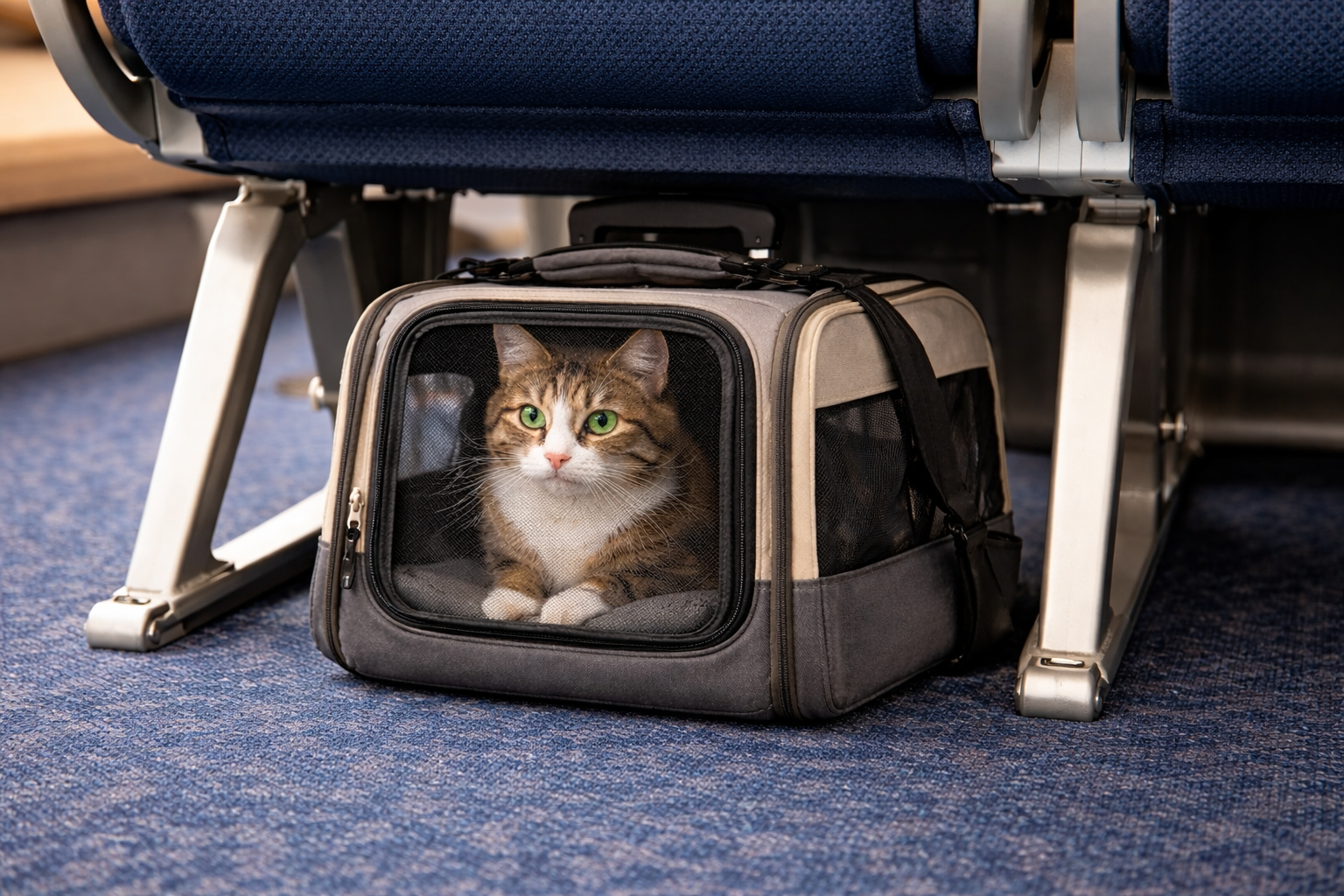
Airlines have strict rules, which makes what size cat carrier for airplane a key question.
Most airlines require:
- Carrier fits under the seat
- Flexible dimensions (usually soft carriers)
- Enough room for your cat to turn and lie down
Typical airline limits:
- Length: 16–18 inches
- Width: 10–12 inches
- Height: 8–11 inches
Because of this, the correct cat carrier size for flights is often smaller than what you would use at home.
Vet visits
For vet visits, handling matters more than space.
The best cat carrier size here:
- Is easy to open
- Keeps your cat secure
- Doesn’t require extra room
A slightly more compact carrier is often easier to manage.
Kittens vs adult cats
This is where many people make mistakes.
- Kittens grow quickly
- Buying too small means replacing it soon
- Buying too big creates instability
The best approach:
- Choose a cat carrier size that fits your cat now
- Avoid oversizing too much
- Upgrade later if needed
Airline Rules You Can’t Ignore
If you’re flying, guessing the cat carrier dimensions can cause real problems.
Size varies per airline
There is no universal standard.
Each airline has slightly different limits for:
- Length
- Width
- Height
This is why many people search for what size cat carrier for airplane and still get confused.
Soft carriers are preferred
Soft carriers:
- Compress under the seat
- Fit more easily within limits
- Are accepted by most airlines
Hard carriers often fail because they cannot adjust.
Real-world insight
Airlines don’t always measure precisely.
But if your carrier:
- Looks too big
- Doesn’t fit under the seat
You risk being denied boarding.
Soft vs Hard Carrier Size Differences
The type of carrier affects how cat carrier size works in practice.
Soft carriers
- Flexible dimensions
- Can compress slightly
- Better for tight spaces
This makes them ideal for travel and airline use.
Hard carriers
- Fixed size
- More structured
- Less forgiving if slightly oversized
They require more precise sizing.
Mistakes to Avoid
Most sizing mistakes happen because people don’t measure their cat.
Always follow a proper cat carrier size guide.
A larger carrier is not always safer or more comfortable.
Correct cat carrier size is about balance, not maximum space.
If you travel, always check airline rules before buying.
Weight helps, but it’s not enough.
Always combine:
- Weight
- Length
- Height
Best Airline Approved Cat Carriers (2026) – DogCat-care
FAQ
What size cat carrier for a 10 lb cat?
Most 10 lb cats need a medium carrier around 18–20 inches long. Always check actual measurements to confirm the right cat carrier size.
Can a cat carrier be too big?
Yes. A carrier that is too large reduces stability and can make your cat feel less secure.
How big should a cat carrier be?
A proper cat carrier size allows your cat to stand, turn, and lie down comfortably without extra empty space.
Do airlines check cat carrier size?
Sometimes. If your carrier looks too large or doesn’t fit under the seat, you may not be allowed to board.
Can two cats share one carrier?
Only if the carrier is large enough and both cats are comfortable. In most cases, separate carriers are safer.
Conclusion
The right cat carrier size is not about choosing small or large. It’s about choosing the correct fit.
If you remember one thing:
- Measure your cat
- Add a small margin
- Avoid oversizing
That’s how you get the right balance between comfort and safety.
Once you get the sizing right, travel becomes much easier for both you and your cat.
Sources
https://www.thesprucepets.com/best-cat-carriers-4682621
https://www.thesprucepets.com/how-to-choose-a-cat-carrier-555405
https://www.vetstreet.com/our-pet-experts/how-to-choose-the-right-cat-carrier
https://www.petmd.com/cat/care/how-choose-best-cat-carrier
https://www.akc.org/expert-advice/lifestyle/how-to-travel-with-a-cat-in-a-car/
https://www.aa.com/i18n/travel-info/special-assistance/pets.jsp
https://www.delta.com/us/en/pet-travel/overview
https://www.united.com/en/us/fly/travel/traveling-with-pets.html
https://www.catster.com/lifestyle/best-cat-carriers/



Pingback: Best Airline Approved Cat Carriers (2026) - DogCat-care