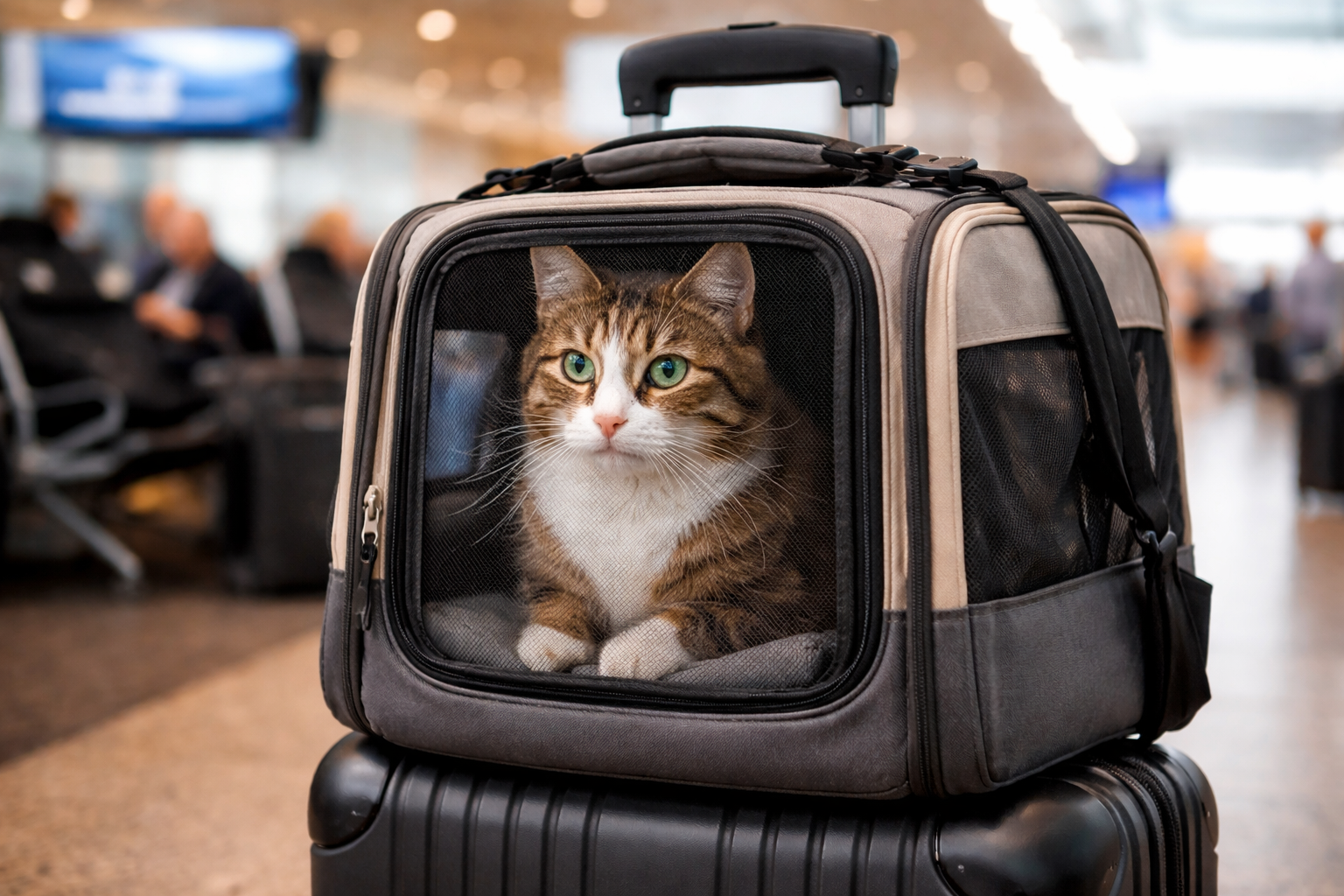
Introduction
Traveling with a cat sounds easy until you actually try it.
You zip the carrier… and your cat immediately starts clawing at the mesh.
They panic in the car. They cry the entire flight. And the moment you open the zipper, they try to bolt.
Here’s what’s really going on:
Most cats don’t hate travel itself they hate unpredictable movement, tight spaces, and zero control. And the wrong carrier makes all three worse.
That’s why choosing the right cat carrier isn’t just about convenience it directly affects:
- How stressed your cat gets
- How safe they are during travel
- Whether your trip is manageable… or a complete nightmare
In this guide, you’ll find the best cat carriers for travel in 2026, broken down by real-world use cases:
- Flying (airline-approved carriers that actually fit under seats)
- Car travel (more stability, less motion stress)
- Nervous or anxious cats (where design matters more than price)
- Everyday trips like vet visits
You’ll also learn what actually matters when choosing a carrier based on how cats behave, not marketing claims.
No fluff. Just the carriers that make travel easier for both of you.
By Dogcat-care.
This post may contain affiliate links. If you buy through these links, I may earn a small commission at no extra cost to you. As an Amazon Associate, I earn from qualifying purchases.
Table of Contents
Quick Picks (Best by Category)
If you don’t want to overanalyze this, start here. These are the best cat carriers for travel based on specific use cases not just specs.
- Best Overall: Sherpa Original Deluxe Pet Carrier
→ The safest all-around choice. Reliable, airline-approved, and easy to use—even if your cat resists going in. - Best Airline Approved Cat Carrier: Sleepypod Air In-Cabin Carrier
→ Built specifically to fit under airline seats (even the tighter ones). Ideal if you want zero issues at boarding. - Best Cat Carrier for Car Travel: Pet Gear View 360 Travel Carrier
→ More structure + visibility = less motion stress and fewer panic reactions during drives. - Best Cat Carrier for Nervous Cats: Mr. Peanut’s Soft-Sided Expandable Carrier
→ Expandable sides + airflow give anxious cats more space, which noticeably reduces stress. - Best Cat Backpack Carrier: Texsens Innovative Traveler Backpack
→ Hands-free and practical for short trips, apartments, or city use.
How to Choose (Quick Decision Guide)
If you’re unsure, use this:
- Flying once or twice a year → Sherpa Deluxe
- Flying frequently → Sleepypod Air
- Cat gets anxious easily → Mr. Peanut’s Expandable
- Mostly car travel → View 360
- Need mobility (walking, city, no car) → Backpack carrier
What Most People Get Wrong Here
They try to find one carrier for everything.
That usually leads to compromises:
- Too bulky for flights
- Too small for longer trips
- Not comfortable for anxious cats
Pick based on your primary use case, not “just in case” scenarios.
Comparison Table (Quick Overview)
If you want to compare the best cat carriers for travel side-by-side, this gives you a fast, practical overview.
| Product | Best For | Type | Airline Approved | Key Feature | Real Limitation | Price Range |
|---|---|---|---|---|---|---|
| Sherpa Original Deluxe | Overall travel | Soft | Yes (most airlines) | Spring frame fits under seats | No expansion space | $$ |
| Sleepypod Air | Flying | Structured soft | Yes (strict airlines) | Compresses to meet airline limits | Higher price | $$$ |
| Pet Gear View 360 | Car travel | Semi-rigid | No | Panoramic visibility reduces stress | Bulky to store | $$ |
| Mr. Peanut’s Expandable | Nervous cats | Soft | Yes | Expandable sides for extra space | Less structural support | $$ |
| Texsens Backpack | Short trips | Backpack | Sometimes | Hands-free mobility | Not for long duration use | $ |
How to Read This Table (Don’t Skip This)
Most people compare the wrong things.
- Airline Approved → Not all “approved” carriers are equal
(some fit tighter airline restrictions better than others) - Type → Impacts comfort and safety
(soft = flexible, rigid = stable) - Real Limitation → This is where most buying mistakes happen
(every carrier has a trade-off—this shows it upfront)
Fast Decision Shortcut
- Want zero airline hassle → Sleepypod Air
- Want best balance overall → Sherpa Deluxe
- Want less stress for your cat → Expandable carrier
- Want stable car rides → View 360
If you’re still unsure, jump to the detailed reviews below this is where the differences become obvious.
Best Airline Approved Cat Carriers.
Buyer Guide: What Actually Matters
Most people choose a cat carrier based on looks or reviews. That’s a mistake. The best cat carrier for travel depends on how your cat behaves under stress not just features on paper.
Here’s what actually matters (and what doesn’t):
1. Size (Non-Negotiable)
Your cat should be able to:
- Stand without crouching
- Turn around easily
- Lie down in a natural position
But here’s the nuance most guides miss:
- Too small → panic, overheating, restricted breathing
- Too large → your cat slides during movement → more anxiety, not less
The goal is secure, not spacious
2. Safety Features (Where Cheap Carriers Fail)
Cats test carriers the moment they feel stress.
Look for:
- Locking zippers (many cats learn to push weak ones open)
- Internal leash clip (prevents escape when opening)
- Reinforced structure (prevents collapse when carried)
Real-world insight:
Most “bad carrier experiences” come from escape attempts not comfort issues.
3. Ventilation (Direct Impact on Stress Levels)
Minimum:
- 3 mesh panels
Better:
- Front + side airflow (cross-ventilation)
Why it matters more than you think:
- Poor airflow = heat buildup
- Heat = faster breathing
- Faster breathing = panic escalation
Ventilation isn’t comfort it’s stress control
4. Comfort (Underrated but Critical)
Look for:
- Firm padded base (not sagging fabric)
- Removable, washable liner
- Expandable sections (for waiting periods)
Simple upgrade that works:
Add a blanket or towel that smells like home this alone can reduce resistance.
5. Entry Design (Huge but Ignored)
This is one of the biggest usability differences:
- Top-loading carriers → best for resistant or fearful cats
- Front-only entry → often leads to fighting and stress
If your cat hates carriers, this feature alone can change everything.
6. Structure: Soft vs Semi-Rigid
- Soft carriers → flexible, airline-friendly, lighter
- Structured soft carriers → better stability, less sagging
- Hard carriers → maximum durability, but bulky
What most people don’t realize:
A slightly structured carrier often reduces stress because it doesn’t collapse when lifted.
7. Weight & Carrying Comfort (For You)
This gets ignored until you carry a 12 lb cat for 20 minutes.
Look for:
- Padded shoulder strap
- Balanced weight distribution
- Lightweight frame
If it’s uncomfortable to carry, you’ll avoid using it properly.
Quick Reality Check
If you only remember three things, make it this:
- Size correctly (not too big, not too small)
- Prioritize ventilation and entry design
- Match the carrier to your primary use case (flight, car, short trips)
Best Cat Carriers for Car Travel (Safety & Comfort)
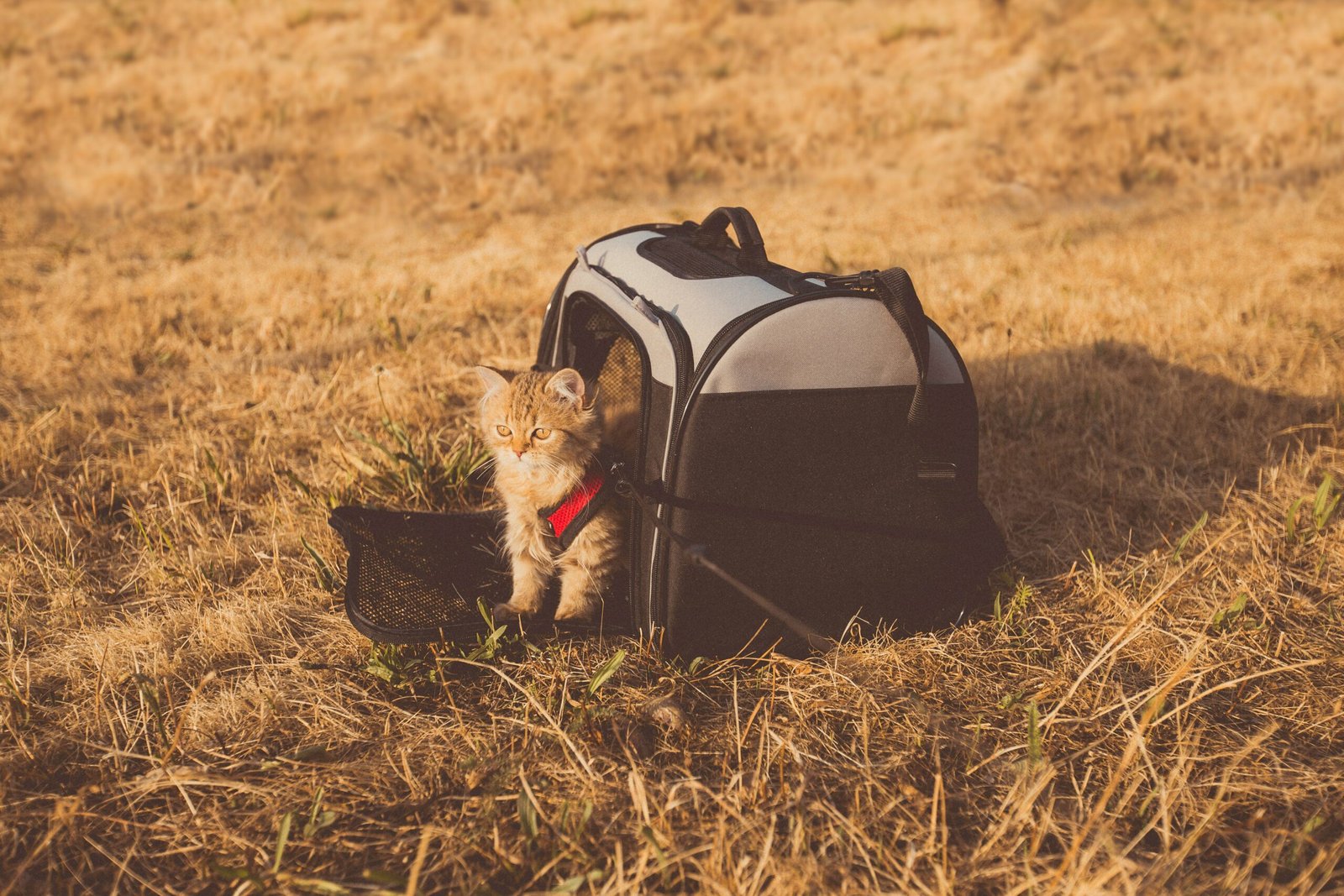
1. Sherpa Original Deluxe Pet Carrier
Summary:
The Sherpa Original Deluxe is a proven, no-nonsense option that works across most travel situations. It’s designed around real airline constraints, with a spring-wire frame that lets it compress under seats without collapsing on your cat. In practice, it’s lightweight, easy to handle, and simple to use even when your cat is resisting.
What stands out in real use:
The combination of top and side entry makes a noticeable difference when placing a stressed cat inside. The structure is soft but stable enough for short trips, and it consistently passes airline checks without issues.
Pros:
- Airline approved for most US airlines
- Top + side entry (much easier with resistant cats)
- Lightweight and easy to carry
Cons:
- No expandable space for longer trips
- Slight sag under heavier cats
- Not ideal for cats over ~15 lbs
Who this is NOT for:
- Large or long-bodied cats
- Long travel days where extra space matters
- Owners who want a more rigid, premium build
Positioning:
- Better than budget carriers in reliability and ease of use
- Less structured and premium than Sleepypod Air
Best for: First-time buyers, occasional travel, light flying use
Sherpa Original Deluxe Pet Carrier
If you want a carrier that works without friction or surprises, this is still one of the safest choices.
2. Sleepypod Air In-Cabin Carrier
Summary:
The Sleepypod Air is built specifically for flying, not adapted to it. Its compressible design allows it to fit under tighter airline seats while maintaining more structure than typical soft carriers. It feels noticeably more stable during transport and holds its shape better under pressure.
What stands out in real use:
You’re far less likely to run into issues at boarding. The structured build also reduces sagging, which helps keep your cat more stable during movement.
Pros:
- Designed to meet strict airline size requirements
- More structured than standard soft carriers
- High-quality materials and build
Cons:
- Higher price point
- Heavier than most soft carriers
Who this is NOT for:
- Occasional travelers
- Short trips like vet visits
- Budget-focused buyers
Positioning:
- Better than Sherpa for frequent flying and structure
- Overkill for basic or infrequent use
Best for: Frequent flyers, long-distance air travel
Sleepypod Air In-Cabin Carrier
If flying is a regular thing, this removes a lot of uncertainty and stress.
3. Mr. Peanut’s Soft-Sided Expandable Carrier
Summary:
This carrier focuses on comfort and space, which makes a real difference for anxious cats. The expandable sides give your cat more room during waiting periods, without sacrificing portability when closed.
What stands out in real use:
The added space can noticeably reduce stress behaviors, especially during longer waits or delays. Ventilation is also strong across multiple panels.
Pros:
- Expandable sides for extra space
- Good airflow and ventilation
- Lightweight and easy to carry
Cons:
- Less structural support
- Can feel unstable when fully expanded
Who this is NOT for:
- Highly active or escape-driven cats
- Situations where structure and rigidity matter most
Positioning:
- More comfortable than Sherpa for longer use
- Less stable and structured than Sleepypod Air
Best for: Nervous cats, longer waiting periods, moderate travel
Mr. Peanut’s Soft-Sided Expandable Carrier
If your cat struggles with confinement, the extra space here can make a measurable difference.
4. Pet Gear View 360 Travel Carrier
Summary:
The View 360 is designed to reduce the enclosed feeling that triggers stress in many cats. Its semi-rigid structure and wide mesh panels create a more open environment, which works well for car travel.
What stands out in real use:
Cats that dislike fully enclosed carriers tend to settle faster because they can see more of their surroundings. The added structure also keeps the carrier stable during movement.
Pros:
- Panoramic mesh improves visibility
- More stable than soft carriers
- Comfortable for longer car rides
Cons:
- Not airline approved
- Bulkier and harder to store
Who this is NOT for:
- Air travel
- Minimal storage space
Positioning:
- Better than soft carriers for car stability
- Less portable and flexible
Best for: Car travel, longer drives, cats sensitive to motion
Pet Gear View 360 Travel Carrier
If your cat gets stressed in the car, this design can help reduce that reaction.
5. Texsens Innovative Traveler Backpack Carrier
Summary:
This is a practical option for short trips where mobility matters more than comfort. The backpack design makes it easier to carry your cat through busy areas or without a car.
What stands out in real use:
Hands-free carrying makes a big difference in urban environments. It’s easier to manage stairs, public transport, or longer walking distances.
Pros:
- Hands-free and easy to carry
- Good ventilation with mesh panels
- Lightweight and affordable
Cons:
- Limited space for the cat
- Not suitable for long-duration use
Who this is NOT for:
- Large cats
- Long trips or extended travel
- Cats that dislike upright positioning
Positioning:
- More convenient than standard carriers for mobility
- Less comfortable for extended use
Best for: Short trips, city use, walking
Texsens Innovative Traveler Backpack Carrier
If convenience is your priority, this is a useful option—but it’s not a replacement for a full travel carrier.
Use Case Breakdown
Not all “best cat carriers for travel” are equal. The right choice depends entirely on how you travel.
Here’s how to pick based on real scenarios:
Best Cat Carrier for Flying (Airline Approved)
Top picks:
What actually matters for flights:
- Must fit under the seat (usually ~18” x 11” x 11”, but varies by airline)
- Soft-sided is required in most cases
- Carrier must fully close and stay stable when compressed
Real-world insight:
Airlines don’t just check dimensions—they check how the carrier behaves. If it bulges, sags too much, or looks unstable, you can get stopped.
Which one to choose:
- Want zero risk of airline issues → Sleepypod Air
- Want a reliable, more affordable option → Sherpa Deluxe
Best Cat Carrier for Car Travel
Top pick:
What actually matters in the car:
- Stability during turns and braking
- Reduced visual stress (or controlled visibility depending on the cat)
- Secure placement (not sliding around)
Pro tip most people miss:
Place the carrier on the floor behind the front seat, not on the seat. It reduces motion and makes cats feel more grounded.
Why this carrier works:
The semi-rigid structure prevents collapsing, and the visibility helps cats that get anxious in fully enclosed spaces.
Best Cat Carrier for Nervous or Anxious Cats
Top pick:
What actually reduces anxiety:
- More usable space (not tight confinement)
- Good airflow
- Ability to partially hide or reduce stimuli
What doesn’t work:
Tiny, fully enclosed carriers with poor airflow—these increase panic fast.
Simple upgrade that works:
Cover part of the carrier with a blanket while keeping airflow open. It reduces overstimulation without trapping heat.
Why this carrier works:
The expandable sides give your cat room when needed, which can noticeably reduce stress during waiting periods.
Best Cat Carrier for Vet Visits & Short Trips
Top picks:
What actually matters:
- Easy entry (especially top-loading)
- Fast access without full opening
- Lightweight and easy to carry
Reality:
Most cats associate carriers with the vet. The faster and smoother the process, the less resistance you’ll deal with.
Which one to choose:
- Want easier handling → Sherpa Deluxe
- Want mobility and convenience → Backpack carrier
Quick Decision Shortcut
If you’re still unsure:
- Flying → Sleepypod Air or Sherpa
- Car travel → View 360
- Nervous cat → Expandable carrier
- Short trips → Sherpa or Backpack
Soft vs Hard Cat Carriers (Which Is Better?)
Short answer:
Soft carriers are better for most travel situations.
Hard carriers are better for specific, more demanding use cases.
Here’s how to actually think about the difference:
Soft Cat Carriers
Summary:
Soft carriers are the default choice for a reason. They’re flexible, lighter to carry, and much easier to use in real-world situations like flying, quick trips, or moving through tight spaces. Because they slightly adapt to movement, many cats feel less confined and settle faster—especially when the carrier is partially covered to create a “den-like” environment.
Best for:
- Flying (most are airline approved)
- Short to medium trips
- Everyday usability and storage
Pros:
- Flexible → fits under airline seats
- Lightweight and easier to carry
- Generally more comfortable for cats
Cons:
- Less impact protection
- Can sag with heavier cats
- Zippers can be a weak point if low quality
Real-world insight:
For most owners, a well-built soft carrier hits the best balance between comfort, practicality, and compliance with airline rules.
Hard Cat Carriers
Summary:
Hard carriers prioritize structure and durability over convenience. They don’t flex, don’t sag, and are much harder for cats to break out of. That makes them useful in situations where stability matters more than comfort like long car rides or transporting larger, stronger cats. The trade-off is bulk, weight, and limited usability for travel like flying.
Best for:
- Car travel (especially longer distances)
- Larger or more escape-prone cats
- Situations where durability is critical
Pros:
- Strong, rigid structure
- More secure against escape attempts
- Easy to clean (important for accidents)
Cons:
- Bulky and harder to store
- Not airline-friendly in most cases
- Less comfortable to carry
Real-world insight:
Hard carriers feel more stable in a car because they don’t shift or collapse but they’re noticeably less practical for anything involving carrying or tight spaces.
What Most People Get Wrong
They assume “hard = better” because it looks safer.
In reality:
- Soft carriers outperform in travel scenarios
- Hard carriers are situational, not universal
- Comfort and usability matter more than raw durability for most people
Bottom Line
- Flying or general travel → Soft carrier (best for 90% of cases)
- Car travel or large/strong cats → Hard carrier (situational upgrade)
If you’re only buying one, go with a soft carrier that has enough structure to avoid sagging.
Size Guide (Don’t Guess This)
Getting the size wrong is the fastest way to make your cat hate the carrier.
Most people assume: bigger = better.
In reality, the wrong size—too small or too big—creates stress.
Step 1: Measure Your Cat (Properly)
You only need two measurements:
- Length: Nose → base of tail (not the tip)
- Height: Floor → top of head (or ears if upright)
Step 2: Add the Right Buffer
Add 2–3 inches (5–8 cm) to both measurements.
This gives your cat enough room to:
- Stand naturally
- Turn around
- Adjust position during travel
What the Right Size Actually Feels Like
A properly sized carrier should feel:
- Snug, but not tight
- Stable during movement
- Not oversized or “open” inside
Real-world insight:
Too much space causes sliding during turns or walking, which increases anxiety not comfort.
Quick Size Guide (Weight + Reality Check)
- Under 10 lbs (4.5 kg) → Small
- 10–15 lbs (4.5–7 kg) → Medium
- 15+ lbs (7+ kg) → Large (check dimensions carefully)
Important:
Weight is only a rough guide. A long, lean cat may need a larger carrier than a heavier but compact one.
Airline Size Constraints (Critical for Flying)
Most US airlines require carriers to fit roughly within:
- Length: ~17–18 inches
- Width: ~10–11 inches
- Height: ~10–11 inches
Soft carriers can flex slightly but don’t rely on that too much.
Common mistake:
Buying a carrier that fits your cat… but doesn’t fit under the seat.
Signs You Chose the Wrong Size
- Your cat can’t turn around easily → too small
- Your cat slides or braces constantly → too big
- The carrier collapses under weight → poor structure
Simple Rule to Remember
Your cat should be able to move comfortably but not be thrown around inside.
Mistakes to Avoid When Choosing a Cat Carrier
Most bad travel experiences don’t come from the trip they come from choosing the wrong carrier.
These are the mistakes that cause the most problems:
1. Choosing the Wrong Size (Usually Too Small)
This is the most common mistake.
A carrier that’s too small:
- Restricts movement
- Increases panic and overheating
- Makes longer trips much harder than they need to be
But going too big isn’t the solution either.
A carrier that’s too large:
- Causes your cat to slide during movement
- Reduces the feeling of security
- Can increase anxiety instead of reducing it
Aim for snug and stable not cramped, not oversized
2. Ignoring Airline Requirements
A carrier can be labeled “airline approved” and still cause problems.
What actually matters:
- Fits fully under the seat
- Doesn’t bulge or collapse awkwardly
- Can close completely and securely
Real-world issue:
People get stopped at boarding because the carrier looks too large or unstable even if it technically meets size limits.
If flying, always prioritize fit and structure, not just labels
3. Prioritizing Looks Over Function
Stylish carriers are everywhere. Most of them are poorly designed.
Common issues:
- Weak ventilation
- Poor structure (collapses under weight)
- Cheap zippers that fail under pressure
If it looks good but lacks structure or airflow, skip it
4. No Top Opening
This is one of the biggest usability mistakes.
Without a top opening:
- You’ll struggle to get your cat inside
- Stress increases for both you and your cat
- Vet visits become unnecessarily difficult
Top-loading access is a small feature with a big impact
5. Weak Zippers and Closures
Cats push, claw, and test the carrier when stressed.
Low-quality zippers:
- Can open under pressure
- Create real escape risks
- Fail faster than expected
Always choose carriers with locking or reinforced zippers
6. Not Thinking About the Actual Use Case
People often try to buy one carrier for everything.
That leads to compromises:
- Too bulky for flights
- Too small for long trips
- Not comfortable for anxious cats
Choose based on your primary use case, not rare scenarios
7. Skipping Pre-Travel Preparation
Even the best carrier won’t fix this mistake.
If your cat only sees the carrier when it’s time to leave:
- They associate it with stress instantly
- Resistance increases every time
Leave the carrier out at home days before travel
Add a blanket or familiar scent to make it feel safe
Quick Reality Check
If you avoid these mistakes, you’re already ahead of most cat owners.
The difference isn’t small it’s the difference between:
- A manageable trip
- And a stressful, chaotic experience
FAQ
What is the best cat carrier for travel overall?
The best cat carrier for travel for most people is the Sherpa Original Deluxe.
It offers the best balance of:
- Airline compatibility
- Ease of use (top + side entry)
- Lightweight design
If you travel occasionally and want something reliable without overthinking, this is the safest choice.
What is the best airline approved cat carrier?
The Sleepypod Air In-Cabin Carrier is the best option for flying.
It’s specifically designed to:
- Fit under tight airline seats
- Maintain structure when compressed
- Reduce issues during boarding
If you fly frequently, this is the most reliable long-term option.
Are soft or hard cat carriers better?
Soft carriers are better for most travel situations.
They’re lighter, more comfortable for cats, and required for most flights.
Hard carriers are better for:
- Car travel
- Larger or stronger cats
- Situations where durability matters
If you’re choosing one carrier for everything, go with a soft carrier.
What size cat carrier should I get?
Your cat should be able to:
- Stand up
- Turn around
- Lie down comfortably
Add 2–3 inches to your cat’s length and height when choosing a size.
Avoid:
- Too small → causes stress and discomfort
- Too large → causes sliding and instability
Are backpack cat carriers safe?
Yes—but only for short trips.
Backpack carriers are:
- Safe for walking or quick transport
- Not ideal for long travel or flights
They prioritize convenience over comfort, so they’re best used in the right context.
How do I calm my cat in a carrier during travel?
What actually works:
- Add a blanket with a familiar scent
- Cover part of the carrier (not ventilation areas)
- Use pheromone sprays 15–20 minutes before travel
- Keep movement smooth and stable
Perfect—this is where you turn hesitation into action. No hype, just clarity and a final push.
Conclusion
There’s no single “best” cat carrier for travel—only the one that fits how you actually travel and how your cat responds to it.
If you get that right, everything becomes easier:
- Less resistance getting your cat inside
- Less stress during the trip
- Fewer problems once you arrive
Here’s the simple way to decide:
- Want a reliable, no-hassle option → Sherpa Original Deluxe
- Flying regularly → Sleepypod Air
- Cat gets anxious or restless → Mr. Peanut’s Expandable
- Mostly car travel → Pet Gear View 360
- Need something for short, mobile trips → Backpack carrier
Don’t overcomplicate it.
Most issues people experience—panic, escaping, constant meowing—come down to using the wrong type of carrier for the situation.
Choose based on your primary use case, get the size right, and prioritize ventilation and entry design.
That alone puts you ahead of most cat owners.
If you’re ready to make travel easier (for both you and your cat), pick the option that matches your situation and move forward.
Sources
https://www.aphis.usda.gov/pet-travel
https://www.transportation.gov/airconsumer/air-travel-consumer-reports
https://www.avma.org/resources-tools/pet-owners/petcare/traveling-your-pet
https://www.aaha.org/your-pet/pet-owner-education/ask-aaha/traveling-with-your-pet/
https://www.humanesociety.org/resources/travel-safely-your-pet
https://www.aspca.org/pet-care/general-pet-care/traveling-your-pet
https://vcahospitals.com/know-your-pet/traveling-with-your-cat
https://www.faa.gov/travelers/fly_pets
https://www.delta.com/us/en/pet-travel/overview
https://www.aa.com/i18n/travel-info/special-assistance/pets.jsp
https://www.united.com/en/us/fly/travel/traveling-with-pets.html
https://www.sleepypod.com/air
https://www.sherpapet.com/products/original-deluxe-carrier
https://mrpeanutspetcarriers.com/collections/pet-carriers
https://petgearinc.com/product/view-360-pet-carrier/
https://www.texsens.com/products/pet-carrier-backpack



Pingback: Best Airline Approved Cat Carriers (2026) - DogCat-care
Pingback: best cat carriers for car travel (Safety & Comfort) - DogCat-care